
National democracy groups, Minnesota secretary of state warn of federal risks to 2026 elections
Get AI-powered insights, summaries, and transcripts
Subscribe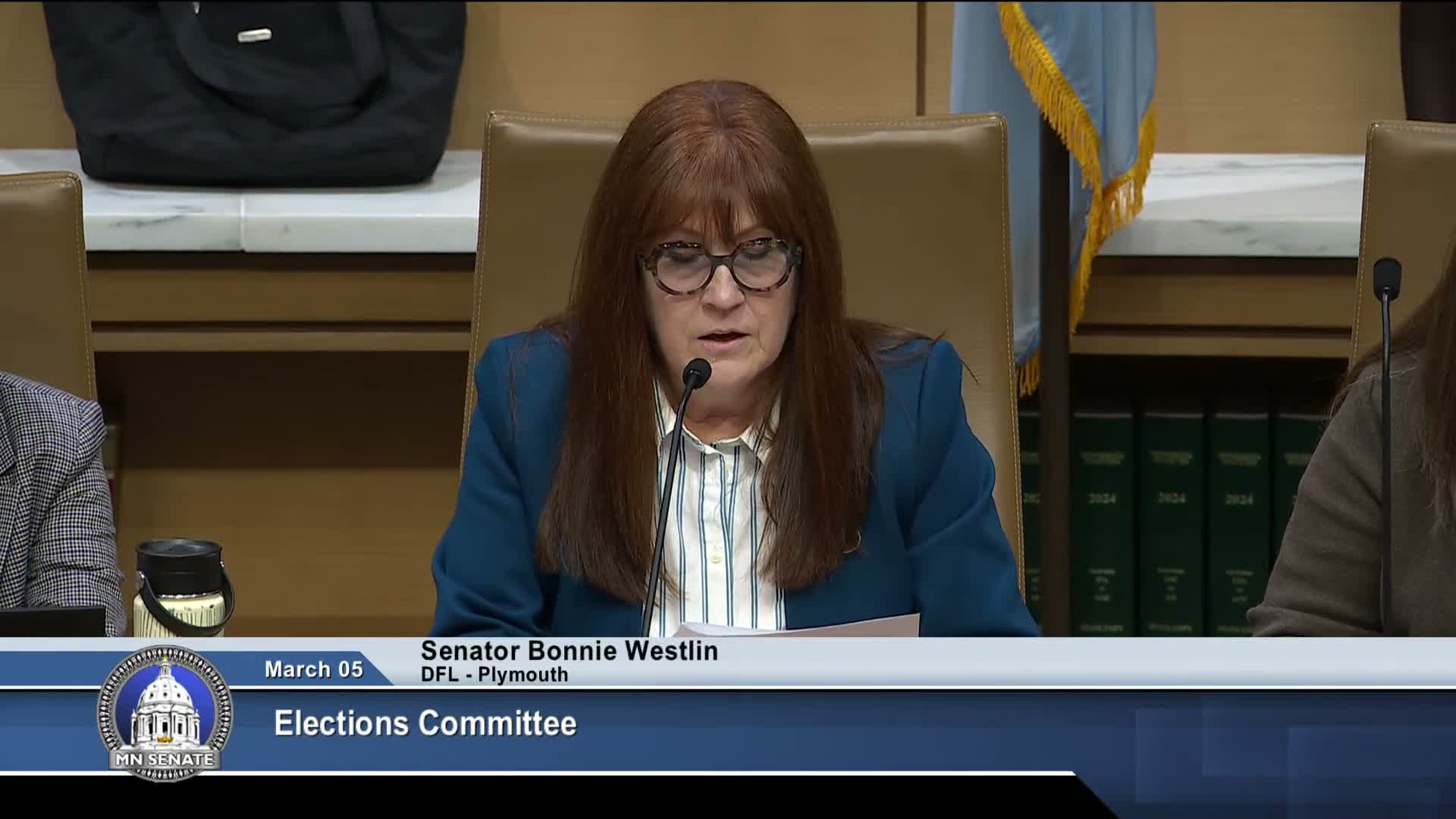
Summary
Experts from Protect Democracy, the Campaign Legal Center and the Brennan Center told the Minnesota Senate Elections Committee that federal actions — including proposed laws, data demands and potential deployments of federal agents — risk undermining election administration and chilling voter participation; Secretary of State Steve Simon said Minnesota remains resilient but urged federal support.
Experts from several national democracy organizations and Minnesota’s secretary of state told the Senate Elections Committee on March 5 that federal actions could undermine election administration ahead of the 2026 midterms, urging state officials to bolster outreach and safeguards.
Janice Marsden of Protect Democracy warned that the current administration’s rhetoric and actions fall into five categories that can distort electoral competition: disinformation campaigns, targeting political opponents, intimidation and threats of force, manipulation of election rules, and interference with results. “We are in year 10 of a steady campaign to degrade Americans’ trust in our electoral system,” Marsden said, adding that authoritarian governments often hold elections while tilting the rules to predetermine outcomes.
Lehi Knott of the Campaign Legal Center focused on federal proposals such as the Save America Act and on Department of Justice requests for unredacted statewide voter rolls. Knott said documentary proof-of-citizenship requirements could disenfranchise people who lack passports or birth certificates and would impose immediate administrative burdens on states that rely on online or by-mail registration. “The bill could disenfranchise millions of eligible citizens who, through no fault of their own, do not have ready access to the proof that the bill requires,” Knott said.
Justine Singh of the Brennan Center warned that federal personnel and agency actions pose a novel threat to election officials. “Sending ICE or any other federal armed agent to the polls is illegal. Full stop,” Singh said, and she also described cuts and staffing disruptions at the Cybersecurity and Infrastructure Security Agency that she said have reduced federal support for state and local election security.
Minnesota Secretary of State Steve Simon told the committee that Minnesota’s system is resilient and benefits from paper ballots, multiple voting options and local administration. “Our system is administered by 87 counties, hundreds of municipalities, and on election day by over 30,000 election judges,” Simon said, and he urged federal agencies to resume classified briefings and funding that have assisted state election security in prior cycles.
Committee members asked presenters about practical state responses. Knott recommended improving list-maintenance practices, optimizing interagency data-sharing for up-to-date records, and strengthening safeguards for voters who might be wrongfully challenged. Marsden urged legislators and election officials to use their public platforms and modern communication channels to counter misinformation rather than repeating false claims.
The presenters cited several concrete concerns discussed in the hearing: a draft executive order described in testimony that would centralize election controls under a national emergency, DOJ demands for unredacted voter rolls, and statutory proposals that would require documentary proof of citizenship for registration. They also flagged two data points discussed at the hearing: testimony that “more than 21,000,000 Americans lack easy access to documents like birth certificates” and that “146,000,000 Americans do not have a passport,” arguments used to illustrate risks from proof-of-citizenship rules.
The hearing closed with members thanking the presenters and Secretary Simon. Presenters recommended stepped-up local outreach, funding for election infrastructure, and legal and administrative safeguards to preserve state control over election procedures.
The committee then moved to its single bill on the agenda; the discussion of the bill and the committee vote are recorded separately.