
Committee advances bill to bar local contracts to house civil immigration detainees, sends SF 3653 to Judiciary
Get AI-powered insights, summaries, and transcripts
Subscribe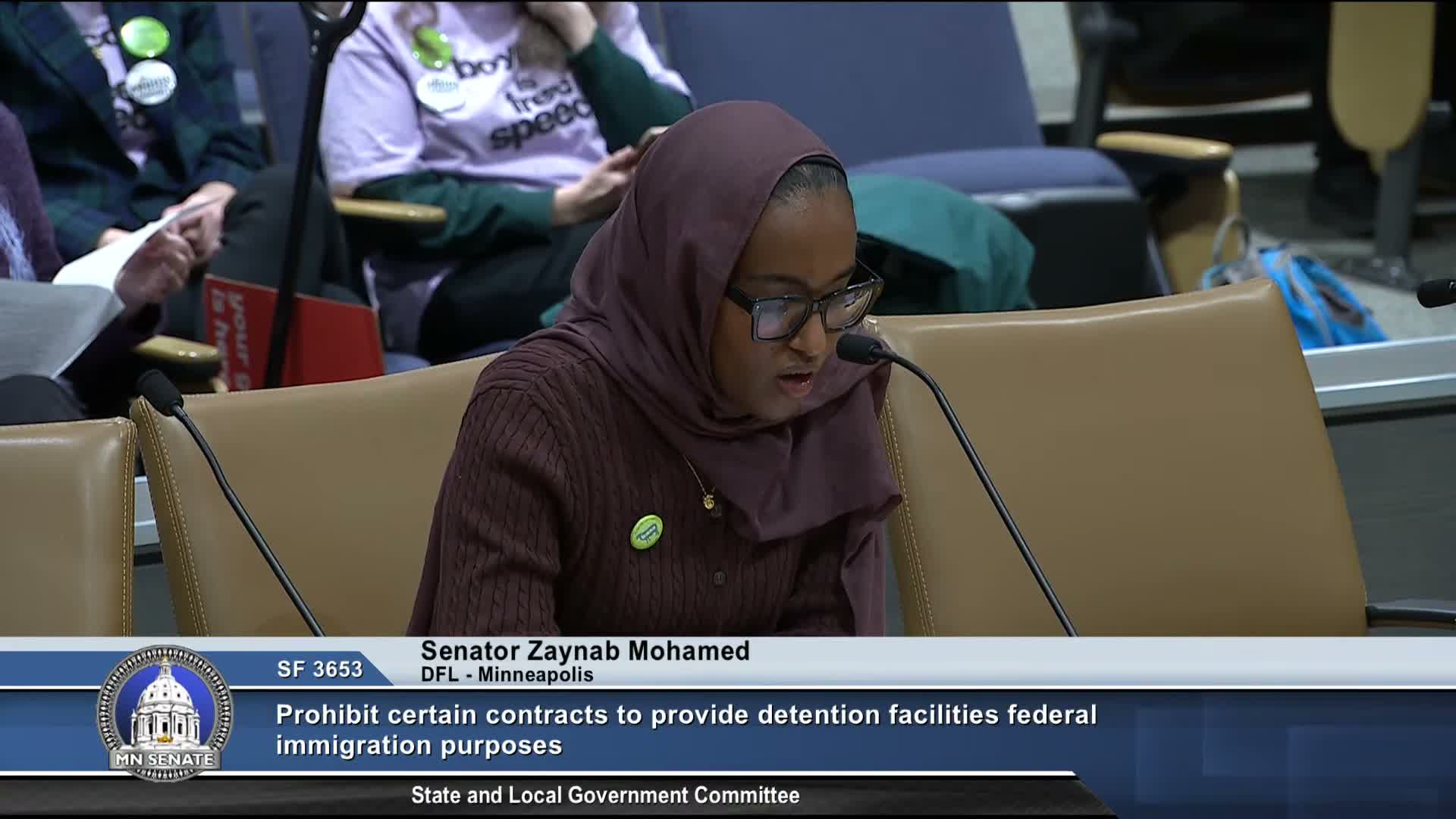
Summary
The committee recommended SF 3653 to the Judiciary Committee after testimony from immigrant-rights groups, legal experts and unions arguing that contracting with federal immigration authorities diverts local resources and harms community trust; opponents said the bill would hinder law-enforcement cooperation.
On March 5, 2026, the Senate State and Local Government Committee recommended Senate File 36 53 for passage and referred it to the Judiciary Committee after a 6–5 roll-call vote. The bill would prohibit local governments from entering agreements with the federal government to house people in custody for civil immigration violations.
Senate File 36 53's author told the committee that local jails are public goods and should not be used to warehouse people for civil immigration enforcement. The author related the experience of a single detainee, saying the person had been detained despite producing documents indicating lawful status and later released after legal intervention.
Supporters included Unidos Minnesota, labor unions and civil-rights groups. Jose, a lead organizer at Unidos Minnesota, argued the bill protects local government finances and community trust by preventing diversion of staff time, facility capacity and taxpayer dollars to federal detention. Linus Chan, who runs a University of Minnesota Law School clinic representing detainees, said several states have limited local contracting for immigration detention and that counties often find federal detention contracts economically nonviable.
John Baylor, policy counsel at the ACLU of Minnesota, clarified that the bill would not affect people detained on suspicion of criminal activity but would target civil administrative detention and warned of increasing litigation and local costs connected with federal detainer practices. Samantha Diaz Powell of SEIU said fear of local jail cooperation reduces workers' ability to report abuse and undermines workplace standards.
Opponents framed the bill as a de facto 'sanctuary' measure that could hamper federal law enforcement and public-safety tools; they warned it could push detainees to out-of-state facilities and raised supremacy-clause concerns. Those arguments marked a sharp split in the committee, with back-and-forth on whether the bill would increase or decrease overall public safety.
The committee recorded a roll-call recommendation to pass and a referral to the Judiciary Committee. The bill will next be considered in Judiciary, where questions about state–federal cooperation, legal risk and implementation will reappear.
Next steps: SF 3653 goes to the Judiciary Committee for further consideration and any potential fiscal or legal analyses.