Get Full Government Meeting Transcripts, Videos, & Alerts Forever!
Get email alerts on the Economic Development topic
No spam. Unsubscribe anytime.
EDC director says Lake Wales must build shovel‑ready sites and workforce pipelines to capture incoming industry
Summary
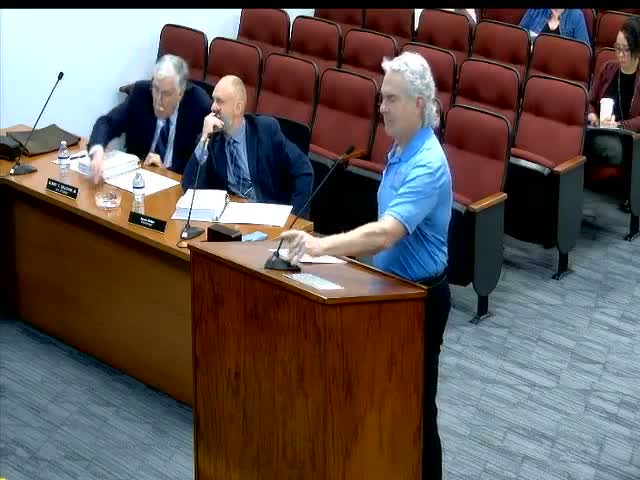
EDC and Chamber director Skip Alford told the City of Lake Wales work session that the city’s competitive advantage depends on infrastructure readiness and workforce pipelines, citing state and local statistics and multiple manufacturing leads that would require move‑in‑ready sites.
Skip Alford, director of the local economic development council and chamber of commerce, told the Lake Wales commission at a work session that the city’s immediate priority should be making land and infrastructure 'shovel ready' to attract manufacturers and logistics employers. He said Florida’s unemployment is relatively low and that population growth has slowed, but that Lake Wales faces local wage and poverty challenges that limit disposable income and economic resilience.
Alford presented statewide and local data and said Lake Wales’ in‑city population is just under 17,000 while the broader community is about 18,800; he warned that a sizable share of residents commute out of Polk County for work. 'Half the population leaves the county every day to work,' Alford said, arguing the city loses daytime economic activity and should focus on keeping jobs and spending local by recruiting employers with higher wages.
Alford ran through examples of prospective projects, including a referenced lead with roughly $400 million in capital expenditure and hundreds of jobs that would pay wages materially above local medians. He said the city is being offered both build‑to‑suit and move‑in‑ready opportunities but that many projects require sites with utilities, appropriate zoning, and permitting in place. 'These companies want certainty,' Alford said. 'They want shovel‑ready, move‑in‑ready structure that they can just adopt and move right into.'
Commissioners asked about workforce readiness and the influence of automation. Alford said the jobs he highlighted are unlikely to be automated — citing skilled trades such as plumbing, welding and HVAC — and described coordination with local education leaders to create pipelines from pre‑K through postsecondary training. He said he has begun discussions with the charter school superintendent to incorporate pathways into the district strategy.
Alford also updated commissioners on specific local site work, including the Hunt Brothers corridor and Longleaf Park parcel discussions, and warned staff and commissioners that some leads must be declined until the city develops the necessary infrastructure. He closed by asking the commission to prioritize infrastructure funding and permitting reforms to position Lake Wales for near‑term bids.
The commission did not take formal action; staff said they will follow up with additional data requested by commissioners and continue site‑readiness work.