
Public commenters press for hand‑marked paper ballots, auditability and backup plans
Get AI-powered insights, summaries, and transcripts
Subscribe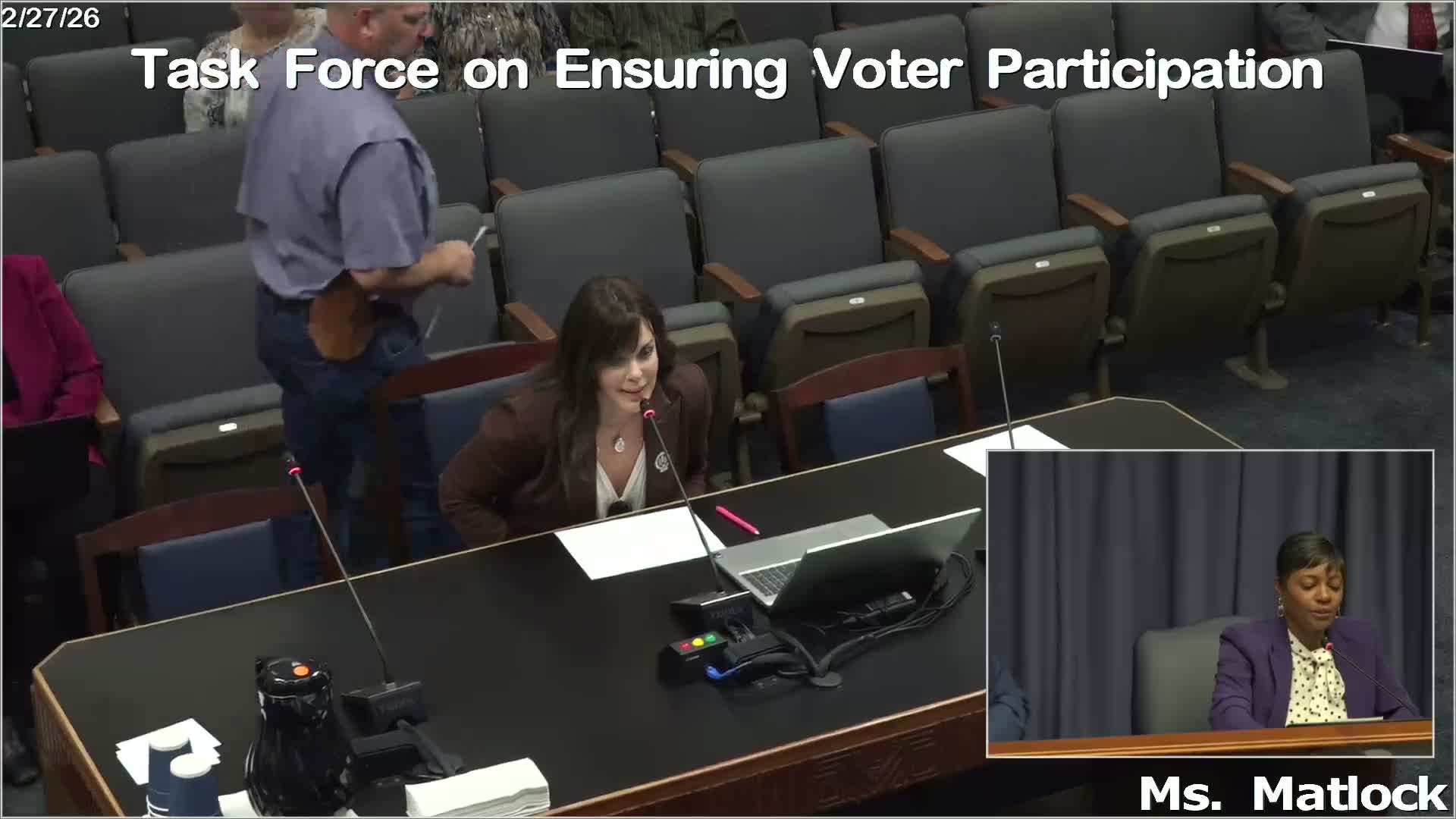
Summary
Public commenters and advocates urged the task force to consider hand-marked, precinct-counted paper ballots, better audit trails and concrete contingency plans if voting machines fail; presenters raised disability-access and literacy concerns with hand-count proposals.
During the public-comment period, several speakers warned that Louisiana's current voting procedures make meaningful audits difficult and urged alternative approaches to ensure verifiability and public confidence.
Christie Hike of the Louisiana Republican Assembly told the task force that "Louisiana is the only state in the nation currently that cannot audit our elections" and recommended replacing electronic voting machines with hand-marked, secure paper ballots counted at the precinct level. She described demonstrations the group has run and outlined a mirrored calling-and-counting method intended to provide immediate adjudication and a visible chain of custody.
Hike also criticized the involvement of the Office of Motor Vehicles in registration, citing an alleged May 2023 DMV cyberincident and saying the DMV is a weak link for accurate registration. "Why does the DMV even have anything to do with voting?" she asked, arguing that registration and audit responsibility should be centralized with the secretary of state.
League of Women Voters state president Christy Green said the League has no formal position on voting methods but raised practical concerns about disability access and literacy for hand-count systems. "We would want to know how that would operate if someone who is illiterate needs the ballot read to them," Green said, arguing that accessibility and stigma must be addressed in any method change.
Other public commenters and task force members agreed on the need for clear contingency plans should machines fail, and for more transparent processes around poll watchers and chain-of-custody procedures. No formal policy change was adopted at the meeting; the exchange centered on trade-offs among auditability, accessibility and implementation complexity.