
Task force proposes wider early voting, DMV automatic registration and civic-education funding; no vote taken
Get AI-powered insights, summaries, and transcripts
Subscribe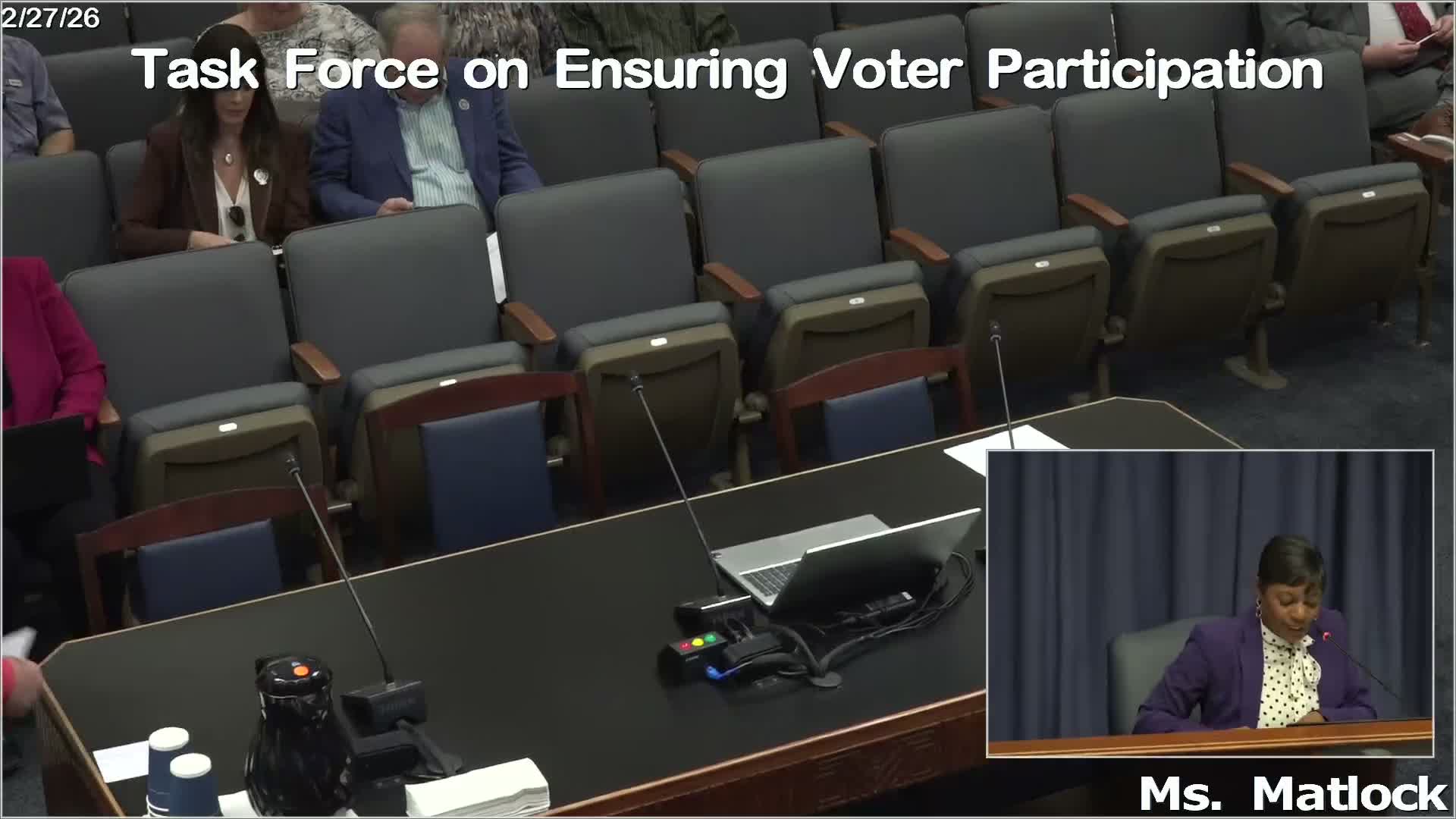
Summary
The task force on ensuring voter participation discussed expanding early-voting sites (including near campuses), studying consolidation of election dates, automatic DMV-based registration with opt-out, paid time off for voting, and a state civic-engagement fund; members emphasized funding, security and data needs and no formal votes were taken for lack of quorum.
The task force on ensuring voter participation met Feb. 27, 2026, to review a package of recommendations aimed at raising turnout, especially among young and rural voters. Chair (filling in for Ashley Shelton) said the proposals include more early-voting sites, automatic voter registration at the Department of Motor Vehicles with an opt-out, paid time off for voting, clearer ballot language for constitutional amendments and a state civic-engagement fund to support nonpartisan outreach.
The package groups several reforms under "voter access and participation," the chair said, and links expansion to available funding and resources. "Increasing early voting sites reduces congestion and shortens lines and addresses transportation barriers, particularly in our rural communities," the chair said. The plan also recommends placing early-voting sites near college campuses to reduce barriers for young voters and conducting post-election surveys to collect data on voter experience.
League of Women Voters state president Christy Green urged the task force to account for geographic distance when siting early-voting locations and to investigate implementation gaps at the Office of Motor Vehicles, saying some registrants told League volunteers they had completed DMV paperwork but still appeared not to be registered at polling places. "We need to figure out what's going on at the Office of Motor Vehicles," Green said.
A committee member noted that any access expansions must include a funding mechanism and suggested consolidation of election dates as one possible source of savings. That member also warned that increasing access should not undermine ballot security and recommended retaining current security measures, including voter ID and balanced poll-watcher rules.
Presenters and public commenters repeatedly urged better data collection. Green and others recommended pilot early-voting sites in select parishes and measurement — for example, using driver-license addresses of voters who use a new site — to determine whether locations attract intended voters. Victoria Wenger of the NAACP Legal Defense and Educational Fund said turnout disparities are multifaceted and recommended sustained, bipartisan funding and coordination with community groups.
Because the task force lacked a quorum, members discussed and reviewed the recommendations but did not take formal votes. The chair said the conversation should continue and asked members to consider funding, security, accessibility, and empirical measures as the group prepares a final report or returns in a future session.