
State agencies warn Nevada—s highway fund is nearing a 'fiscal cliff,' urge lawmakers to act
Get AI-powered insights, summaries, and transcripts
Subscribe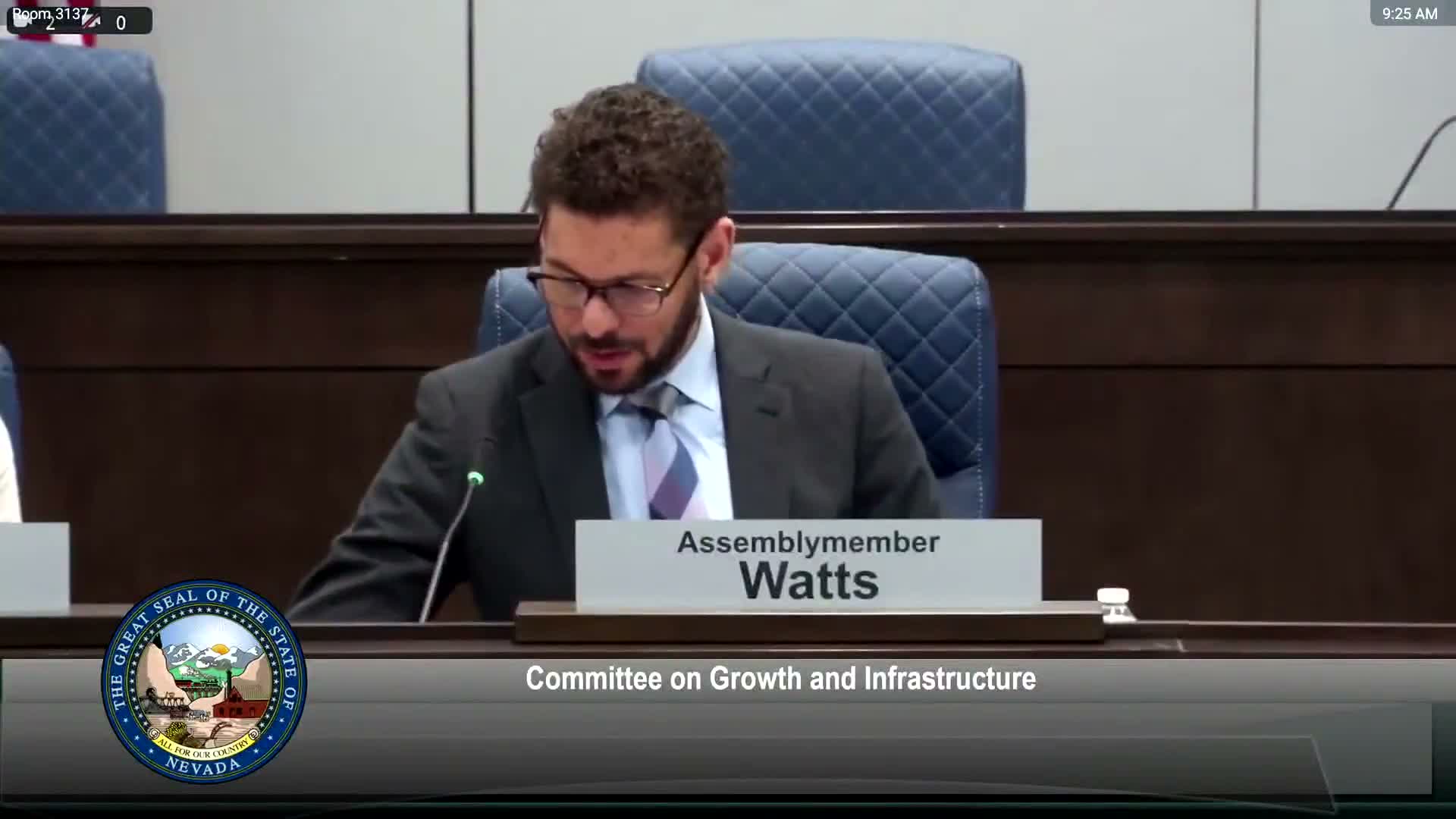
Summary
NDOT, DMV and DPS told a joint Growth and Infrastructure committee that decades‑old fuel and fee structures aren—t keeping pace with inflation, EV adoption and population growth, leaving preservation, safety and capital projects at risk without new or restructured revenue.
Tracy Larkin Thomason, director of the Nevada Department of Transportation, told the joint interim Growth and Infrastructure Committee on March 12 that Nevada—s state highway fund is struggling to meet basic preservation and safety needs as construction costs and travel demand climb.
"If we neglect the fundamentals of preservation and maintenance, the problems grow exponentially," Thomason said, noting NDOT maintains 5,400 center‑line miles and more than 1,000 bridges and estimates preservation needs near $3 billion over the next decade (roughly $300 million per year). She added NDOT—s share of capital needs over 10 years is between $10 billion and $14 billion.
The joint presentation—delivered by NDOT, the Department of Motor Vehicles and the Department of Public Safety—outlined why the agencies say the traditional revenue base is eroding. State motor fuel taxes and basic vehicle registration fees were last raised in the early 1990s, and increasing fuel efficiency and electric‑vehicle adoption are reducing per‑mile fuel consumption, the presenters said. "These dollars are deposited into the state highway fund," Thomason said, "and according to our state constitution, they can only be spent on highway taxes administration and highway construction, maintenance and repair."
DMV Director Tanya Laney described a statutory cap on the portion of highway funds the DMV may use for operations. Laney said DMV collects roughly $1.9 billion annually but retains about 6 percent for operations; a temporarily raised cap of 27 percent is scheduled to revert to 22 percent in a future fiscal year. She warned that DMV—s staffing, technology modernization and facility needs often cannot be advanced because the agency must operate within that cap.
Deputy Director Christy Defer of the Department of Public Safety said the Nevada Highway Patrol is funded almost entirely by the highway fund and that per‑trooper costs have risen with new in‑car video, digital reporting and radios. "Deployment of a single trooper today costs significantly more than it did 20 years ago," Defer said, and recruitment and retention remain challenges despite recent salary increases.
Committee members asked for concrete examples of projects delayed by the funding gap. NDOT cited Neon Phase 2 in Southern Nevada (including about $60 million in right‑of‑way acquisition that has been pushed out), multiple phases of large interchange projects in Northern Nevada and reductions in planned passing lanes on U.S. 95 and U.S. 93.
The presentations reiterated the tradeoffs lawmakers face: indexing or increasing user fees, increasing the share of general fund support for transportation, or making additional programmatic cuts. Chair Watts said the record should include specific projects and staffing constraints so the committee can document the consequences of inaction.
Next steps: agency leaders committed to provide follow‑up details on deferred projects, contract amounts and vacancy and staffing metrics. The committee will continue discussions during the interim and consider legislative and other options to preserve the purchasing power of transportation revenues.
Sources and attributions: remarks and figures above come from the joint presentation by Tracy Larkin Thomason (NDOT), Tanya Laney (DMV) and Christy Defer (DPS) to the Growth and Infrastructure committee on March 12, as recorded in the meeting transcript.