
Committee advances wide home‑education package, adopts some repeals and protections, raises EFA and funding questions
Get AI-powered insights, summaries, and transcripts
Subscribe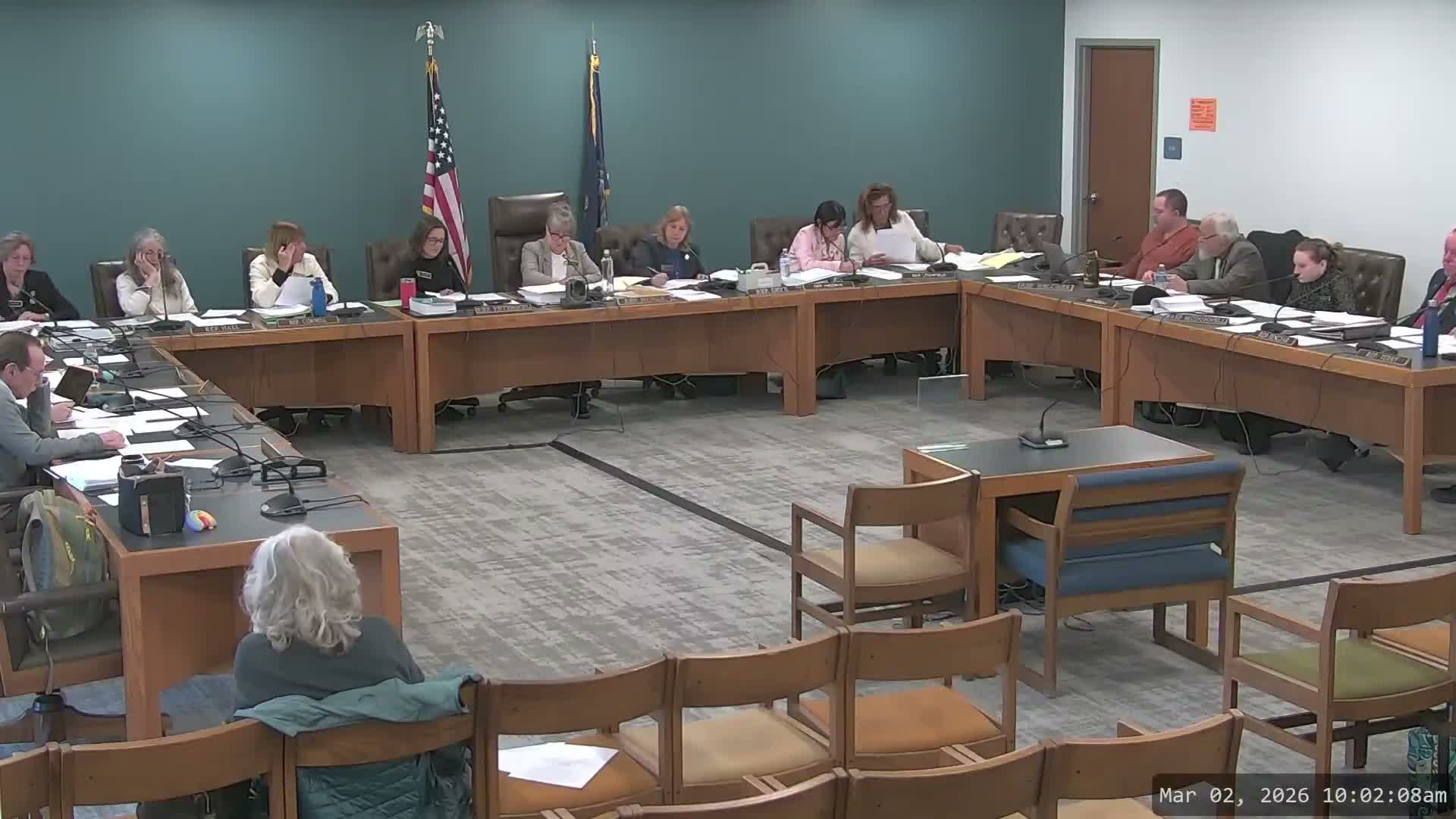
Summary
Members advanced a suite of bills on home education and Education Freedom Accounts — including repeal of the Home Education Advisory Council, protections for home‑educated families, and expanded access for EFA students — while flagging concerns about funding impacts, CTE seat availability, and definitions of parental authority; multiple measures were reported or sent to interim study with split committee votes.
The House Education Committee spent the bulk of its session on an interlocking package of home‑education and Education Freedom Account (EFA) bills, passing amendments on several and sending others to interim study.
Representative Perrineau proposed an amendment to repeal the Home Education Advisory Council (HEAC), citing repeated contention in council proceedings and difficulty filling seats. "This council has had its day," Perrineau said, arguing the repeal would remove a commission that no longer functions effectively. The amendment passed on a 10–8 vote; supporters said repeal would not remove home educators' ability to engage with legislators, while opponents urged fixes instead of elimination.
The committee also debated HB 12‑68, a broader Home Education Freedom Act‑style bill that would: clarify that a home‑educated student who enrolls in an EFA program is not treated identically to RSA 193‑A home‑educated students; make notification of home‑education optional unless the parent seeks access to public‑school programs; protect families from warrantless home inspections except under probable cause or exigent circumstances; and remove 'education' as a statutory basis for a neglect finding. Sponsor testimony emphasized shifting the burden of proof away from home educators and protecting privacy; critics asked for legal clarity on inclusion of EFA students and the fiscal consequences when EFA students access public‑school classes or CTE programs.
Representative McDonald offered standalone and related bills (for example HB 18‑17) to ensure EFA and home‑educated students can access statewide assessments including the PSAT/SAT and curricular offerings; she said the PSAT difficulty cited by some home educators warranted statutory clarity. Several members warned that allowing EFA students to take district CTE classes could create capacity and funding issues, including tuition and seat apportionment concerns for receiving CTE centers.
Other bills in the package — including proposals on scholarship‑organization authority, EFA transparency and reporting (HB 15‑13), and statutory clean‑ups — were debated with mixed results: some were recommended ITL or interim study; others (including HB 13‑58 and HB 17‑74) were advanced as amended. Speakers repeatedly asked the Department of Education for technical clarifications on adequacy calculations and whether particular reporting or enforcement steps are legally permissible. Representative Belcher pressed for transparency and cautioned against codifying contract language that might constrain future procurement.
Why it matters: The bills collectively reshape the statutory landscape for home education and EFA students — from privacy and neglect protections to the parameters under which EFA participants can use district services. Debate highlighted tradeoffs among parental autonomy, district capacity, fiscal impacts, and equal access to programs such as CTE. Committee action will now move these bills to subsequent stages, where fiscal staff and legal counsel may be asked to provide further detail.
Representative quotes and key votes are embedded in the committee record; the committee used a mix of OTP/OTPA/ITL and interim‑study recommendations across the package.