Get Full Government Meeting Transcripts, Videos, & Alerts Forever!
Get email alerts on the Tax Policy topic
No spam. Unsubscribe anytime.
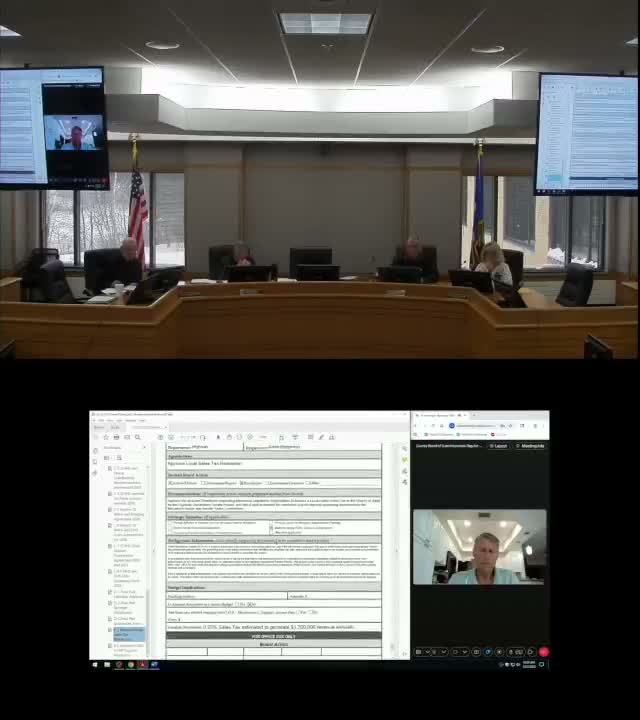
Isanti County OKs resolution seeking state authorization to ask voters for 0.25% sales tax for highway facility
Summary
The board approved a resolution requesting legislative authority to place a 0.25% local-option sales tax on the ballot to fund a proposed new highway department facility (project estimate ~$23 million); staff said the tax would raise about $1.7 million annually and must be authorized by the Legislature before a voter question is offered.
The Isanti County Board voted Dec. 2 to forward a resolution to the Minnesota House and Senate tax committees asking for special‑law authority to seek voter approval of a 0.25% local‑option sales tax dedicated to a new highway department facility.
Justin (presenting staff) said the county’s existing highway facility, originally constructed in 1949, is functionally and physically inadequate and that a dedicated local sales tax would spread costs among users of the county’s regional roadway network, including nonresidents who shop or commute through the county. He said the board’s current project estimate is roughly $23 million, including financing and related costs, and staff estimate the tax would raise about $1.7 million annually based on current taxable sales.
“This project is the county’s only proposed capital improvement under Minnesota statute 2102.97a,” the staff presentation said, and the resolution directs staff to submit supporting documentation to the House and Senate tax committees by Jan. 31, 2026. If the Legislature enacts special‑law authorization, the county would place a ballot question before voters (the board said it would seek to do so at the 2026 general election) and adopt the tax only if voters approve.
The board approved forwarding the resolution; one commissioner voted no and asked for additional research on the sales-tax proposal before committing to the approach.
Next steps: staff will submit the resolution and supporting materials to the legislative tax committees and continue predesign and cost-estimating work to refine the project scope and revenue projections.