Get Full Government Meeting Transcripts, Videos, & Alerts Forever!
Get email alerts on the Medical Licensure topic
No spam. Unsubscribe anytime.
Committee advances bill to create supervised provisional license pathway for internationally trained physicians
Summary
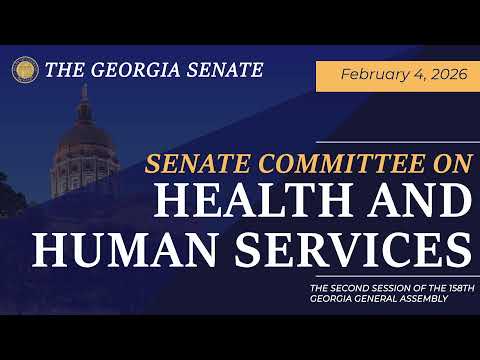
The Senate Health and Human Services committee passed a substitute to S.B. 427 to allow internationally trained physicians to hold limited provisional licenses while working under supervision in rural counties, licensed hospitals or accredited medical schools; supporters said the pathway helps address physician shortages, while members raised questions about scope, oversight and immigration status.
The Senate Health and Human Services committee advanced a substitute to S.B. 427 after an extended presentation, several rounds of questioning and supportive testimony from the medical board and advocacy groups.
The bill creates a limited provisional license for internationally trained physicians (ITPs) who meet defined eligibility criteria: a current active foreign license not expired more than three years, recognized medical-school credentials (or IAMRA-equivalent recognition), a minimum period of postgraduate practice or residency, demonstrated English proficiency, and legal authorization to work in the United States. Under the substitute, provisional licensees may practice only under the supervision of a designated supervising physician in a rural county, at a licensed hospital, or at an accredited medical school; a medical director would oversee the program and the composite board would quantify participants.
The sponsor said the licensure route is designed to "give more pathways" and reduce red tape while preserving patient safety through supervised practice and board oversight. The bill requires four years of supervised practice before provisional licensees are eligible to apply for full Georgia licensure and then an additional two years of practice in an underserved area as defined by board rules, producing up to approximately six years of oversight in the pathway as described in testimony.
Committee members pressed on several points. Some asked how the bill prevents U.S. citizens from "gaming the system" by attending a foreign medical school and returning; the sponsor said applicants still must meet the board’s competency and documentation requirements. Senators also asked why the pilot is limited initially to rural counties and hospital or medical-school settings; the sponsor said the focus reflects where the committee identified the greatest need and that full-license holders can later practice in federally qualified health centers (FQHCs) and other settings.
Kimberly, deputy executive director of the Georgia Composite Medical Board, told the committee the board vetted the bill and supported an approach that requires a supervising physician because many FQHCs are not staffed by physicians and may not be able to provide the on-site supervision the bill requires during the provisional period. Jason, executive director for the medical board, said other states have tried similar laws but that many lacked a medical director or sufficient oversight; the bill was modeled in part on a recent North Carolina law but adds a medical director role intended to reduce the risk of exploitative ‘‘factory’’ models, he said.
Supporters from outside groups urged passage. Stephanie Zanker, strategic director for the Libre Initiative in Georgia, said immigrant physicians already in the state can improve access in Latino and other underserved communities and bring language and cultural competence that helps patients get preventive care. "These doctors bring critical language skills and cultural understanding to underserved Latino communities and other minority communities, which improves trust, communication, and health outcomes," Zanker testified. Chris Denson of the Georgia Public Policy Foundation also supported the bill, noting versions of the concept exist in some 18 states.
After questions and testimony, Senator Huff Sattler moved to adopt the substitute to S.B. 427; Senator Seltzer seconded. The chair announced the committee’s vote in favor and indicated it appeared unanimous; the transcript does not include a roll-call tally. The committee adjourned after the vote.
The committee’s action advances the bill for further consideration; the transcript does not record subsequent procedural steps or an exact vote count.