Get Full Government Meeting Transcripts, Videos, & Alerts Forever!
Get email alerts on the Governance And Public Comment topic
No spam. Unsubscribe anytime.
Residents raise emergency‑addressing concerns and commissioners debate $400 facilities fee as audit review continues
Summary
During public comment a resident said an addressing error could delay emergency response; the board discussed a proposed $400 flat rate for county facility rentals, fee‑waiver authority and transparency, and the county attorney summarized CRA audit findings and requested a March 10 special meeting to approve an engineer for grant work.
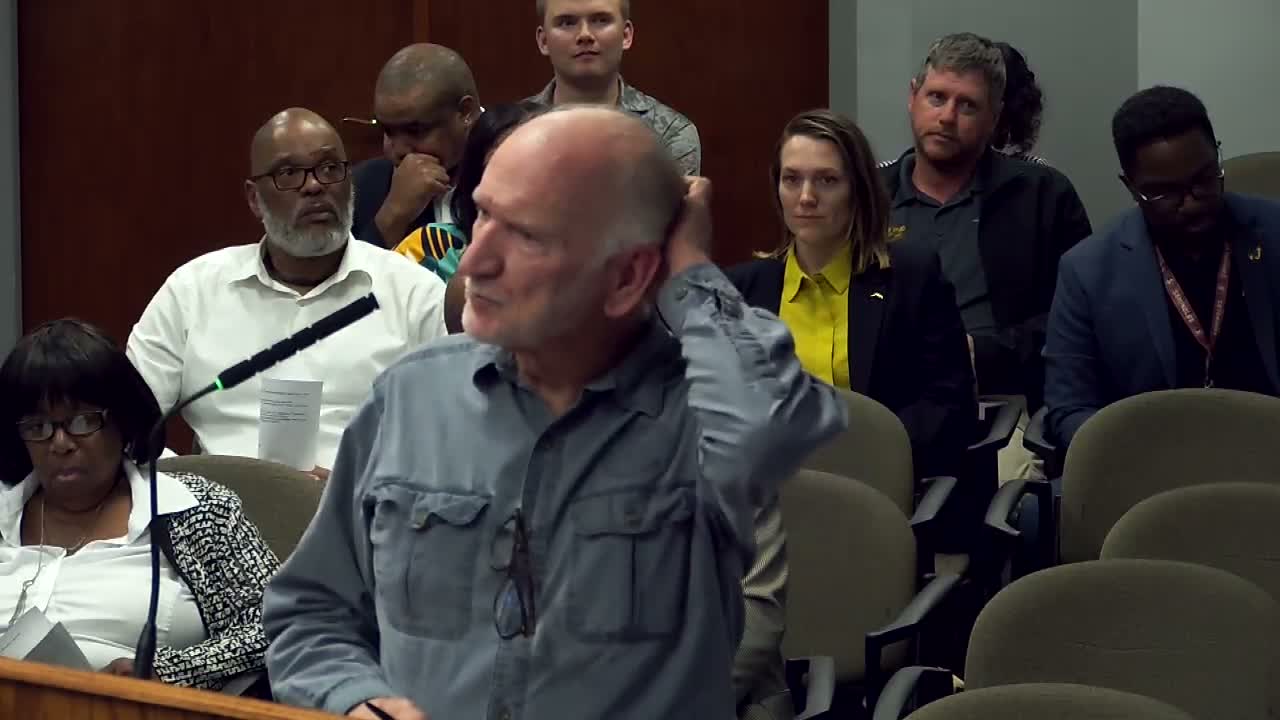
A Gadsden County resident told the board he has experienced years of address‑assignment errors that he fears could delay emergency response. Alan Dust, of 477 Scotland Road in Havana, said Enhanced 9‑1‑1 conversion to geospatial addressing placed his parcel out of numeric sequence and that repeated calls and certified letters to county staff yielded no responsive follow‑up. A sheriff's representative and county staff offered to take his contact information and help correct the addressing sequence.
The board also debated a proposed facilities‑rental policy that the interim administrator recommended setting at $400 as a flat rate for county facility rentals. The interim administrator said the $400 figure was used previously and recommended it be restored; the policy would allow the administrator to waive fees for certain nonprofit groups (for example, NAACP and veterans organizations) but would require the administrator to notify the board at the next meeting if a waiver is granted. Commissioners raised concerns about discretion and fairness, questioned whether fee waivers should be pre‑approved or reported, and noted security and insurance requirements for larger events (the administrator said events with more than 75 people would require security and, for some events, event insurance naming the county as additional insured). Some commissioners argued for exemptions for small fundraising groups; others urged a firm, transparent policy to avoid inconsistent treatment.
Separately, the county attorney updated the board on a city CRA audit related to TIF funding, saying auditors’ findings “appear to be correct” in a broad sense but that staff and the clerk’s office must perform fiscal‑year analysis to determine carryover allocations and any dollar amounts. The attorney requested a special meeting on March 10 to approve an engineer of record for FDOT grant applications; the FDOT application deadline is March 16 and the next regular meeting is March 17, so staff said the interim meeting is needed to meet grant requirements.
Why it matters: Addressing errors can affect emergency response and resident safety; the facilities fee policy determines how public buildings are made available to nonprofits and how county costs are recovered; the CRA audit may require financial reconciliation and could affect TIF allocations.
What’s next: Staff and the sheriff’s office will follow up with Alan Dust to resolve his address issue; the board asked staff to return with a detailed facilities policy and budget implications (agenda item expected March 17); the attorney will convene a special meeting on March 10 to approve an engineer so FDOT grant submissions can meet the March 16 deadline.