Get Full Government Meeting Transcripts, Videos, & Alerts Forever!
Get email alerts on the Infrastructure topic
No spam. Unsubscribe anytime.
Commission discusses drainage study scope, sewer-camera charges and building-inspection thresholds
Summary
At a Feb. 23 workshop commissioners pressed staff on the scope of a drainage engineering contract, asked for cost breakdowns on video camera inspections and mobilization fees, and were told the 40-year building inspection threshold has been reduced to 30 years; staff will provide memos and invoices for clarification.
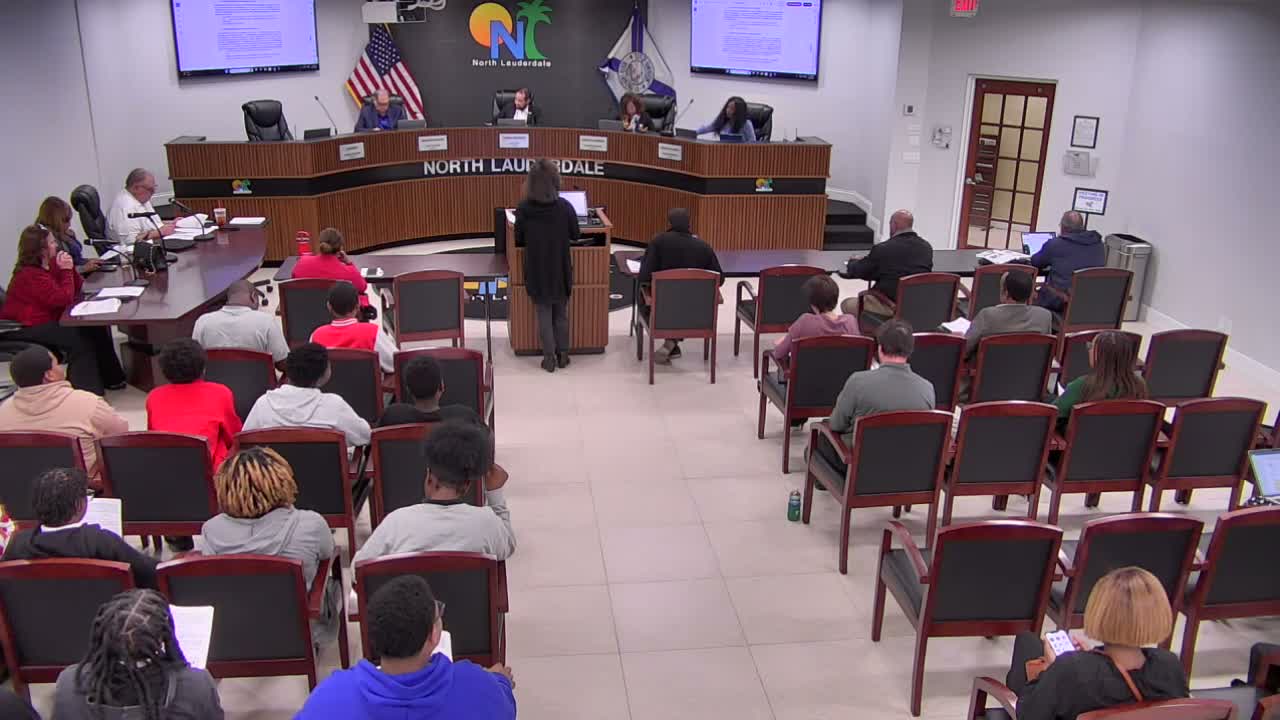
City of North Lauderdale commissioners used a Feb. 23 workshop to seek details on an engineering scope to address localized drainage and flooding and to get clarity on related inspection and contractor charges.
Commissioners emphasized that raising road grades alone is not an adequate solution and asked staff and the prospective consultant to consider adjacent properties and lateral contributors to runoff so work does not push water onto neighbors. Staff said the selected consultant’s scope will include a preliminary report, a 30% design-level evaluation, field survey work and hydraulic modeling to quantify runoff and identify whether treatment is needed on- or off-site.
Separately, commissioners questioned whether video-camera inspections were being billed to the city or by contractors. Staff reported a common camera-inspection charge in the packet of $2,500 for a single inspection and indicated there are separate permitting and line-replacement costs that will be itemized. The transcript included an additional, larger camera-inspection figure ($282,500) as discussed during the meeting; staff agreed to return with exact invoice breakdowns and mobilization definitions so the commission can reconcile charges.
On building safety, staff told the commission that state rules changed after the Surfside collapse and the inspection threshold was reduced from 40 years to 30 years; staff committed to provide the current list of buildings that meet the new inspection requirement and to attach the county-supplied list as backup.
What comes next: staff will prepare a memo with (1) the consultant scope and fee proposals, (2) an itemized breakdown of camera-inspection and mobilization charges with supporting invoices, and (3) the most recent building-safety list so commissioners can verify whether the subject properties are covered by the 30-year inspection requirement.