
Conroe debate sharpens after Attorney General opinion affirms four-member quorum
Get AI-powered insights, summaries, and transcripts
Subscribe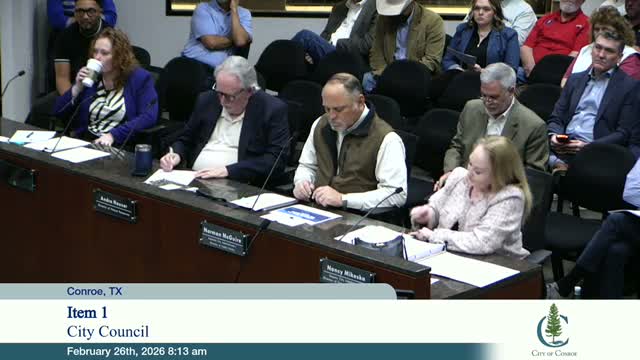
Summary
An Attorney General opinion (KP0511) affirmed Conroe’s charter requires four council members for a quorum, prompting heated public comment and a defensive exchange between city officials and candidates over transparency, procedures and who should provide legal advice to the city.
The Conroe City Council spent a large portion of its Feb. 26 meeting responding to Attorney General Opinion KP0511, which council members and staff said affirms that a quorum of Conroe’s governing body requires four members.
The council and members of the public sharply disagreed about why the opinion was sought and what it means for local practice. "The Attorney General's opinion simply restates the general framework," John Sellers, a candidate for Council Place 5, told the council during citizen comment. Sellers said the opinion "does not provide legal clearance for any specific situation" and pledged that, if elected, he would not use serial communications to build consensus outside openly posted meetings. "Transparency isn't about what you can legally get away with. It's about earning and keeping the public's trust," he said.
Councilwoman Shauna Porter, who had asked that the opinion be placed on the agenda, said the AG’s response "confirmed our charter" and that the city’s voters previously rejected proposed charter changes that would have altered quorum rules. Porter urged the city to post the opinion on the city website so residents could read it for themselves.
Mayor Pro Tem Wood and other council members characterized the AG opinion as a legal restatement, not an investigator’s factual finding. "He did not investigate any events," Mayor Pro Tem Wood said, stressing the opinion’s limits. Mayor and other council members outlined the procedural history—letters to the county attorney, referrals to the AG, and prior council votes—and at times pushed back at criticisms that earlier actions were improper.
The exchange touched on related governance issues raised by public commenters, including whether the city intends to post a vacancy for the city attorney or temporarily assign legal duties to an acting administrator; several speakers warned against concentrating legal and executive authority in a single unelected official during an election cycle.
No formal policy change or vote on the AG opinion occurred at the meeting. Council members and staff said the conversation was intended to clarify the legal posture moving forward; the mayor then moved the agenda on to other business.
Why it matters: The AG opinion and the council’s discussion affect how the council interprets its charter and conduct public business. The topic also surfaced in the campaign season: several candidates who spoke at the meeting framed their platforms around transparency and open-government commitments.
Next steps: The council finished the meeting and continued through a full agenda of presentations and routine votes; the coming city election and planned agenda items will determine whether the issue returns for further formal action.