Get Full Government Meeting Transcripts, Videos, & Alerts Forever!
Get email alerts on the Tourism topic
No spam. Unsubscribe anytime.
Oro Valley OKs cycling IGA with Marana and reviews 100‑page leisure travel plan with 20 recommendations
Summary
Council approved a five‑year intergovernmental agreement with Marana focused on cycling initiatives and then held a study session on a draft Oro Valley leisure travel management plan that contains 20 recommendations and five long‑term 'big ideas' (performing arts venue, indoor rec center, Tohono Chul expansion, Steampunk Ranch market hall and a resident design festival). Council asked staff for clearer ROI, budget boundaries and TAC involvement.
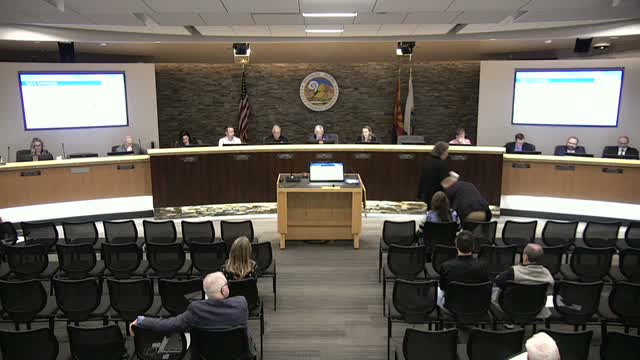
The Oro Valley Town Council unanimously approved Resolution R26‑06, authorizing an intergovernmental agreement (IGA) with the town of Marana to advance coordinated cycling initiatives for tourism, and then spent more than two hours in a study session reviewing a draft 100‑plus page leisure travel management plan.
Community and Economic Development Director Paul Melcher said the cycling IGA is intentionally focused and will function as a framework under which specific initiatives can be implemented. "Our goal is to establish Oro Valley in the Marana region as a premier cycling destination," Melcher said, citing previous cooperation on events such as the Tucson Bicycle Classic and Project Echelon. Councilmember Rob moved approval of R26‑06; Councilmember Murphy seconded. Vice Mayor Barrett and other council members questioned how broadly staff could act under the IGA and whether the term or budget cap should be narrower. Staff and legal counsel said the IGA as drafted includes a five‑year term (exhibit A) and that Marana had already approved the same IGA the previous night; counsel explained that unilateral changes to the contract term would require Marana’s agreement.
During the study session, consultant Richard Cutting Miller (CSL) presented a yearlong body of research and stakeholder engagement that produced 20 recommendations organized into five categories and five strategic "big ideas" intended to differentiate Oro Valley in the region. The recommendations emphasize resident benefit, infrastructure upgrades, marketing and governance; suggested low‑cost, near‑term items include brand and website development and a resident‑focused events calendar, while big ideas include an amphitheater or performing arts venue, a new indoor recreation center, expansion of Tohono Chul, a Steampunk Ranch market hall and an annual resident design festival.
Staff said the plan uses Placer.ai visitation estimates (roughly 1.8 million annual visits defined as nonresidents who spend more than 30 minutes in town) and set a conservative five‑year target of 5% visitation growth. Melcher explained an economic‑impact illustration that a 5% increase (about 73,000 additional visitors) at a conservative $100 per‑day spend yields roughly $7.4 million in annual visitor spending. Several council members cautioned that the visit definition is broad and asked staff to provide a future report isolating overnight stays and longer stays that drive higher spending.
Vice Mayor Barrett and Councilmember Murphy urged clearer ROI, shorter IGA terms or budget caps for staff‑level authority, and closer work with the Tourism Advisory Commission (TAC) to prioritize recommendations. Council members also discussed bed‑tax funding and staffing needs. Staff responded that many recommendations are intended to be implemented incrementally, that some items already are underway, and that the plan can be revised and returned to council after incorporating council comments and TAC input.
Council took two formal actions that evening: approval of Ordinance O‑26‑05 and adoption of Resolution R26‑06; the leisure travel plan was discussed in study‑session format with direction to return with any substantive revisions for council consideration.