Get Full Government Meeting Transcripts, Videos, & Alerts Forever!
Get email alerts on the Budget Finance topic
No spam. Unsubscribe anytime.
Oro Valley finance director: early fiscal‑year revenues lag budget; construction sales tax and bed tax driving shortfall
Summary
In an unaudited first‑quarter update presented Nov. 19, Oro Valley’s finance director reported general fund revenues trailing budget by roughly $2.5 million at this stage, driven mainly by lower local sales taxes, and fielded council questions about bed taxes, a delinquent payer and construction tax assumptions.
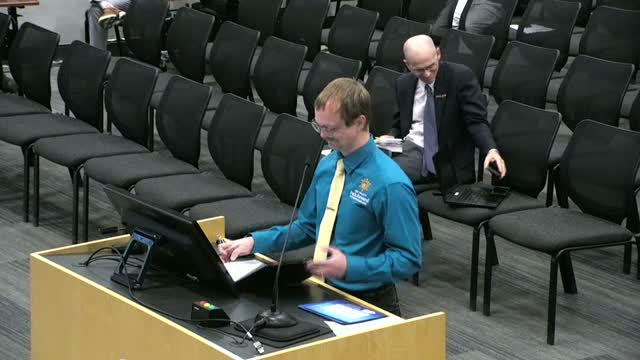
Chief Financial Officer Gebhardt presented the town’s unaudited quarterly financial report for fiscal year 2025‑26 (through September 2025), warning that early revenues are below expectations and explaining the primary drivers.
Gebhardt said the report is unaudited and subject to change: “The information being presented this evening is unaudited and subject to change,” he told council. He said total general fund revenues were lower than last fiscal year by about $535,000 and that the town was at roughly 21% of budget through the first quarter, producing a budget shortfall of about $2.5 million at this point in the year. The finance director cited weaker local sales‑tax collections — notably construction sales tax — and increased transfers out and personnel costs as the main contributors to the variance.
Gebhardt gave several line‑item details: he said construction sales tax performed about $650,000 worse than the prior year for that category and that the town now forecasts a $1.46 million shortfall on that line at year end. Some categories (federal and state grants, development fees and certain contracted operating revenues such as golf) outperformed prior‑year results and are projected to exceed budgeted amounts.
Council members probed the bed‑tax decline and a referenced payer that has fallen behind on remittance. Gebhardt said he was legally precluded from elaborating on a specific delinquent payer: “I cannot elaborate, on that,” he told the council, “Just precluded from doing so by Arizona law.” Councilmembers also pressed for clarity on the assumptions underpinning construction‑tax projections and whether the town could identify the specific projects tied to those expectations; Gebhardt said the budget was built on anticipated marketplace development that has materialized more slowly or at reduced scope.
On procedural items, Gebhardt said staff expects to reallocate early‑year half‑cent sales‑tax receipts from the community center fund to the general fund after the council takes a formal action (and subject to the effective‑date timing required by state law). He also offered to return with more detailed answers about impact‑fee offsets and the mechanics and timing of sales‑tax remittance by payers.
Councilmembers asked for a clearer percent‑of‑year indicator in future reports to make quarter‑to‑budget comparisons easier. Gebhardt concluded by noting that, despite early revenue shortfalls, several funds (notably the community center and water utility) showed strong or improved performance in specific lines such as development fees and water sales.