Get Full Government Meeting Transcripts, Videos, & Alerts Forever!
Get email alerts on the Solid Waste topic
No spam. Unsubscribe anytime.
Residents and a county employee press Lee County commissioners on waste monopoly, records delays
Summary
At the Feb. 25 Lee County Commission meeting, public commenters alleged a county solid-waste monopoly harms residents, cited Alabama Code §6-5-182 and pressed for overdue records and enforcement; commissioners did not take formal action on the complaints during the meeting.
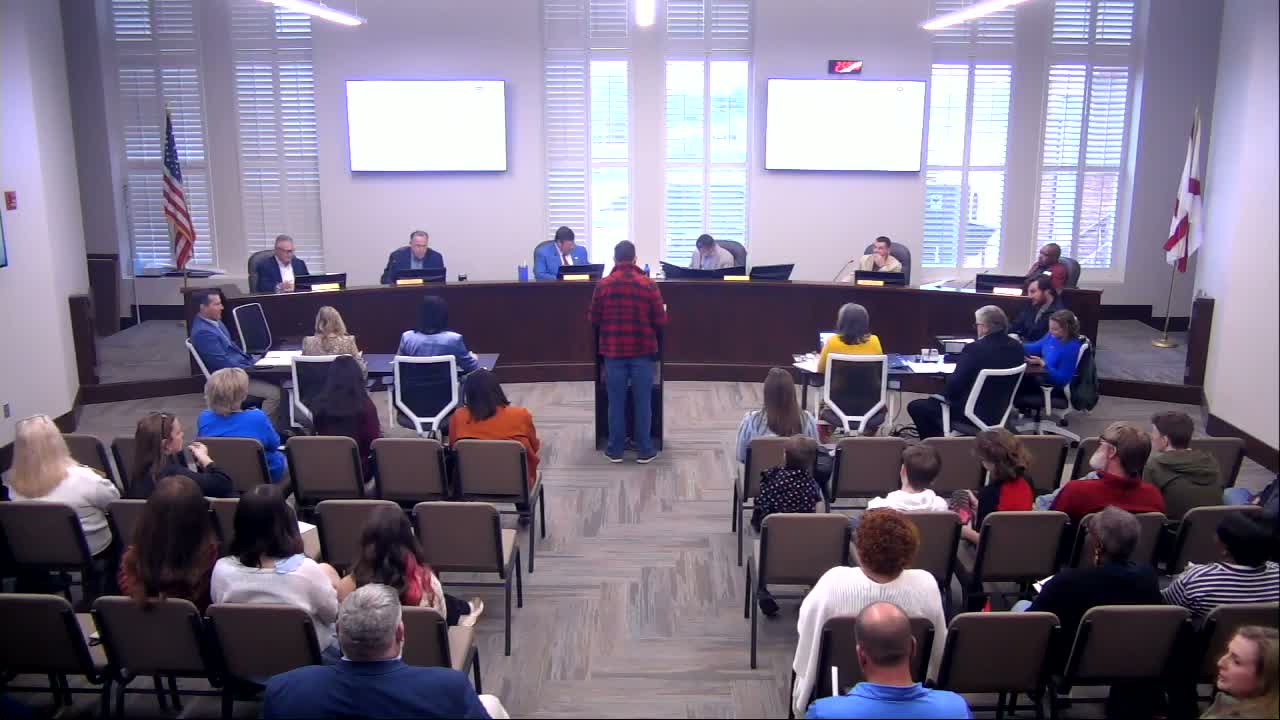
At a Feb. 25 Lee County Commission meeting, public commenters accused a county solid-waste contract of creating a monopoly that harms residents and property owners and said county communications improperly use the word “delinquent.” Lance Farrar, introduced by the chair as the first public speaker, urged the commission to meet with county administrators and to address what he described as continuing violations tied to billing language in the meeting packet.
Farrar said he has outstanding records requests submitted Oct. 27 and Nov. 24, 2025, and asked for a huddle involving county leaders to resolve them. He told commissioners he will provide a line-by-line list of steps to fix the problem and said he could email his materials to media after the meeting.
John Softglaze, a separate public commenter, said the current waste arrangement once had competition and now behaves like a monopolist. “We’ve paid 8 and a half plus million to our monopolist,” Softglaze said, and he urged the county to document vendor access and prosecute wrongful dumping where it occurs. He also asked the commission to avoid sudden meeting-date changes that inconvenience constituents.
A Lee County employee, Harold Watley, spoke about internal leadership and staff conditions, urging commissioners to listen to employees’ proposals and to prioritize safety and fair working hours.
Why it matters: Public criticism of procurement and contract management can prompt reviews of bidding, billing and enforcement practices that affect county budgets and resident costs. Claimants at the meeting named a specific statutory reference and alleged both procedural and enforcement lapses.
At the meeting the commissioners did not adopt a motion to open a formal investigation or change county contracting; they proceeded with the published agenda items. Farrar’s requests for meetings or records updates were recorded in public comment but not resolved on the floor that night.
The complaints raised a mix of legal and administrative questions — including Farrar’s citation to Alabama Code §6-5-182 — that county staff or counsel would need to address in follow-up work if the commission directs it.
The commission moved on to other business, including routine approvals and presentations. No vote was taken on the solid-waste complaints during the session.