Get Full Government Meeting Transcripts, Videos, & Alerts Forever!
Get email alerts on the Municipal Budget topic
No spam. Unsubscribe anytime.
City manager warns Mount Clemens faces up to $400,000 revenue shortfall after personal property tax repeal
Summary
City manager told commissioners the state’s repeal of the personal property tax could cost Mount Clemens roughly $400,000–$430,000 annually, with limited state replacement options; staff also reported on IT planning and fire-department staffing changes.
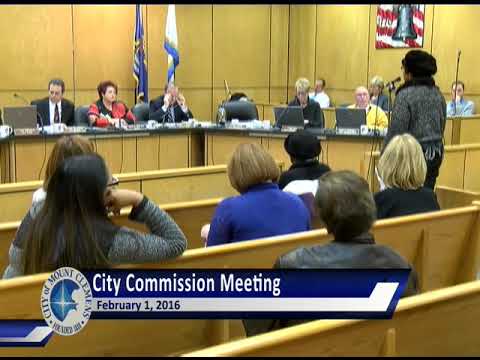
At the Feb. 1 meeting the city manager told commissioners that the state repeal of the personal property tax poses a “major concern” for Mount Clemens’ upcoming 2017 budget and could reduce revenue by as much as approximately $430,000.
The manager said an initial state plan discussed with the local representative envisioned an 80 percent makeup, which would have yielded about $344,000 in recovery. But staff explained that the only revenue source currently promised is an ‘‘essential services assessment’’ — a statewide millage on eligible personal property — that would likely produce a much smaller local allocation; using illustrative midrange numbers, staff said such a mechanism could yield around $27,000 after administrative fees.
"Since no other revenue sources have been identified by the state, we're basically looking at a funding loss of 400 plus thousand dollars per year," the manager said, noting this will be a significant issue in the FY2017 budget process. The city manager asked commissioners to factor the potential shortfall into upcoming budget planning and to expect follow-up reports.
The manager also briefed commissioners on IT planning (evaluating partners and bandwidth options), an oral-board process and promotions in the fire department after a captain’s retirement, and possible personnel impacts tied to the potential separation of the Mount Clemens Housing Commission. Temporary staff were added to the human-resources function to manage short-term needs while longer-range HR staffing plans are developed.
Commissioners asked questions and were directed to await further detail in budget work sessions and subsequent reports.