
California Transportation Commission trains cities and counties on RMRA/Local Streets & Roads expenditure reporting
Get AI-powered insights, summaries, and transcripts
Subscribe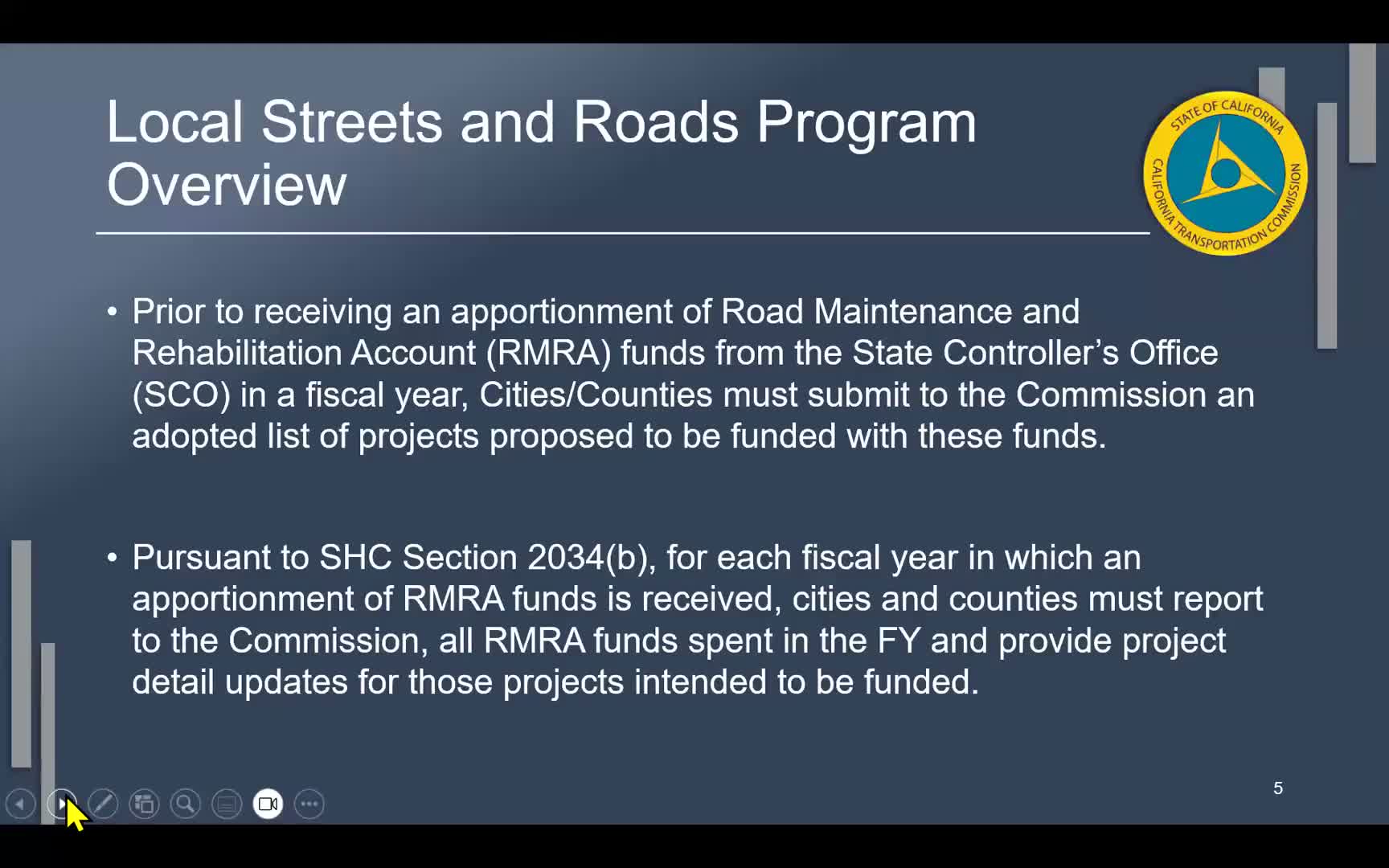
Summary
The California Transportation Commission held a Cal Smart technical training guiding cities and counties through annual RMRA (local streets and roads) expenditure reporting, deadlines, what counts as reportable spending, and where to find apportionments and estimates.
The California Transportation Commission on a live training demo walked local government staff through the annual Road Maintenance and Rehabilitation Account (RMRA) expenditure reporting process in the Cal Smart system, emphasizing statutory deadlines, what to report and how to avoid common tally errors. Alicia Socorra, program manager for the local streets and roads funding program, led the session and said the reporting window is open early this year to allow hands‑on assistance and demonstrations.
Socorra said jurisdictions must report funds spent ‘‘in the reporting fiscal year’’ (defined by the program as July 1 to June 30) and explained that invoices paid after the fiscal year may still be counted for the prior year if the work was performed within that reporting period. ‘‘If there’s invoiceable work that occurred throughout the reporting year, but you don’t pay that invoice until September or August … you’re still counting that as RMRA funds spent in that fiscal year,’’ she said.
The training flagged two widely‑mistaken items: apportionment timing and interest. Socorra noted apportionments are disbursed by the State Controller’s Office and the Commission ‘‘does not have control over the amounts’’ or timing; payments tied to July 1 often arrive in September. She advised participants to split reported receipts between amounts received from September through June and amounts received in July and August so CTC staff can reconcile totals against State Controller apportionments.
Socorra also demonstrated how to export prior project lists (examples: 23/24) and the current proposed list (24/25) from Cal Smart and urged jurisdictions to use those exports to populate the expenditure report. She walked through project status definitions — Completed, In progress, Carriedover, Forecasted and No longer RMRA funded — and instructed jurisdictions to report projects accurately and provide an explanatory activity summary when projects are removed from RMRA reporting.
The presenter walked attendees step‑by‑step through Cal Smart data entry, including entering original estimates, apportionments, interest attributable to carryover funds, and project component dollars. Using sample numbers in the demo, she showed how small data-entry mistakes (wrong component, mis‑linked projects or inconsistent rounding) can leave the intake page totals mismatched from the detailed project totals and how to correct them before submitting. Socorra advised that if a jurisdiction cannot reconcile totals by the deadline it may submit to meet the filing requirement and request the Commission return the report for corrections; CTC can then work with the jurisdiction during the subsequent 6–8 week edit window.
Socorra highlighted a new Cal Smart field to indicate projects eligible for emergency repair reimbursement and warned jurisdictions to be conservative when claiming RMRA amounts for projects expected to be substantially reimbursed by federal or state disaster funds. She closed by directing attendees to resources including the State Controller’s Office apportionment pages and the California Local Government Almanac for original RMRA estimates, and said one of the session recordings and the handouts will be posted.
The training targeted public works and finance staff in cities and counties and underlined the program’s compliance goal: 100% reporting to ensure transparency in use of RMRA funds.