
LA84 and Play Equity Fund urge sustained youth investment, highlight AB 749
Get AI-powered insights, summaries, and transcripts
Sign Up Free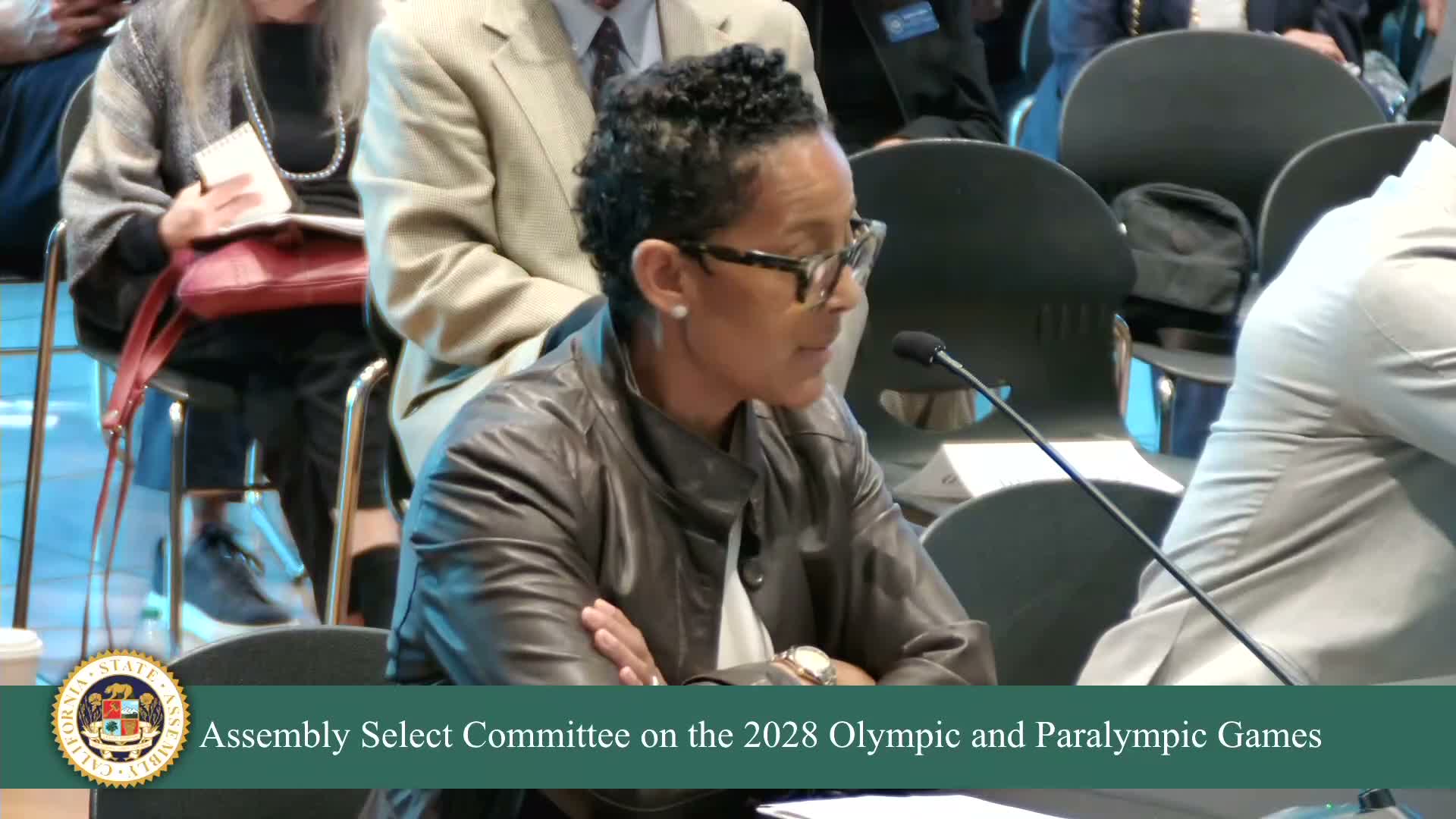
Summary
LA84 leaders and community partners told the committee that the 1984 surplus has funded decades of youth programs; they urged policies and funding (including AB 749) to translate LA28 activity into long-term access for underserved youth.
Leaders from the LA84 Foundation and community partners outlined how the 1984 Games' surplus was converted into an endowment that has funded youth sports, coaching and community programs across Southern California for more than four decades.
Renita Simrill described the Foundation's strategy of investing the surplus to create a "gift that keeps on giving," funding programs that have reached millions of young people and supporting a research library and learning agenda to measure what works. "We invest in access," Simrill said, listing transportation, cost and inclusive programming as barriers the foundation tries to reduce.
Community leaders and program directors presented outcomes. Renato Paiva, who runs Access Youth Academy, said his program has a 100% graduation rate and noted that Olympic inclusion of sports such as squash can expand school partnerships and fundraising. Derek Fisher, a coach and longtime youth-sports advocate, urged passage and implementation of AB 749 (Youth Sports for All Act), which would establish a blue-ribbon commission to recommend a statewide entity to coordinate youth-sports access and accountability; Fisher said the commission's recommendations are due in 2028.
Community commenters gave testimony about the personal impact of LA84-funded programs in neighborhoods such as Pico Union. The committee asked LA84 for zip-code data on program reach and encouraged additional outreach to ensure programs include communities directly affected by 2028 venues and economic activity.
The hearing emphasized making legacy investments equitable and durable: funders, non-profit intermediaries and public agencies should plan for capacity building, local procurement inclusion and measurable outcomes so that benefits persist after the ceremonies.