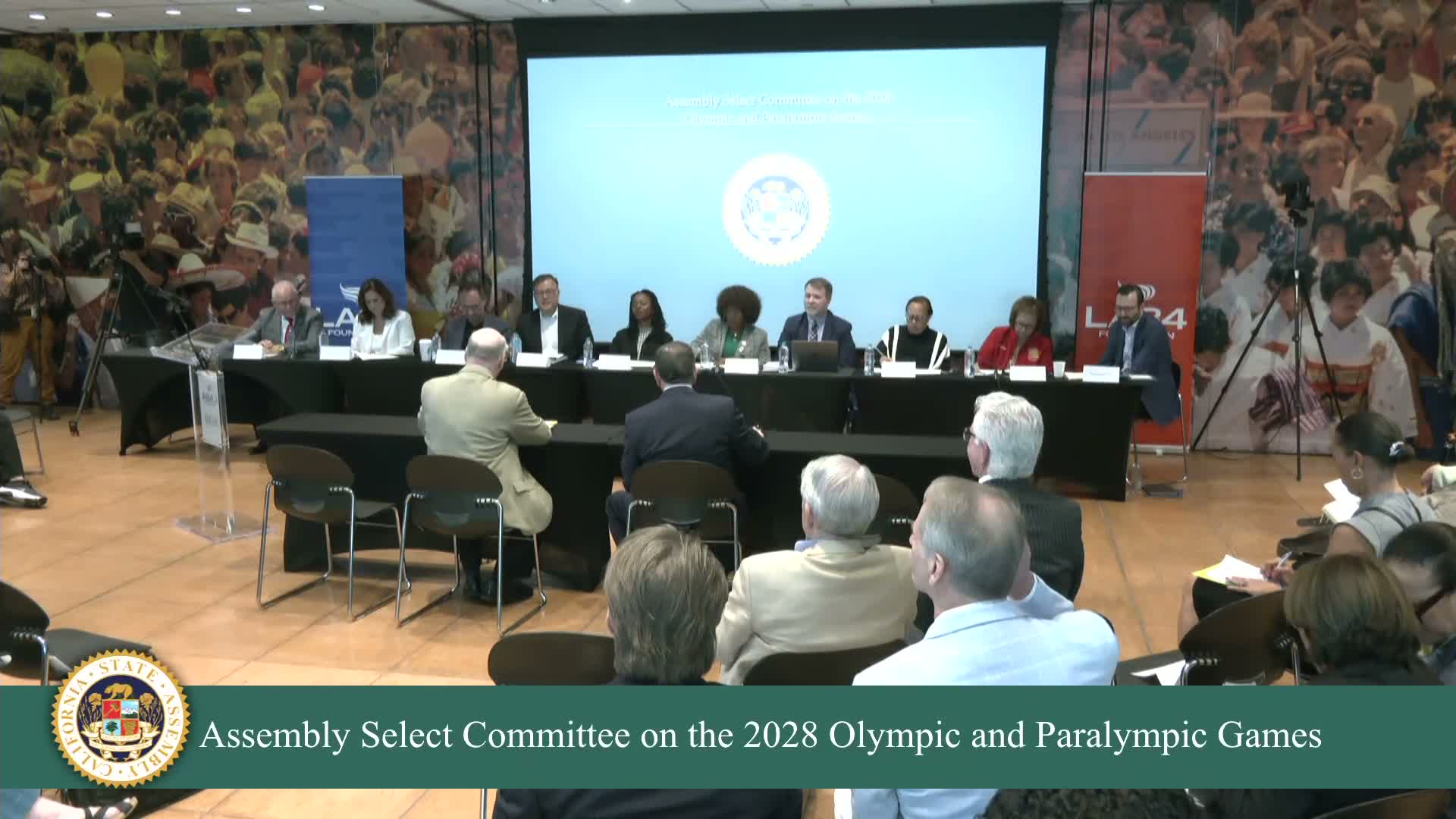
Assembly select committee reviews 1984 Olympic legacy as California prepares for LA28
Loading...
Summary
Legislators and legacy leaders told the Assembly Select Committee that the 1984 Los Angeles Games’ private-financing model, volunteer program and targeted legacy investments helped create long-lasting youth programs; they urged oversight and equitable procurement for LA28.
Assemblymember Tina McKenner convened the first hearing of the Assembly Select Committee on the 2028 Olympics and Paralympics at the LA84 Foundation auditorium, inviting panelists to reflect on the lasting legacies of the 1984 Los Angeles Games and lessons for LA28.
Speakers with direct 1984 experience and current legacy leaders described how a volunteer workforce, inexpensive local tickets and a novel sponsorship model produced an unexpected surplus that was intentionally recycled into community programs. Rich Perlman, who ran press operations in 1984, said the organizing committee relied heavily on volunteers and existing venues and used new television and corporate deals to drive revenue. "We paid a lot for it, but we didn't get any out of it financially," Perlman said, describing the emphasis on legacy rather than direct profit for local organizers.
Renita Simrill of the LA84 Foundation described how a portion of that surplus was placed in an endowment that has funded youth sports, coaching education and community programs for decades. "The Olympic Games weren't just a successful event, it was a civic decision," Simrill told the committee, stressing research, access and long-term investment through the Play Equity Fund.
Committee members pressed panelists on modern differences—California labor law, the scale of LA28, and digital-era procurement—and asked how the Legislature should monitor LA28's finances and commitments. Several panelists recommended scheduled briefings and access to financial statements so state and local officials can assess risks and verify commitments ahead of 2028.
The hearing included youth testimony and public comments. A 17-year-old student athlete from Pico Union said LA84-funded after-school sports kept her engaged and urged continued investment so that opportunities remain for low-income neighborhoods. Public commenters and documentary filmmakers offered archival materials and urged the committee to restore community arts programming associated with the Games.
The committee scheduled a follow-up hearing with LA28 staff on April 6 in Sacramento to focus on funding, procurement and the organizing committee's public commitments. McKenner closed the session urging the committee use the 1984 example—financial discipline plus intentional legacy spending—as a guide for ensuring the 2028 Games leave durable benefits for California residents.