Get Full Government Meeting Transcripts, Videos, & Alerts Forever!
Get email alerts on the Mental Health Aces topic
No spam. Unsubscribe anytime.
Arizona trauma expert tells Surprise commission ACEs drive long-term health problems, urges community-based responses
Summary
Dr. Robert Roten of the Arizona Trauma Institute briefed the Surprise Veterans, Disability and Human Services Commission on ACEs research, arguing that adverse childhood experiences and social determinants are primary drivers of chronic illness and that communities should invest in trauma-informed, relational supports.
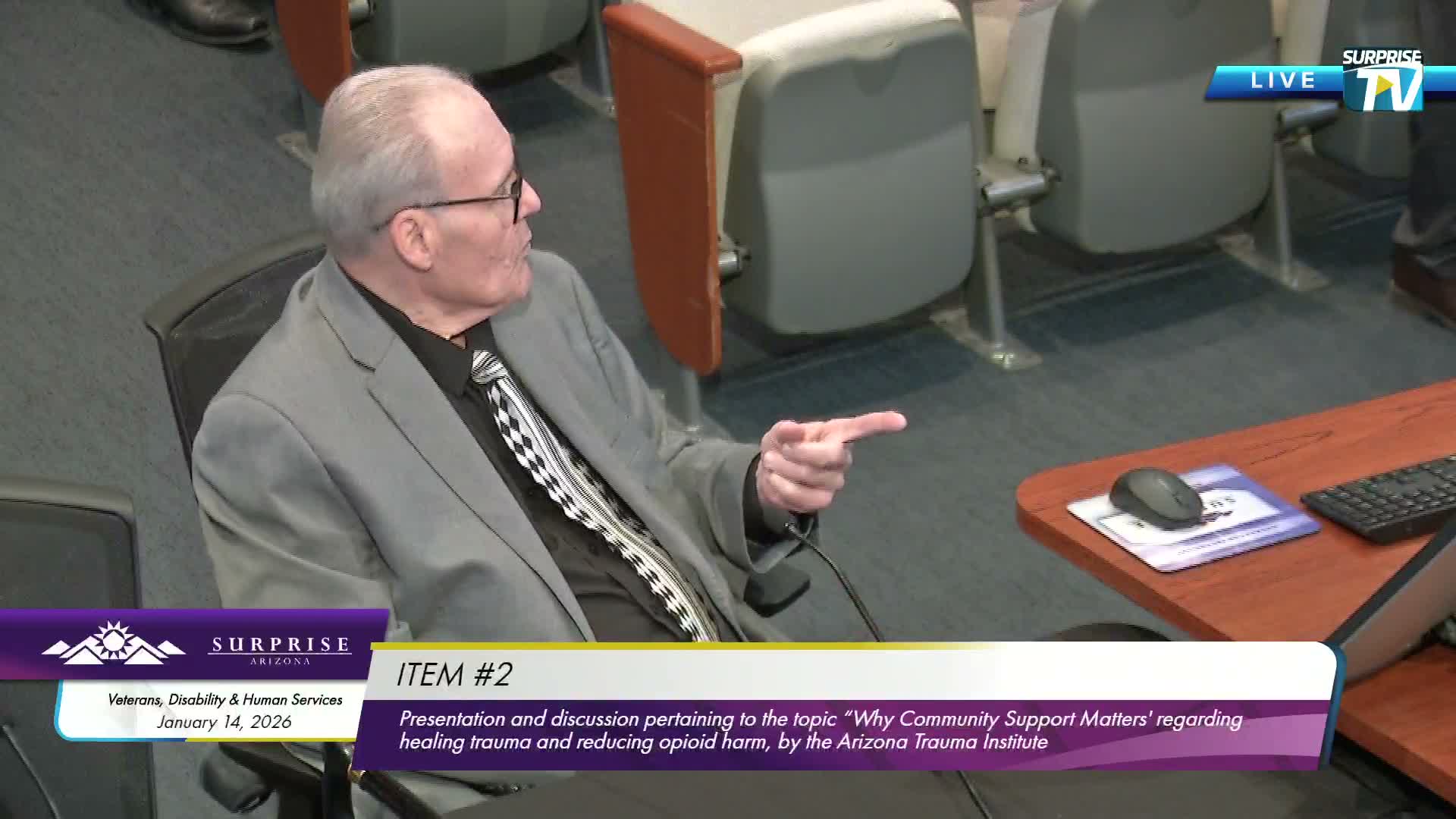
Dr. Robert Roten, founder and CEO of the Arizona Trauma Institute, told the Surprise Veterans, Disability and Human Services Commission that decades of research show adverse childhood experiences (ACEs) and social-environment stressors have large, lasting effects on health.
In a presentation and extended Q&A, Roten said large ACEs studies find that "if you had 4 of these 10, you are more likely to have long term health issues," and described links between childhood trauma and later problems such as obesity, diabetes and cardiovascular disease. He identified both abuse-related and social-environment factors and cited repeated international replications of the original ACEs results.
Roten, who identified himself as a psychologist and a fellow of the American Academy of Experts in Traumatic Stress, also explained biological pathways: chronic stress raises cortisol and noradrenaline levels, which can lower serotonin and dopamine and produce predictable behavioral and mood responses. He said many systems treat those behaviors as individual failings rather than signs of a biologically driven stress response.
Commissioners pressed for practical implications. Roten urged trauma-informed, community-centered approaches over punitive or efficiency-first models. "We need to change systems," he said, arguing schools and local services should act as resource hubs that stabilize caregiving units and increase relational supports. He noted that some international programs, including work he described in Pakistan and Singapore, have been receptive to these approaches.
The presentation included a discussion of veterans' needs. Roten said the U.S. Department of Veterans Affairs conducts related research but may not publish extensively; he warned that veterans who enter the military from high-stress communities can be at higher risk of complex trauma.
Roten closed by urging local leadership to adopt culture changes that prioritize connection before correction and to coordinate human services rather than silo them. He invited commissioners to contact him with questions by email.
The commission did not take formal action on the presentation; the session moved afterward to additional agenda items including VetFest planning.