Get Full Government Meeting Transcripts, Videos, & Alerts Forever!
Get email alerts on the Immigration Detentions topic
No spam. Unsubscribe anytime.
Residents demand action after DHS buys Sweetwater warehouse near Dysart High School
Summary
Hundreds of Surprise residents and community groups pressed the City Council to oppose and seek oversight after the Department of Homeland Security purchased a Sweetwater-area warehouse the public says ICE intends to convert into a 1,500-bed detention facility; speakers asked for transparency, impact studies and city-level limits on cooperation.
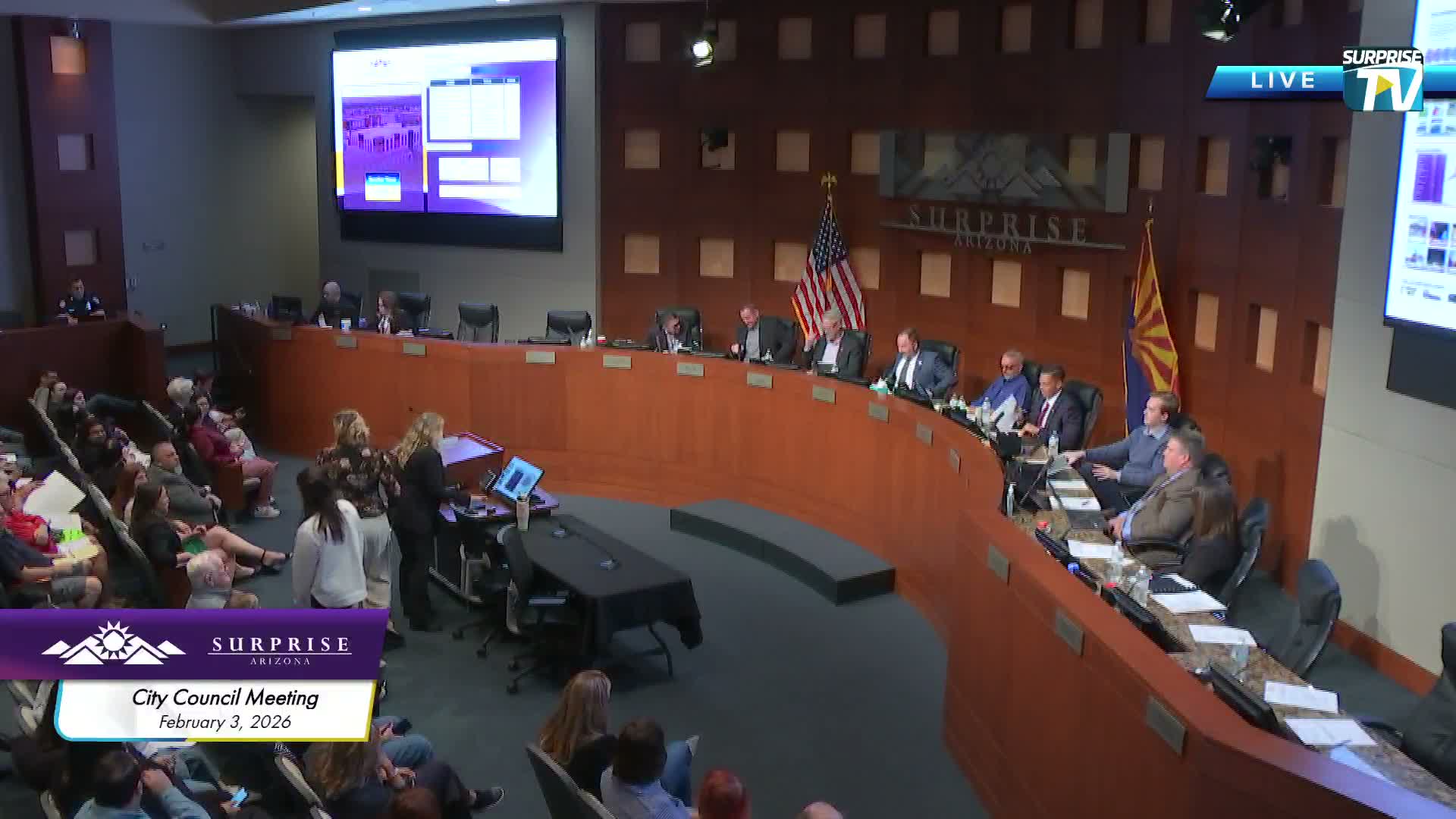
At a packed Surprise City Council meeting, residents urged the council to act after the Department of Homeland Security purchased a warehouse on Sweetwater Avenue that speakers said ICE plans to convert into a 1,500-bed detention facility.
Why it matters: Commenters said the site is close to Dysart High School and multiple elementary schools and argued the facility would strain water, sewer, emergency services and public safety resources while inflicting lasting harm on community trust and children's sense of safety.
The meeting turned largely into public comment. Mayor Kevin Sarter told the chamber the city had not been notified before the federal purchase and reminded residents that federal projects are not always subject to local zoning. "The city was not aware that the efforts were underway to purchase a building that was secured by Department of Homeland Security," he said, while urging civil discourse during the comment period.
Outside groups and many residents pressed for clearer, immediate steps the city can take. Brent Peek of Northwest Valley Indivisible said his group will continue peaceful protest and explained its nonviolence standards; he told the council, "We do not trust ICE to exercise their authority responsibly." Alexandria Moen, who identified herself as a Dysart alumna, cited press accounts and told the council, "DHS says they expect it to be up and running by April," a timeline that alarmed parents and educators in the room.
Speakers repeatedly asked the council to use all lawful tools available: demand DHS and ICE disclose operational plans, require environmental, traffic and infrastructure impact reviews, refuse to provide city contracts or subsidies for any private operators, and consider ordinances or moratoria other cities have pursued. Several commenters called on the council to pass a formal resolution opposing local use of the facility and to seek state or congressional assistance.
Multiple residents cited a sales figure of $70,000,000 for the property and said retrofitting a warehouse for long-term human custody raises questions about plumbing, air conditioning and medical care that were not addressed in the purchase. Jennifer Woods, who said she is a local small-business owner and disabled veteran, told the council the conversion "is an inhumane operation" and warned that the facility would change the character of the neighborhoods near Dysart and Sweetwater.
Council reactions and next steps: Council members acknowledged limits on local authority over federal projects but heard repeated requests to pursue transparency and to explore every municipal lever that remains available. Speakers urged the council to demand federal disclosures, require permits and impact assessments where legally applicable, and commit not to use local resources to subsidize operations. Several asked the city attorney to outline legal options and for the council to consider a public resolution stating formal opposition.
What the council can and cannot do: Mayor Sarter and staff reiterated that federal supremacy limits the city's ability to block a federal purchase, but commenters and some councilmembers discussed alternatives including withholding city partnerships, scrutinizing building permits and seeking state-level remedies or assistance from congressional offices. Commenters also suggested the city insist on advance operational plans and written assurances that municipal services would not be unduly strained.
The meeting closed without a council vote on the issue; the council adjourned after several hours of public comment. Residents said they will continue organizing, and many who spoke said they expect to return with petitions, legal proposals and coordination with other jurisdictions that have confronted similar federal purchases.