
Morrisville staff outline changes to incentive policy, recommend lower thresholds and 'peak-assessment' fix
Get AI-powered insights, summaries, and transcripts
Subscribe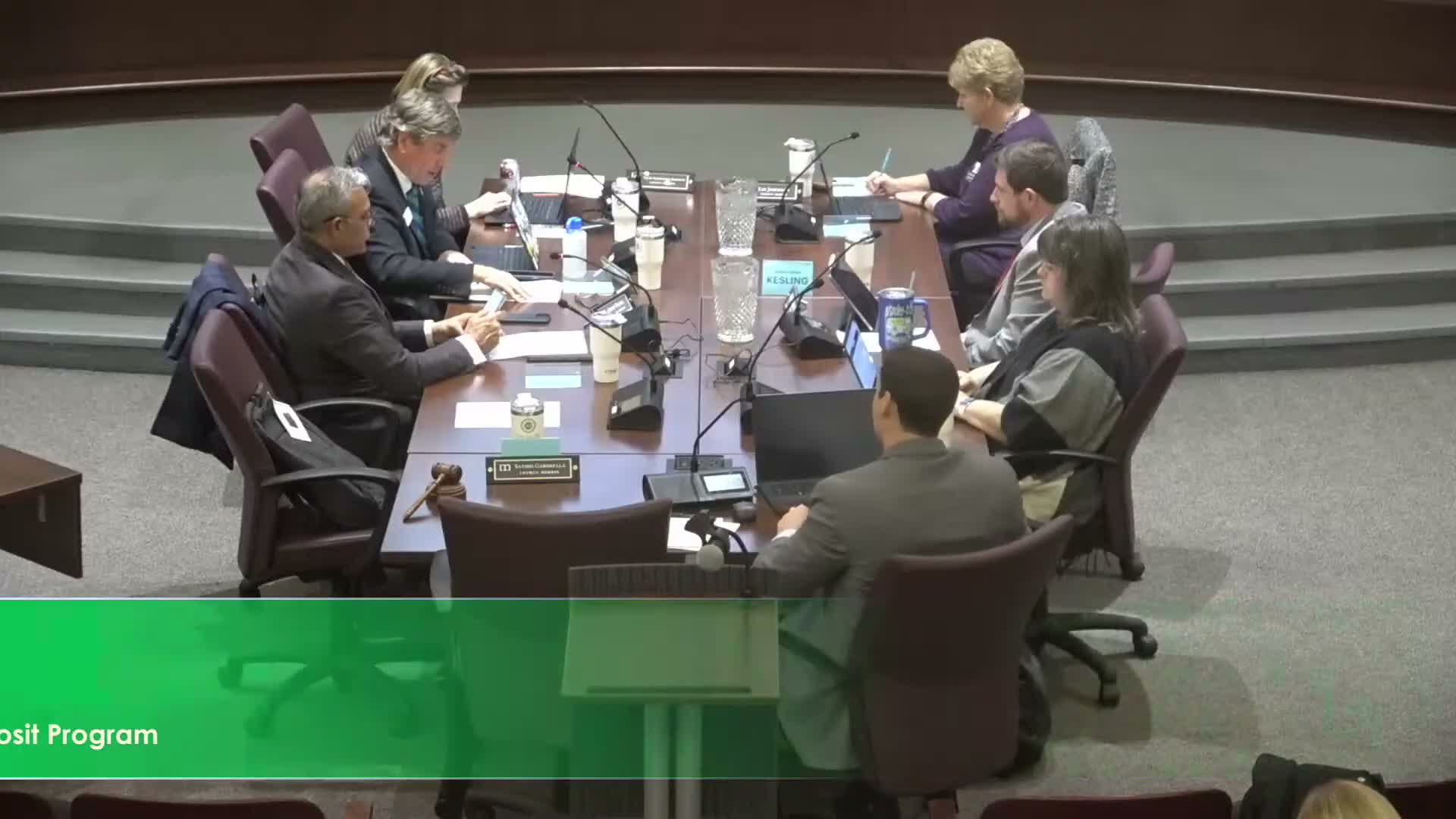
Summary
Economic development staff presented options to address a technical mismatch between capital-investment thresholds and Wake County assessed value, proposing lower entry thresholds for some project types and a 'peak-assessment' confirmation that would remove depreciation from payout eligibility while maintaining job-performance requirements.
Economic Development Director Tiffany McNeil told the Morrisville Town Council on Feb. 26 that the town's current incentive policy can create a technical barrier for some projects because annual payout eligibility is verified against Wake County assessed value, which may decline rapidly for certain capital types (notably equipment or software) as depreciation is applied.
McNeil illustrated the problem with a hypothetical $10.5 million capital investment that initially meets the town's $10 million threshold but could fall below that threshold after depreciation is reflected in assessed value, leaving a company technically ineligible to receive post-performance grant payments. "Because of the way the policy is built for a lot of projects, it's gonna be difficult to stay above because of depreciation," McNeil said.
As a remedy, staff proposed a "peak assessment" option: confirm assessed value equal to committed capital investment in the first year after the investment is complete, then base compliance on maintained job commitments rather than subsequent assessed-value depreciation. "Once that assessed value is equal to that capital investment commitment ... depreciation wouldn't be the consideration," McNeil said.
McNeil also presented a tiered alternative that shifts to a percentage of new tax growth (a model used by some peers) and recommended several threshold adjustments to improve competitiveness: lower the $10 million threshold to $5 million for new target-industry projects, change expansion thresholds to $3 million, and add a $2 million tier for office and corporate projects. Staff would maintain a 50-new-job minimum but proposed requiring an average wage of at least 110% of Wake County's average for projects receiving incentives.
Councilmembers questioned whether lower thresholds would meaningfully change competitiveness and raised equity concerns about directing public dollars to for-profit firms. Several members sought examples showing how recent local projects would fare under the proposed tiers. McNeil agreed to return with three-to-four recent project scenarios, a depreciation-impact case study for the new-tax-growth model and analysis of average job creation by industry.
Next steps: staff will prepare a single recommended draft policy framework with example scenarios and return to council for direction; they will also provide cost and payout estimates under the alternatives discussed.
Quotes and attributions in this article are drawn only from speakers who spoke on the record at the meeting. Where councilmembers spoke without a full name recorded in the transcript, the article uses role labels.