Get Full Government Meeting Transcripts, Videos, & Alerts Forever!
Get email alerts on the Housing Affordability topic
No spam. Unsubscribe anytime.
Morrisville staff recommend 60% AMI for rental-assistance pilot, 80% for security deposits
Summary
Staff proposed a pilot rental-assistance program using small-area fair market rent for Morrisville and recommended limiting rental-assistance eligibility to households at or below 60% AMI and security-deposit help at or below 80% AMI, with a three-month post-launch review.
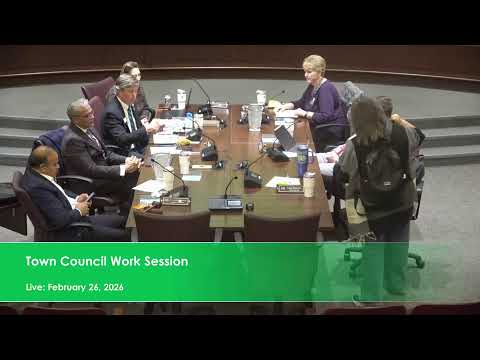
Morrisville officials on Feb. 26 reviewed details of a planned rental-assistance and security-deposit pilot that staff will administer with NeighborUp, and recommended starting eligibility at 60% of area median income for rental assistance and 80% for security deposits.
Planner II Josh Mekel, who presented follow-up information from a Jan. 27 work session, said the town will use small-area fair market rent (SAFMR) targeted to Morrisville'7560 ZIP code so subsidy levels reflect local rents rather than broader Raleigh MSA averages. "We are going to use the small area fair market rent," Mekel said. "Those numbers better reflect Morrisville versus the Raleigh MSA." He added that vouchers are based on FMR, and that subsidies cannot exceed the FMR cap.
Mekel walked council through household examples showing how subsidies would apply to single- and two-person households and estimated demand based on HR data: roughly 15'0 households for security-deposit assistance and between 5 and 12 for rental assistance depending on the subsidy. He cautioned these are estimates that may undercount employees with spouses or other household income.
Several council members pressed staff on gaps the pilot will not cover, especially utilities. Mayor Collier and others noted that the standard affordability calculation (30% of income toward housing) typically excludes utilities and that rent-only subsidies may not fully relieve cost burden. Mekel said NeighborUp was chosen partly because the nonprofit provides individualized counseling and can help applicants pursue separate utility-assistance programs, but the pilot itself is scoped to rent and deposit support: "We focused on just the rent at this point," he said, adding that NeighborUp—an connect participants to additional resources.
Staff recommended keeping the initial 60% AMI threshold for rental assistance and 80% AMI for security deposits for the pilot and returning to council three months after launch (planned for late March) with application and take-up data. "Staff do think that maintaining 60% initially still is prudent at this point," Mekel said. Council signaled general support for that approach and asked staff to report first-program statistics at the scheduled review.
Next steps: staff will launch the pilot with NeighborUp as administrator, collect early application data and return to council in approximately three months with uptake, demographic details and any recommendations to tweak thresholds or program components.