Get Full Government Meeting Transcripts, Videos, & Alerts Forever!
Get email alerts on the Comprehensive Land Use topic
No spam. Unsubscribe anytime.
Belmont council adopts comprehensive land use and multimodal plans, and re-adopts small-area plans unanimously
Summary
At a Sept. 15 workshop, the Belmont City Council unanimously adopted a new comprehensive land use plan update and a standalone multimodal transportation plan, approved a Wilkinson Boulevard small-area plan and re-adopted three existing small-area plans; consultants and staff highlighted extensive community engagement and next steps for implementation.
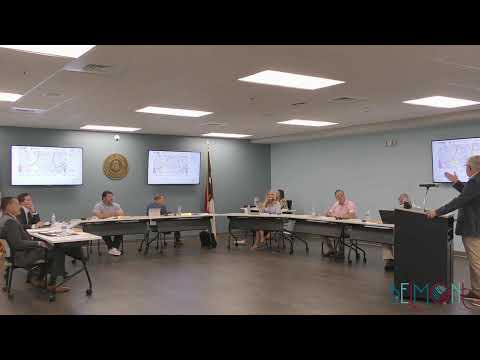
Mayor Pro Tem James Heffern opened the Belmont City Council workshop on Sept. 15 and the council moved through several resolutions to adopt an updated comprehensive land use plan and a new multimodal transportation plan, approve a Wilkinson Boulevard small-area plan, and re-adopt the Center City, South Fork and Mont Cross small-area plans. All motions passed unanimously with council voting “Aye” and no roll-call tallies recorded in the transcript.
Planning Director Tiffany Farrell told the council the update is the result of roughly 18 months of work and was developed concurrently with several companion efforts so the land-use, transportation and utility analyses could inform one another. Farrell said staff emphasized community engagement and coordination with other departments and regional partners; she asked council to make the state-required findings of reasonableness and consistency to adopt the plans.
Consultants said the outreach was substantially larger than the 2018 effort. Michael Dunning, principal at Mid Design Collaborative, said the process produced “over 2,000 comments” from surveys, workshops and online input — roughly an order of magnitude more engagement than the consultants had seen in the prior plan cycle. Nat Hayward of Kimley‑Horn summarized the multimodal plan as a standalone mobility document that also serves as the transportation chapter of the comp plan; he said the multimodal plan includes project prioritization, a set of demonstration projects and policies to guide implementation.
Key elements consultants and staff highlighted include:
- A reorganized, 11-section comprehensive plan that pulls small-area plans into standalone documents for easier updating. - A new multimodal transportation plan that prioritizes roadway, bicycle, pedestrian and transit projects and was funded in part by an NCDOT Integrated Mobility Division grant; staff said listing a project in a local plan helps with state/MPO scoring and future grant applications. - The Wilkinson Boulevard small-area plan focused on corridor revitalization, parcel constraints and short-, medium- and long-term recommendations including gateway improvements and potential zoning or overlay adjustments. - A utility-forecasting model and a digital twin (the LUCID tool) to help estimate downstream sewer impacts and capital needs tied to future land use.
Votes at a glance
- Multimodal Transportation Plan: resolution adopted unanimously (motion and second on the record; “Aye” recorded; no roll-call numbers given). (See provenance: introduction SEG 863–920; adoption motion SEG 2203–2213.)
- Comprehensive Land Use Plan update: resolution adopted unanimously (motion and second on the record; “Aye” recorded; no roll-call numbers given). (Provenance: introduction SEG 1220–1310; adoption motion SEG 2228–2250.)
- Wilkinson Boulevard small-area plan and re-adoption of Center City, South Fork and Mont Cross small-area plans: each adopted or readopted unanimously by resolution. (Provenance: presentations SEG 1404–1699; adoption motions SEG 2251–2338.)
What adoption means and next steps
Farrell said the city will keep the small-area plans as standalone documents so they can be updated on their own schedule and that the Center for Comprehensive Planning — a nonprofit partner — has committed to provide up to two years of implementation assistance to help staff and the community carry the plans forward. Staff will work to integrate project lists into the city’s capital improvement plan and pursue regional and state funding opportunities where appropriate.
The council noted no public commenters had signed up for the hearings. The workshop concluded with a demonstration of LUCID for council and staff and a reminder of a special meeting scheduled for Sept. 24.
Provenance: topicintro SEG 106; topfinish SEG 2341.