Get Full Government Meeting Transcripts, Videos, & Alerts Forever!
Get email alerts on the Substance Use Treatment topic
No spam. Unsubscribe anytime.
Facility director outlines Synacor’s addiction-treatment capacity and gaps in Farmington
Summary
Jolene Schneider, facility director at Synacor in Farmington, told the City Council the center has expanded detox, residential and outpatient services since 2022, reporting specific admissions and demographic breakdowns, and said transportation and trauma-informed care remain service gaps.
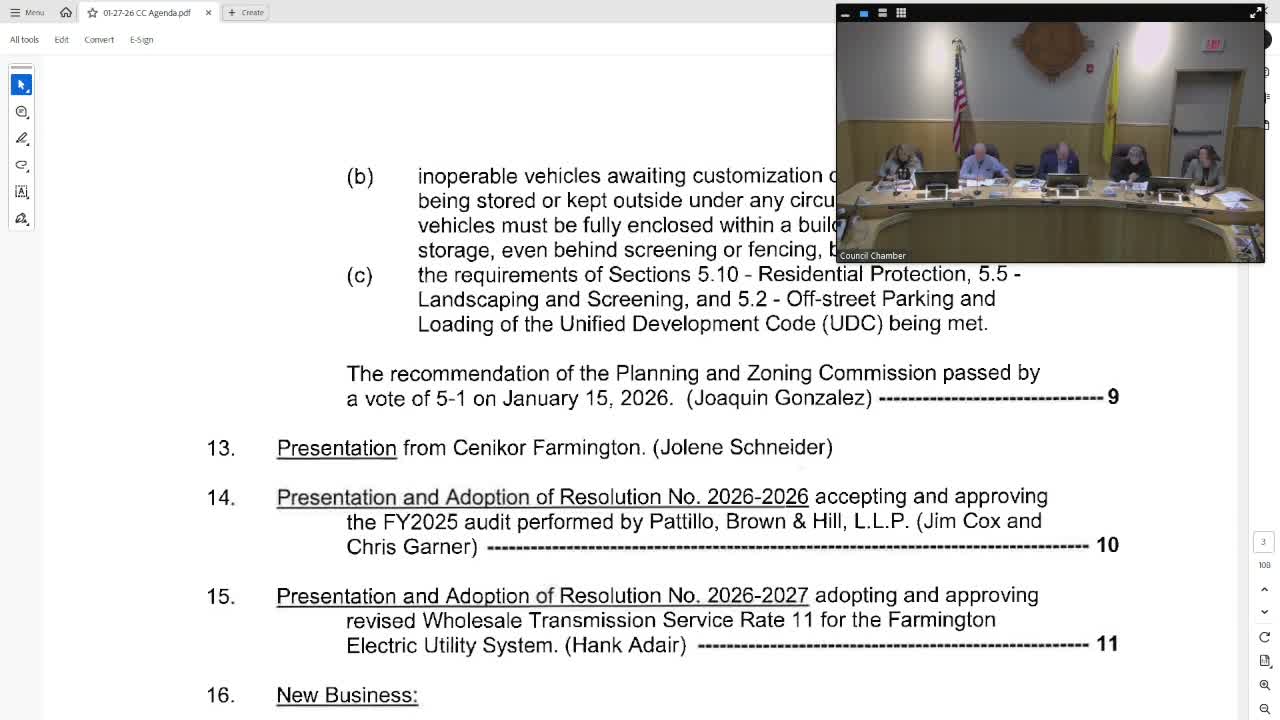
Jolene Schneider, facility director of Synacor in Farmington, described to the council how the locally based treatment center has expanded substance-use services since May 2022 and the volume of clients it serves.
Schneider said Synacor provides residential treatment, medical detox (initially for men, later expanded to women), medication-assisted treatment (MAT), intensive outpatient treatment and outpatient mental-health services. “Since we started the medical detox, we have had 845 admissions,” she told the council, adding that residential treatment has had 1,559 admissions, MAT 289, intensive outpatient 205 and mental-health services 95.
Schneider gave a demographic breakdown and payment sources. “Seventy percent of our clients in all levels of care are men,” she said, and she reported 45% of clients are Native American, “primarily Navajo.” She said the average client age is between 31 and 40. Schneider said Medicaid is the program’s primary payor, followed by an agreement with U.S. Probation, state funding and some commercial insurance.
Councilors pressed on capacity and repeat admissions. Schneider said Synacor operates 12 medical-detox beds and 39 residential beds and described repeat use as common: “I have had people come into detox probably 10 or more times,” she said, and stressed the importance of offering repeated opportunities for treatment.
On referrals and partnerships, Schneider said most referrals are walk-ins, followed by judicial system referrals and hospital referrals, and she listed local partners the facility coordinates with, including PATH, the navigation center, PMS Clinic, San Juan Regional, Cottonwood and Brenda’s House of Hope. She also said Synacor refers families to community programs such as Community Reinforcement and Family Training (CRAFT) and offers family-group work in outpatient services.
Schneider identified gaps in services that limit patient transitions to stability. She said transportation is a major barrier for clients trying to reach jobs and appointments, and she urged more focus on trauma-informed interventions: “We have not focused enough on the impact of trauma on the individual,” she said, adding that brief trauma-informed treatments can make a large difference.
Councilors thanked Schneider for the presentation and encouraged exploring supports and partnerships that could expand housing and transportation for clients. The council did not take formal action on the presentation; it was received for information.