Get Full Government Meeting Transcripts, Videos, & Alerts Forever!
Get email alerts on the Transit topic
No spam. Unsubscribe anytime.
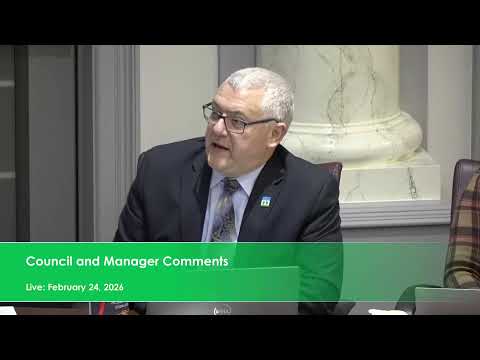
Morrisville council adopts transit study, directs phased expansion of Smart Shuttle
Summary
The council unanimously accepted an alternative transit‑service study that recommends adding micro‑transit nodes, expanding the Smart Shuttle fleet to two vehicles during service hours with a third peak vehicle phased in, and pursuing Community Funding Area Program (CFAP) and FTA funding to reduce local operating costs.
Morrisville accepted a consultant study on Feb. 24 that lays out near‑term service improvements for the town’s Smart Shuttle micro‑transit program and a longer‑term rubric for fixed‑route readiness. By resolution the council authorized staff to pursue phased implementation that would increase daytime service to two vehicles across service hours, add up to nine new pickup/drop‑off nodes to expand coverage, transition to minivan vehicles, explore advanced booking for targeted riders, and hire a transit planner to manage rollout.
Transportation Project Manager Brett Martin told council the recommended service alternative “would, at full build out, do 2 vehicles during all service area hours … and then have a third vehicle come in during peak.” Martin emphasized a phased approach intended to protect reliability and staff capacity, and said staff will survey current riders and conduct a demand analysis before expanding further.
Why it matters: the plan aims to widen access while containing costs. Martin said baseline operating costs for the Smart Shuttle this fiscal year are $978,220 and staff are modeling varying contributions from the CFAP and a credit from FTA formula funds. Using conservative assumptions and a phased rollout, the town’s projected operating contribution for the recommended partial FY27 implementation was shown in staff materials as roughly $355,068, contingent on competitive CFAP awards and FTA credits.
Council members pressed staff on timing and funding mechanics, especially a CFAP rule that limits funding changes tied to budget annualization. Martin explained that the Community Funding Area Program could support 65% of operating costs beginning in FY27 but could not support paying for three vehicles if all were deployed immediately in November; that third vehicle could be requested later if monitoring justifies it in spring 2027. He also said minivans would have rear‑mounted bicycle racks and seat five to six passengers.
The council voted unanimously to adopt Resolution 2025‑389‑0, accepting the Transit Alternatives Evaluation Final Report and directing staff to proceed with near‑term improvements and the CFAP application process. Mayor Pro Tem moved the resolution; the vote carried 6–0.
Next steps: staff will begin rider surveys and demand analysis, develop a node‑improvement program for council review, coordinate changes with the current operator, and file a CFAP application by the program deadline. The study’s appendix also includes a rubric for assessing when fixed‑route service might become appropriate, a decision the town would revisit if market thresholds are met.