Get Full Government Meeting Transcripts, Videos, & Alerts Forever!
Get email alerts on the City Budget topic
No spam. Unsubscribe anytime.
Council presses administration on $18.8M projected overspend in first-quarter report
Summary
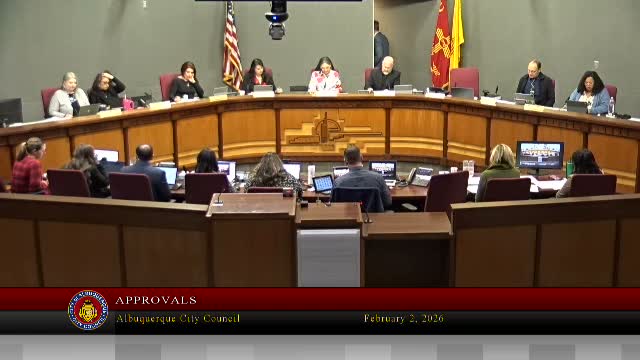
City administration presented the first-quarter revenue and expense report showing a projected $18.8 million overspend driven by police, fire and municipal development contracts. Councilors pressed for causes, mitigation plans and timing of audit and forecasts; administration cited operating contracts and turnover as factors.
City finance officials told the Albuquerque City Council that first-quarter projections show a roughly $18.8 million projected variance for fiscal year 2026 and described mitigation steps as they fielded extensive council questions.
Budget staff told the council that the largest projected variances are concentrated in a handful of departments: an increase in operating costs for fire (pharmaceuticals, cleaning, contracted services), contract and personnel costs for municipal development (pump services, street lights, and a major knockdown/traffic light replacement contract), and increased contractual spending for police including ShotSpotter and an expanded drone program.
“Fire’s generally an increase in operating costs such as pharmaceutical, cleaning, operating costs, and contracts,” the administration’s finance representative told the council when asked to explain the major drivers of overspending.
Councilor Grout pressed for specific mitigation measures and whether a formal budget adjustment would be required; administration officials responded that first-quarter projections are conservative and that staff are reviewing vacancies, travel and contracts to manage the variance and will monitor projections throughout the year. They said second‑quarter projections and a finalized five‑year forecast were being worked on and expected before the end of the month.
Councilors also questioned the timing of audit work. The administration said the FY25 single audit review from the State Auditor’s Office was anticipated by Feb. 20 and that delays earlier in the reporting cycle were driven in part by turnover and the recent federal government shutdown that pushed some federal reporting deadlines back.
Councilors asked for more granular information on overtime and vacancy-driven costs, especially in fire where vacancies for lieutenant and driver paramedic positions have been reported. Staff committed to follow-up briefings and to providing more detailed breakdowns to council members.
The council took receipt of the EC‑18 report; no appropriation change was adopted during the meeting. Several councilors urged the administration to prioritize enforcement and staffing resources in departments that process registrations and permit compliance, and some suggested adding dedicated FTEs to Planning to improve permit throughput and enforcement capacity.
Next procedural steps: administration will refine second‑quarter projections, finish the five‑year forecast and return with departmental follow-ups and requested breakdowns on overtime and contract spending.