Get Full Government Meeting Transcripts, Videos, & Alerts Forever!
Get email alerts on the Short Term Rentals topic
No spam. Unsubscribe anytime.
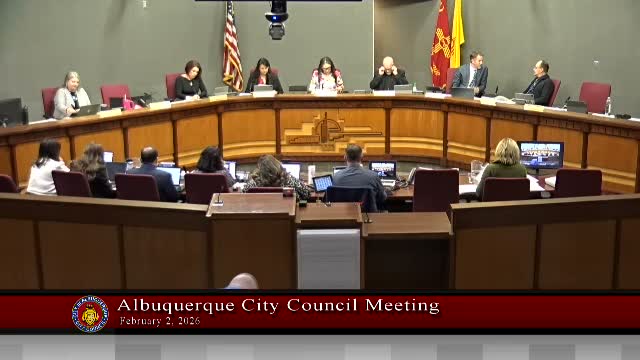
Albuquerque council rejects amended short-term rental spacing rule after long public hearing
Summary
After hours of testimony from homeowners, hotel and realtor groups and neighborhood advocates, the Albuquerque City Council defeated an amended short-term rental ordinance that would have required minimum spacing between permitted rentals. Supporters said the measure would curb concentration and protect neighborhoods; opponents warned it would hurt small local hosts and jobs.
A proposed ordinance to limit the concentration of short-term rentals in Albuquerque failed after a long hearing and multiple floor amendments.
Councilor Patricia Rogers and co-sponsors introduced O-26.5 to add a separation requirement between permitted short-term rental permits. Sponsors said the measure was intended to prevent over-concentration in neighborhoods and protect long-term housing and neighborhood character.
“Over the past several years I’ve heard consistently from residents about the impacts that concentrated short-term rentals have on community stability, parking and noise,” Councilor Rogers said, urging colleagues to support the measure.
Councilors adopted an amendment reducing the setback from 330 feet to 100 feet and another amendment delaying the ordinance’s effective date to July 1, 2026, to allow existing operators time to register. Those amendments passed on voice votes, but when the full amended ordinance came to a final vote it failed.
The hearing drew a broad mix of speakers. Small-business owners and STR hosts described the industry as local and job-creating: “This is my small business. It supports my family and more than 25 local cleaners and maintenance workers who depend on this income,” said Taryn Rivera, a short-term rental operator. Melissa Sawyer, an active-duty service member and homeowner who rents a casita, told the council that the extra income made homeownership possible.
Real-estate and hotel industry representatives urged caution. Ryan Swinney of the Greater Albuquerque Association of Realtors said STRs make up roughly 1% of the city’s housing stock and that restricting them is unlikely to materially increase long-term housing or reduce rents. “Independent peer-reviewed research consistently shows that short-term rentals do not drive housing shortages,” Swinney told the council.
Industry representatives and many homeowners warned of enforcement challenges and unintended effects on small operators. Carl Bridal of the New Mexico Short Term Rental Association presented industry data and said that many listings are part‑time and that the proposed separation rule, as drafted, would amount to a near‑ban in some neighborhoods.
Backers said the ordinance was targeted to clustered areas and would grandfather in current, registered hosts while giving time for unregistered operators to comply. Councilor Baca, a sponsor, said the effort was about “balance” and preserving neighborhood quality of life, pointing to neighborhoods where a high concentration of rentals had changed block-level character.
After final debate the ordinance failed on the council floor. The council later discussed next steps for enforcement and staff resources; several councilors urged increased funding for permitting and code enforcement to ensure existing rules are enforced.
The vote leaves Albuquerque without the new separation requirement but keeps in focus a set of policy choices — enforcement resources, registration processes and potential zoning or housing initiatives — that council members said they plan to pursue going forward.