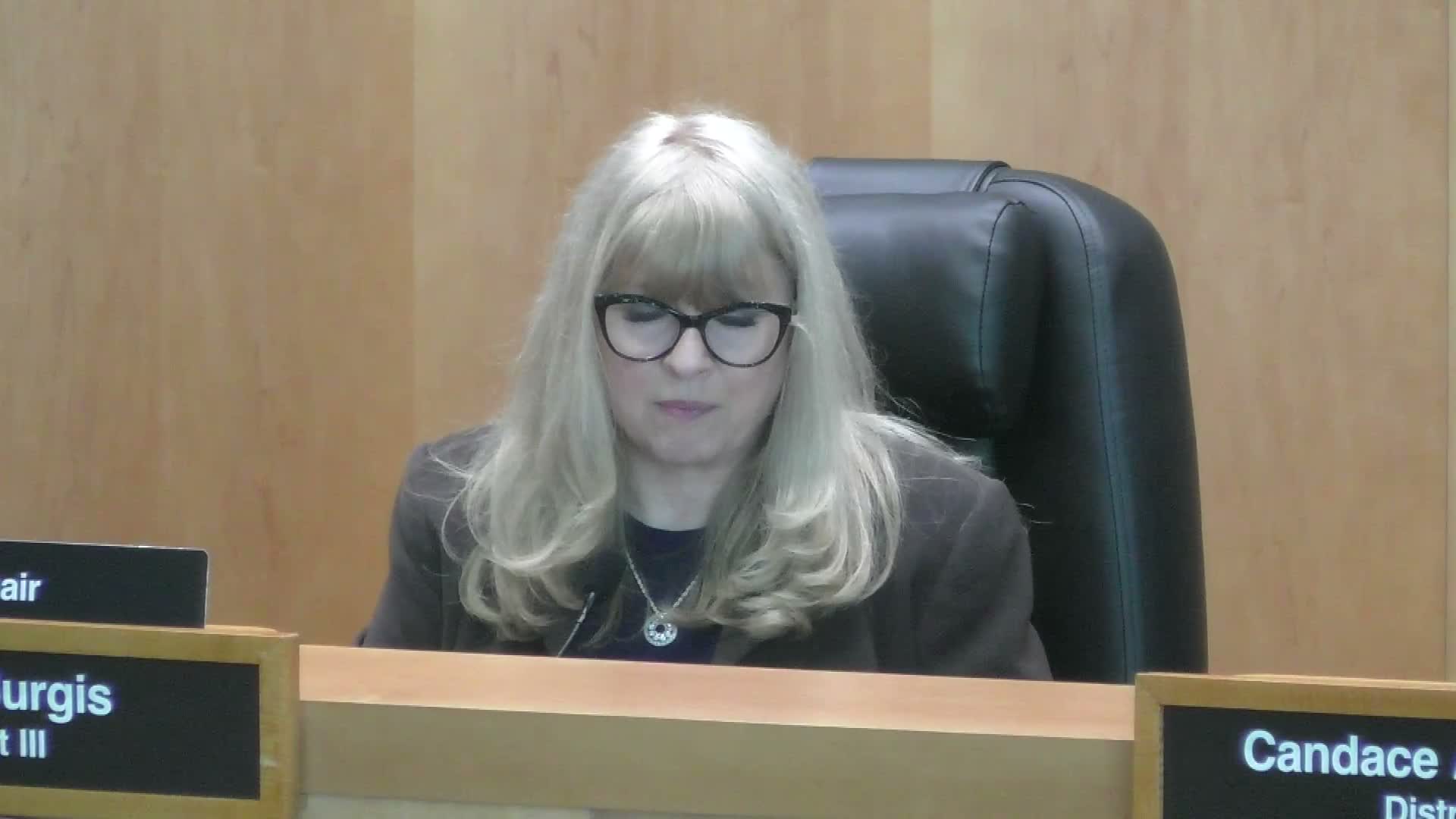
Contra Costa supervisors vote 4–1 to place 0.625% temporary sales tax on June ballot to shore up county health services
Loading...
Summary
On March 3, 2026 the Contra Costa County Board of Supervisors voted 4–1 to submit a temporary 0.625% sales-and-use tax to voters on June 2, a measure officials said is intended to blunt projected federal and state funding cuts to county health and human services.
The Contra Costa County Board of Supervisors voted 4–1 on March 3 to place a temporary 0.625% sales-and-use tax on the June 2, 2026 ballot to help offset projected federal and state funding reductions that county officials say threaten health and social services.
The ordinance (2026-05) and companion resolution (2026-40) would levy the tax for five years if approved by voters and authorize the county administrator to process a $1,200,000 budget amendment to cover ballot-related costs. The board’s action was announced after staff presented updated fiscal projections and new operational estimates for eligibility staffing.
"Lives are at risk and our entire healthcare system is at risk," Dr. Grant Colfax, director of Contra Costa Health, told the board as he described the projected effects of recently enacted federal policy changes and state cuts. County finance staff showed a forecast extending to fiscal 2031 in which Enterprise Fund 1 (the county hospital and clinic system) could incur more than $1 billion in cumulative operating losses and would face roughly $240 million in capital needs in the near term.
Board members and staff identified specific operational pressures beyond the hospital ledger. Dr. Marla Stewart, director of the Employment and Human Services Department, said county eligibility work will expand under new rules, estimating the county will need about 313 additional eligibility workers — an unfunded increase staff estimated at about $117 million — to manage Medi‑Cal and CalFresh work requirements and twice‑yearly renewals now slated to take effect in the next two years.
Supervisor Candace Anderson — the lone vote against placing the measure on the June ballot — urged caution and pushed staff to correct public materials before moving forward. "We have been wrong with what we have had on the website," Anderson said, citing earlier communications that she said misstated whether losses were cumulative or ongoing. She asked for time to ensure the county is providing accurate information to the public before advancing a ballot measure.
Other supervisors argued a near‑term response was necessary. Supervisor John Gioia and others emphasized the potential human and system costs if funding gaps are allowed to widen, saying the temporary tax would allow the county to invest in enrollment work, eligibility staffing and other mitigation strategies ahead of the sharpest anticipated cuts.
Public commenters were divided. Supporters — including representatives of senior advocates, a county food bank and labor unions — urged the board to give voters the chance to act and to begin prevention work now. Opponents and watchdog groups urged a delay, criticized late changes to staff slides and said the board should provide clearer public documentation; an attorney representing several registered voters warned of potential legal challenges and questioned whether the board had sufficient legal authority to place the measure on the June ballot as drafted.
The board’s motion to adopt the ordinance and call the election passed by a recorded margin of 4–1. Supervisor Candace Anderson voted no; the chair announced "motion passes 4 to 1." Staff said they would file the ordinance and resolution with the county registrar immediately if the board’s action remained intact, observing an 88‑day filing deadline to make the June 2 ballot.
What’s next: if the registrar accepts the filings, the ballot question will appear on the June 2 primary ballot and voters will decide whether to authorize the temporary 0.625% sales tax for five years. If approved, proceeds would be used to help stabilize county health and human services while staff and regional partners plan for longer‑term funding and service adjustments.