Get Full Government Meeting Transcripts, Videos, & Alerts Forever!
Get email alerts on the Utility Franchise topic
No spam. Unsubscribe anytime.
Vice Chair Robbins urges strict terms in Texas Gas Service franchise renewal; commissioners split on preapproval and takeover of conservation programs
Summary
Vice Chair Robbins presented a multi‑section proposal recommending competitive franchise selection, a 10‑year term, progressive rate tiers, a city‑run conservation program funded by higher franchise fees, and steps to address securitization; commissioners raised legal and practical concerns and Texas Gas Service told the commission a rate‑case proposal is pending before an administrative law judge.
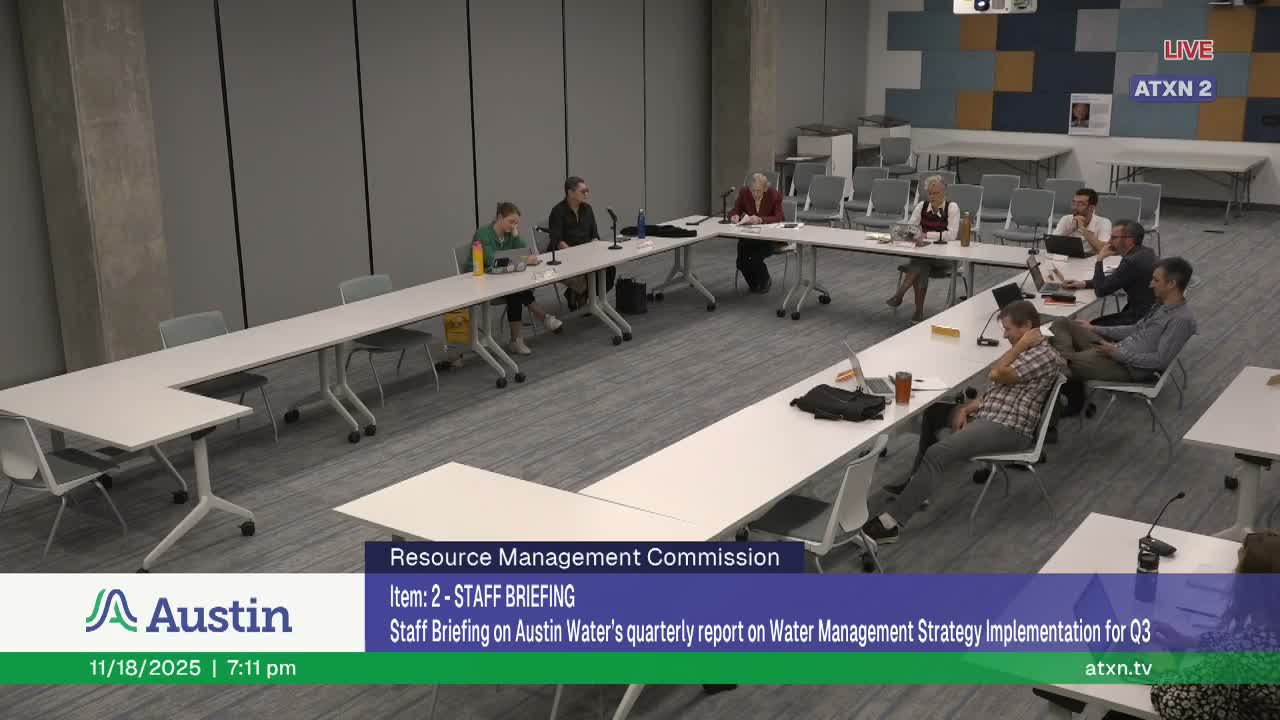
Vice Chair Robbins presented a comprehensive set of recommendations his sub‑quorum drafted for negotiating the Texas Gas Service (TGS) franchise renewal, and commissioners spent most of a second agenda item debating the proposals’ legal footing and practical consequences.
Robbins walked the commission through key sections that would shape negotiations with TGS: require a competitive selection process that includes Austin Energy as a potential bidder; limit franchise terms to 10 years with no automatic renewal; require progressive residential rate tiers with a base fee capped at no more than 30% of total revenue; phase in an income‑qualified customer assistance program to enroll at least 7% of city ratepayers within about four years; and require TGS to fund at least $500,000 annually (with shareholder contribution) for emergency bill assistance, indexed to inflation.
Robbins also urged the city and TGS to investigate high fuel and securitization costs associated with Winter Storm Uri and said the city should consider litigation to recover excessive charges. "Gas costs went up from about $3 per MCF to as high as $1,100 in a few cases," Robbins said from the dais, arguing that extraordinary spikes and securitization merit scrutiny.
Larry Graham, who identified himself as a Texas Gas Service representative, told commissioners the Share the Warmth program is ongoing and that TGS recently contributed about $200,000 to local partners. He said the current rate case has a proposed settlement and that an administrative law judge’s proposal for decision is expected to go to the Railroad Commission in December.
Commissioners were divided on several proposals. Some supported the idea of using higher franchise fees to fund city‑run conservation programs or of contracting Austin Energy to run more cost‑effective measures; others cautioned that city takeover of TGS programs raises legal and capacity questions. Commissioner Gary asked whether city legal had reviewed the draft; Robbins said prior precedent exists (the city managed similar programs from 1987–1997) but that the current draft has not yet gone to city legal.
The meeting included a procedural show‑of‑hands to prioritize which sections commissioners wanted to discuss in depth. Questions focused on how much of rate design can be specified in a franchise versus left to Railroad Commission rate cases, the practical timing of any changes (Graham said rate cases typically occur every 3–5 years), and what would happen if city and utility failed to reach agreement; Graham said temporary extensions, fee escrow or negotiated short extensions are common and that a stop‑service scenario is unlikely.
Robbins’ most contested suggestion — requiring city preapproval of capital expenditures that feed rate increases — prompted robust debate. Supporters argued a pre‑review or third‑party consultant could prevent "gold‑plating" and protect ratepayers; opponents, including an experienced ex‑regulator on the commission, said prereview by the city is atypical in utility regulation and that the Railroad Commission is the usual venue to examine prudence of investments.
No formal vote was taken on the draft. The chair proposed tabling the discussion and returning to the item at the commission’s January meeting; commissioners were asked to submit written questions to the staff liaison, Natasha Goodwin.
"If there's something pressing we could vote, but I don't anticipate we'll vote tonight," the chair said. "This will give you plenty of time to provide input."