Get Full Government Meeting Transcripts, Videos, & Alerts Forever!
Get email alerts on the Digital Accessibility topic
No spam. Unsubscribe anytime.
City sets deadlines to meet DOJ Title II for digital accessibility; departments must inventory public assets by Dec. 1
Summary
At the Nov. 14 meeting the Digital Accessibility Compliance Project outlined DOJ Title II expectations, a December inventory deadline, testing by Dec. 12 and an April 24, 2026 internal compliance timeline; staff said enforcement relies on legal risk and internal governance rather than new punitive measures.
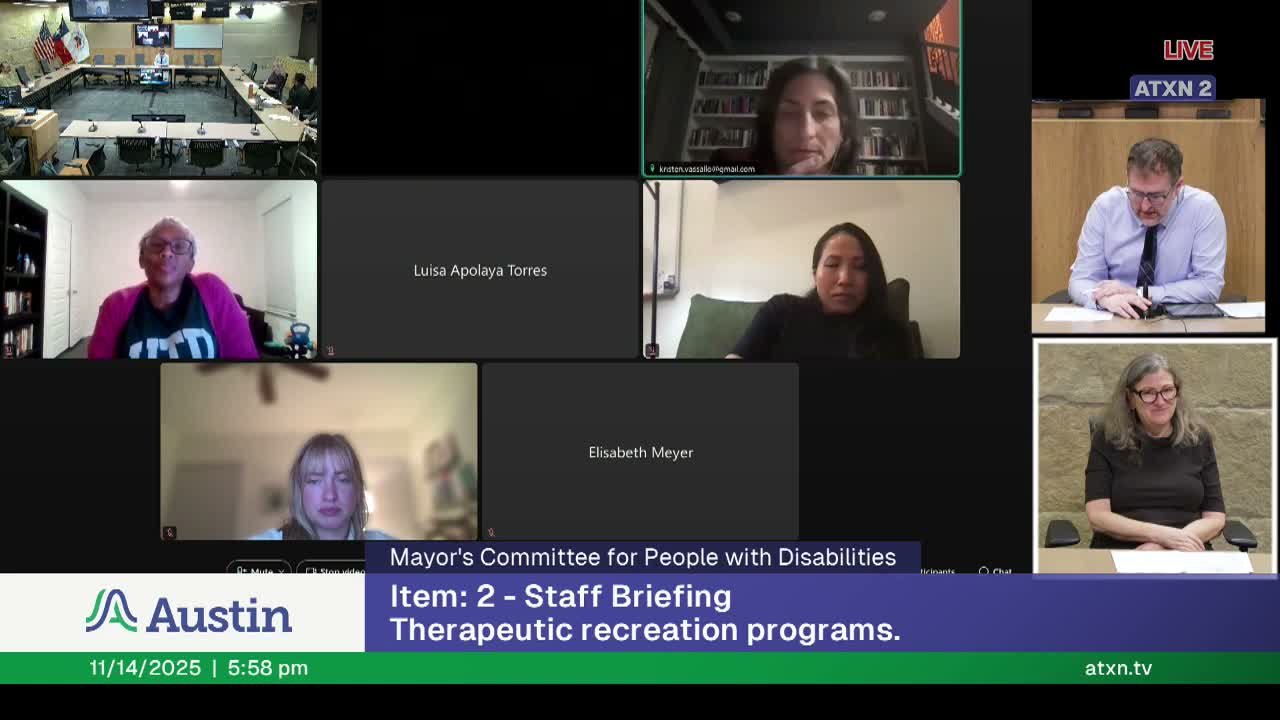
Luisa Torres, presenting for Austin Technology Services and Austin Communications and Engagement, told the Mayor's Committee on Nov. 14 that the city has launched a Digital Accessibility Compliance Project in response to a Department of Justice rule under Title II and that departments must inventory public‑facing digital assets by Dec. 1.
Torres described the scope of the rule and the city's internal timeline: departments are being asked to inventory assets through a digital intake form by Dec. 1; compliance testing for most assets should be completed by Dec. 12 (some apps require manual testing); and remediation work will continue through April so departments can be in a position to meet the DOJ deadline of April 24, 2026.
"About two years ago, the Department of Justice finalized the rule under Title II that state and local governments must make web content and mobile applications meet WCAG guidelines 2.1 AA," Torres said, adding that the city's project covers public websites, mobile apps, PDFs and embedded video and social media content.
Torres said the city has established an internal committee and has designated about 40 accessibility champions across departments to track progress and provide training. The project has created guidance documents, a SharePoint resource site and a remediation‑training course for PDFs. Torres named community partners the project has begun working with, including The Arc, Austin Lighthouse, Scribe Cole Rehabilitation Center and Know Ability, and invited the committee to suggest priority assets and offer community‑based training opportunities.
When asked about penalties or mandatory enforcement, Torres said the principal tangible consequence for noncompliance is legal risk from potential litigation and that the project currently relies on governance, visibility to department directors and regular reporting rather than formal departmental fines. "As far as I'm aware, the only tangible kind of penalty that might incur by not complying would be the legal risk," she said.
Torres encouraged committee members and community organizations to email the project at digitalaccessibility@austintexas.gov with assets that need attention and to offer feedback on prioritization.
Next steps: departments must complete the inventory by Dec. 1, testing is scheduled by Dec. 12, and the committee will receive additional visibility from the project's remediation tracker and ongoing engagement with department champions.