City presents $1.66B convention center expansion with sustainability pledge and $17.7M public‑art program
Loading...
Summary
City project staff described plans for a $1.66 billion expansion of the Austin Convention Center that would nearly double rentable space, target a global first for zero‑carbon certification, and include a $17.7 million Art in Public Places investment featuring integrated works by local artists.
City capital delivery staff and ACME leadership presented the convention center redevelopment to the Music Commission, outlining scope, schedule, expected economic benefits and an extensive public‑art program.
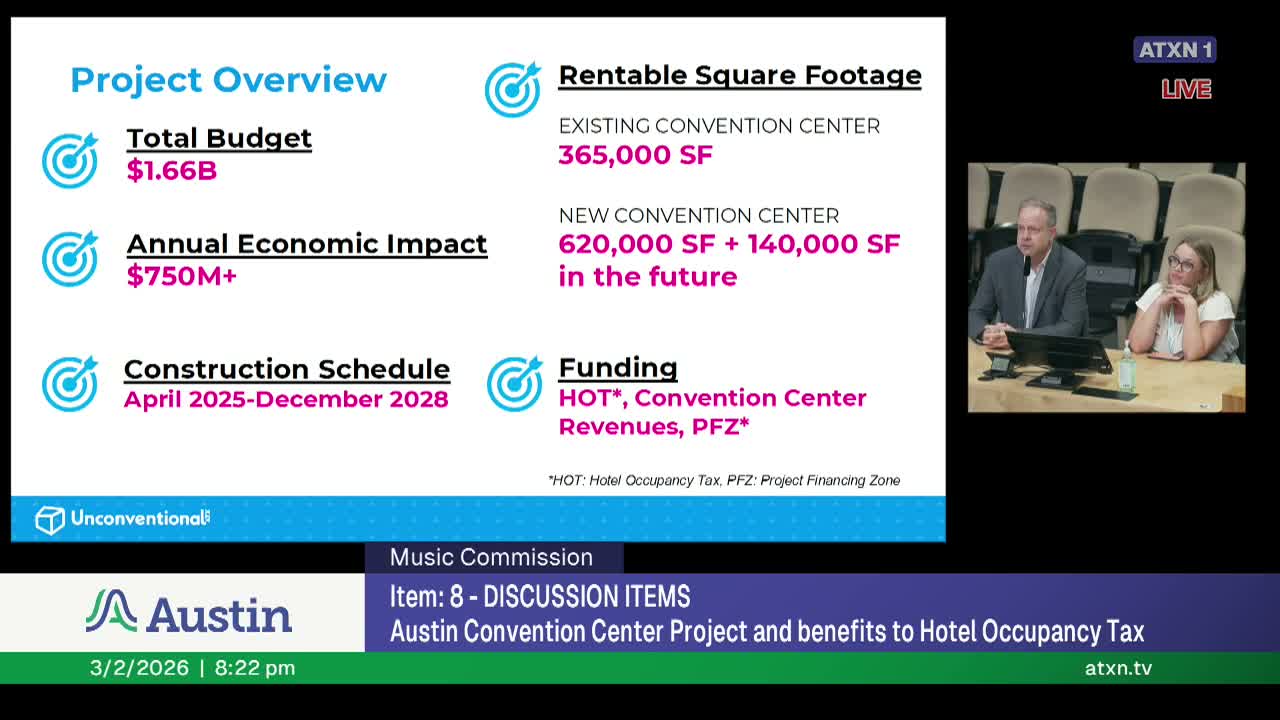
"The total project budget is $1,660,000,000," said Riley Triggs, project manager for the convention center project. Triggs told the commission the redevelopment will expand rentable space to roughly 620,000 square feet (including an approximately 350,000 sq ft exhibit hall placed below grade), and that the project team expects annual economic impact in excess of $750 million once complete.
Schedule and construction: Triggs said demolition and enabling work began in April 2025; above‑grade demolition is complete, excavation is underway and substantial completion is targeted for December 2028 with an opening for festival season in 2029. The project team described a two‑phase build, including a future expansion footprint prepared in the first phase.
Sustainability and art in public places: The project aims to lead on sustainability — staff described an ambition to be the world's first zero‑carbon certified convention center, powered with 100% renewable energy, using low‑carbon concrete mixes, mass timber and reclaimed materials from the old center. ACME and project staff described a $17.7 million Art in Public Places program: roughly $12 million for architecturally integrated works by selected local artists and an additional $5 million for traditional AIPP installations.
Public benefits and risks: Staff said expanding the convention center raises hotel‑occupancy tax revenues that fund arts grants and public‑art projects, and warned that delays or a decision to halt the redevelopment would reduce HOT streams and broader tax and job benefits. Triggs and ACME acknowledged a recent petition and ensuing lawsuit — the petition did not meet signature requirements and a subsequent legal challenge was decided in the city's favor.
Commissioner concerns: Commissioners asked about transit connections, parking and local hiring and asked for formal pathways for arts and music community input on programming. Staff said the project plans include a new light‑rail station in the district, rely on existing convention garages (no new parking planned), and that Art in Public Places guidelines prioritize local artists and local fabrication where feasible. Triggs also said contractors have plans to respond to protests and protect worker safety on the construction site.
What happens next: Staff committed to continuing community engagement, bringing updates to the arts and music commissions and to forming staff liaisons as convention center administrative staffing ramps up.