Get Full Government Meeting Transcripts, Videos, & Alerts Forever!
Get email alerts on the Zoning Tattoo topic
No spam. Unsubscribe anytime.
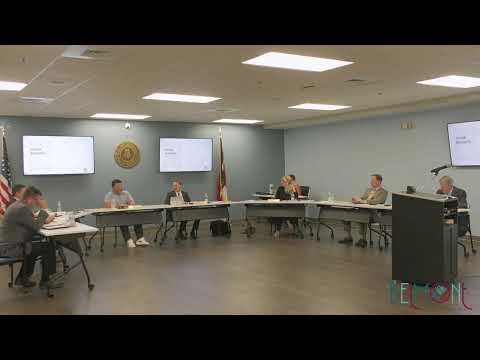
Belmont council denies proposal to allow tattoo and piercing studios downtown after heated public comment
Summary
After more than an hour of staff presentation, an applicant statement and dozens of public comments both supporting and opposing it, Belmont City Council voted to deny a text amendment that would have allowed tattoo and piercing establishments in the neighborhood center commercial (NCC) district subject to a special use permit.
Belmont City Council voted on Oct. 6 to deny TA 2025-03, a proposed text amendment that would have allowed tattoo parlors and body-piercing establishments in the city’s neighborhood center commercial (NCC) district, subject to special-use review.
Senior planner Rachel Brophy summarized the staff recommendation and the proposed code changes, saying the definitions for "tattoo parlor" and "body-piercing establishment" were drawn from state statutes and that the amendment would add the uses to chapter 5.6 of the land development code while requiring a special use permit (SUP) and supplemental regulations to address compatibility, design and public-health concerns. Brophy noted the applicant had circulated a petition with more than 1,000 signatures and that police and fire had recorded no public-safety objections.
The applicant, who identified himself in the record as "Turtis Ford," told council Covenant Tattoo planned to operate a combined gallery and studio with a roughly 60/40 split between tattoo/piercing operations and art-gallery/retail space. "Foot traffic for us is essential for the art gallery," he said, adding the gallery model and downtown location would improve safety for staff and clients and support related downtown businesses.
Public comment was strongly divided. Opponents—many long-time downtown residents and property owners—argued the amendment would undermine the "quaint," family-oriented character of Belmont’s main street, create potential compatibility problems (for example, tattoo operations co-located with child-centered uses), and could expose council to later difficulties reclaiming the zoning if lower-quality operators opened later. One opponent warned the amendment would open a "Pandora's box" of uses ill-suited to the district. Supporters—downtown merchants, business owners and customers—said modern tattoo studios are professional, artistic and can drive foot traffic and tourism; several supporters pointed to the petition and local-business endorsements.
Council members focused discussion on two linked concerns: (1) whether the SUP process provides an adequate, objective standard for findings such as "visual and functional compatibility" given subjective language in the current code (terms like "quaint" and "main street characteristics"), and (2) the difficulty of reversing an allowed use once it is written into the zoning code. Several council members said that while the applicant appeared professional, zoning determines what is allowed for all future operators, not just one shop.
Catherine moved to deny the text amendment; Charlie seconded. The motion to deny passed and the council also voted that the proposal was not a reasonable request and not consistent with the goals of the comprehensive land use plan. The denial leaves tattoo and piercing uses permitted in Belmont only in the Highway Commercial district under existing code, subject to applicable state public-health permit requirements.
Authorities cited in the staff presentation included North Carolina General Statutes referenced for definitions and public-health rules.