Get Full Government Meeting Transcripts, Videos, & Alerts Forever!
Get email alerts on the Housing Homelessness topic
No spam. Unsubscribe anytime.
Board workshop spotlights housing and homelessness: Oak Hill, Homekey and prevention pilots emphasized
Summary
County staff outlined a work plan to refresh homelessness strategy and highlighted key projects — Oak Hill (Eden Housing partnership), Coast Guard property rehab, Homekey conversions and shelter‑to‑housing pilots — while supervisors pressed for immediate measures to keep seniors and other vulnerable residents housed amid state funding cuts.
Marin County staff used the budget workshop to present a draft county work plan for affordable housing and homelessness that pairs short‑term shelter responses with longer‑term development projects and system refresh recommendations.
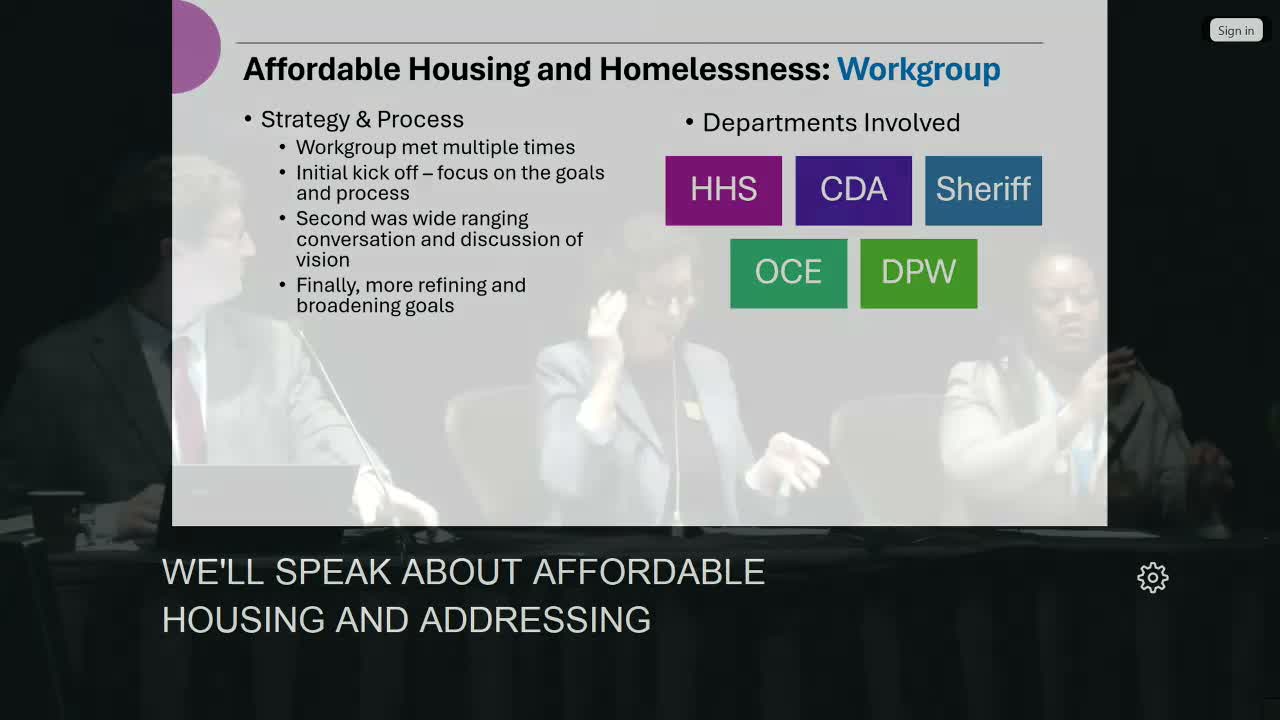
Lily Thomas of the Community Development Agency and Nicole Tyler of Health and Human Services said the work group settled on five core goals, including a strategic refresh of the county’s homelessness system, mitigation of public‑health and environmental impacts of homelessness, and proactive positioning to remain competitive for future state HAP funding cycles. They highlighted shelter‑to‑housing efforts for sites at Marydale and at B Street in Point Reyes, collaborations on Homekey projects to provide permanent supportive housing, and two development efforts: Oak Hill (a state surplus parcel proposed with Eden Housing to include workforce and teacher housing, including 135 units earmarked partly for county employees and educators) and a Coast Guard property rehab planned to create about 54 homes in West Marin.
Staff warned of near‑term risks. Tyler and colleagues noted a reduction in statewide HAP funding from $1 billion to $500 million and reminded supervisors that jurisdictions must show progress on housing‑element implementation to remain eligible for some funds. Several supervisors pressed for tangible short‑term measures while the county completes its strategic refresh: Supervisor Milton Peters and others asked how the county will keep people — especially seniors — housed during the transition. Staff pointed to homelessness prevention pilots with community partners (including Bay Area Community Services), two ongoing small rent‑subsidy pilots for older adults run with nonprofit partners, and work with the housing authority to prioritize those at risk of losing emergency vouchers.
Supervisor Colbert urged an emphasis on execution — “it’d be nice if Oak Hill could break ground” — while other supervisors asked for measurable near‑term targets and clarity about how initiatives map to the board’s six priorities. Staff agreed to return with more detail and said some one‑time funds previously discussed ($8 million set aside in an earlier briefing) had already been allocated in part to homelessness and housing pipeline support.
The presentation included several action items expected to return for board consideration in coming meetings, including a development and disposition agreement for the Coast Guard property on the March 10 agenda and subsequent items to operationalize prevention pilots and subsidies. The board did not adopt policy changes at the workshop but directed staff to provide implementation details and performance metrics in follow‑up briefings.