Get Full Government Meeting Transcripts, Videos, & Alerts Forever!
Get email alerts on the Stormwater topic
No spam. Unsubscribe anytime.
University Place staff outline expanded inspections and minor NPDES updates at public hearing
Summary
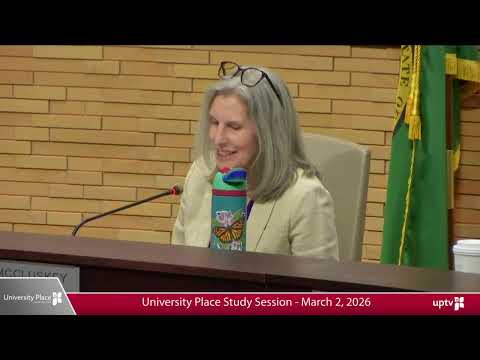
Public Works Director Jack Eklund and NPDES coordinator Todd Smith presented the city’s annual NPDES stormwater management update, saying staff will expand annual inspections to as many private stormwater facilities as city rights allow and invited public comment before returning the plan for council consideration on March 16.
Public Works Director Jack Eklund summarized University Place’s annual update to its municipal NPDES (National Pollutant Discharge Elimination System) stormwater management program and emphasized one substantive change: the city will annually inspect all stormwater flow‑control and water‑quality facilities where the city has rights, not just the 80% subset the current permit explicitly requires for post‑2007 facilities.
Why it matters: the expanded inspection practice is intended to identify deferred maintenance earlier and to give homeowners’ associations and property managers guidance before problems escalate. Eklund said the city’s current permit term runs August 2024 through July 2029 and that this year’s update mostly adjusts dates and clarifies language, but the inspection change “is an example of where the city is going above and beyond what is required by a permit to be more protective for the community.”
What staff said: Eklund told the council the proposed program lists the 12 required program elements (stormwater planning; public education and outreach; public involvement; mapping and documentation; illicit discharge detection and elimination; controlling runoff from development and construction; stormwater management for existing developments; source control; operations and maintenance; monitoring, assessment and reporting; record keeping; and compliance with underground injection control wells). Todd Smith, the city’s NPDES coordinator, said the public comment period has been open since Feb. 4 and that most early responses were requests for formatting changes and clarifying acronyms.
Questions from council: Council members pressed staff on likely costs and fees, outreach plans and how the program would apply to legacy ponds. Council member Figueroa asked whether stormwater fees would increase; staff said current fee levels appear sufficient for the proposed work and that no fee increase is included in this update. On legacy private ponds such as Harvest Ridge, Eklund said many pre‑2007 facilities lack recorded city rights-of‑entry; in those situations staff will attempt owner contact and, if needed, rely on enforcement tools for persistent noncompliance. Smith said the city also applies design guidance from county manuals (King County and Department of Ecology tools) and has applied for and received an Ecology grant of roughly $120,000 for the next two‑year cycle to support program operations.
Next steps: The council closed the public hearing and directed staff to place the stormwater management plan update on the March 16 council agenda for consideration under the consent agenda, allowing additional written comments to be filed in the interim.