Get Full Government Meeting Transcripts, Videos, & Alerts Forever!
Get email alerts on the Environment topic
No spam. Unsubscribe anytime.
Local advocates ask Marin County to fund CEQA and feasibility study for Chileno Valley wildlife undercrossing
Summary
A volunteer group urged the board to seed a $1.2 million feasibility and CEQA study to design a permanent undercrossing on Chileno Valley Road to stop road mortality of amphibians and other species and to leverage state and federal construction funds.
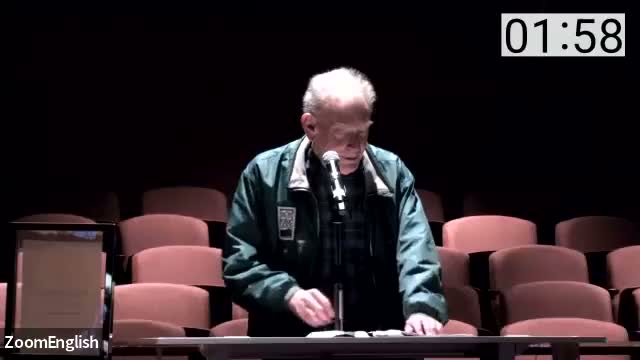
Jerry Merrill, identifying himself with the Cholanda Valley Inuit Brigade, asked the Marin County Board of Supervisors during public comment to partner on funding environmental review and a feasibility study for a permanent wildlife undercrossing at Chileno Valley Road.
Merrill said the next step—a feasibility study and CEQA review to reach about 65% design—will cost approximately $1,200,000. "We have moved over 40,000 of them, but that is not a permanent solution," he said, describing years of volunteer animal‑moving efforts and warning of high mortality without a permanent crossing.
Why it matters: County roads that bisect habitat can cause steep declines in amphibians and other species; building a permanent undercrossing would make the roadway safer for vehicles and people while restoring safe passage for wildlife, but it requires upfront environmental and design funding to be eligible for larger construction grants.
What advocates asked for: Merrill asked the board to provide seed funding to move the project through feasibility and environmental review so it can be competitive for state and federal construction dollars. He said the group is pursuing state and federal funds but that, because the road is a county road, local partnership is essential to advance CEQA and design.
Next steps: The speaker asked staff to consider seed funding to help reach 65% design and to coordinate with Department of Fish and Wildlife and other agencies; no formal county action was taken during the workshop.