Get Full Government Meeting Transcripts, Videos, & Alerts Forever!
Get email alerts on the Comprehensive Plan topic
No spam. Unsubscribe anytime.
Commission approves Priority Preservation Area chapter; water resources chapter delayed to March
Summary
The Planning Commission approved the final draft of the comprehensive plan's Priority Preservation Area chapter with staff edits and additions to ranking criteria and postponed the water resources chapter to March, citing a lack of recent county‑level groundwater and aquifer data.
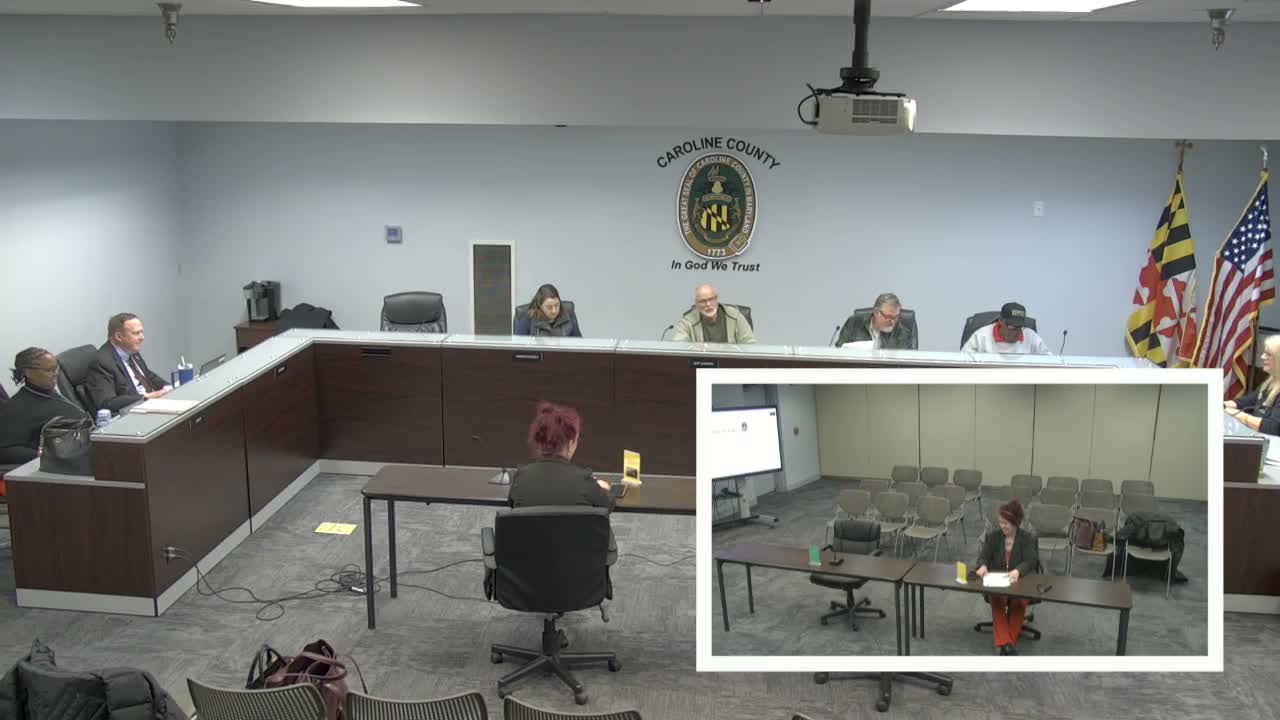
The Caroline County Planning Commission approved the final draft of the comprehensive plan’s Priority Preservation Area chapter at its February 2026 meeting and directed staff to proceed with the county and state review process. Chair Jeff Jackson moved for approval; a commission member seconded and the commission voted in favor.
Planning staff said the final draft incorporates mapping corrections and adds ranking criteria for easement applications, including extra points for proximity to priority preservation areas and for proximity to transmission lines. Staff described the multi‑step process for adopting the criteria: a formal draft, review by the commission, input from the agricultural advisory board, submission to the Maryland Agricultural Land Preservation Foundation (MALPF) for review, and potential MALPF board action. Staff expects the process to take most of the year and to use any adopted criteria for the next round of MALPF applications.
On the water resources element, staff postponed review to March because county‑specific aquifer and groundwater data are limited. The planner said much of the available technical work dates to the 2007 coastal plain aquifer study and that the most recent county‑level groundwater withdrawal figures she could find were from 2015. She warned that recent data releases are organized by HUC12 watershed and include neighboring counties, making it difficult to isolate Caroline County’s withdrawals.
"I may just have to stop and say that's what I'm gonna use," the planner said of using 2015 as the most recent baseline and extrapolating forward. Staff noted the implications for projecting irrigation and surface‑water vulnerability under hotter, drier conditions and that the chapter will include climate‑related updates for heat and drought impacts.
Department staff also reported three zoning text‑amendment bills—zoning map corrections, reintroducing R3 zoning with townhouse rules, and allowing mini‑storage in Village Center districts—were introduced at the county commissioners' meeting and will proceed to public hearings. Commissioners confirmed calendar changes and said the June and September meetings will be held at the courthouse because the usual meeting room will be used by the election board.
The commission adjourned after closing business.