Get Full Government Meeting Transcripts, Videos, & Alerts Forever!
Get email alerts on the Municipal Finance topic
No spam. Unsubscribe anytime.
Flower Mound CFO previews tiered cost-recovery policy; council to review survey results
Summary
John Zagurski, the town's chief financial officer, presented a draft cost-recovery policy modeled on Plano's framework that defines five tiers of beneficiary responsibility and proposes annual analysis to set fee-recovery targets; council asked for vendor/end-user revenue breakdowns and timing for a survey and full analysis.
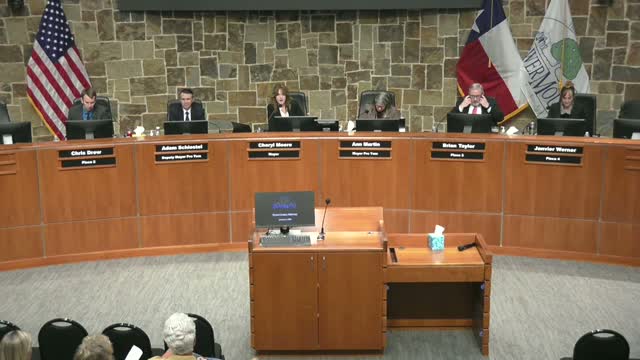
John Zagurski, Flower Mound’s chief financial officer, presented a draft cost-recovery policy at the town council meeting on Jan. 2 that lays out a five-tier framework for determining how much of program and service costs the town should recover from users.
Zagurski said the policy, adapted from the City of Plano, groups services from primarily community-benefit (tier 1) to primarily individual-benefit (tier 5) and uses those categories to set revenue-recovery targets. He said capital costs would be quantified for transparency but excluded from the recovery calculations, which focus on operating costs. Examples discussed included animal control (tier 1) and recreation programs such as the CAC swim and tennis programs, which Zagurski said approach 100% cost recovery.
The framework is intended to create a legally defensible basis for fees, Zagurski said, noting Texas law can treat fees that exceed the actual cost of a service as unlawful taxes. He told council members they would receive a short survey asking them to classify specific services; Zagurski said he would compile responses and return with an analysis in about three to four weeks.
Council members pressed for more detail on how revenue sources are categorized and broken out. One council member asked whether special-event revenue, vendor payments and sponsorships could be separated from end-user fees; Zagurski said the town can produce reports showing revenues and expenses for specific programs but that some lines may require granular backend data to parse vendor net proceeds versus town revenue. He also said EMS/ambulance revenue sits closer to higher recovery tiers when operational costs are nearly covered.
The council discussed timing for any fee adjustments. One member said, given current financial conditions, the town should not wait until the next fiscal year to consider adjustments; Zagurski repeated that the analysis timeline would depend on council responses to the survey and the depth of the follow-up work.
Zagurski summarized next steps as distributing the survey before the end of the week and returning with a full analysis and recommendations for council consideration.