Get Full Government Meeting Transcripts, Videos, & Alerts Forever!
Get email alerts on the Utility Billing topic
No spam. Unsubscribe anytime.
Denton staff propose changing billing rules: full refunds for overbilling, six-month cap for underbilling recoveries
Summary
In a Feb. 23 work session the Denton Public Utilities Board heard staff recommend ordinance changes to make customers whole for overbillings (refund to the date of the error) while limiting recoveries for underbillings to six months; staff cited 218 accounts with recent adjustments and a plan to return ordinance language to the board.
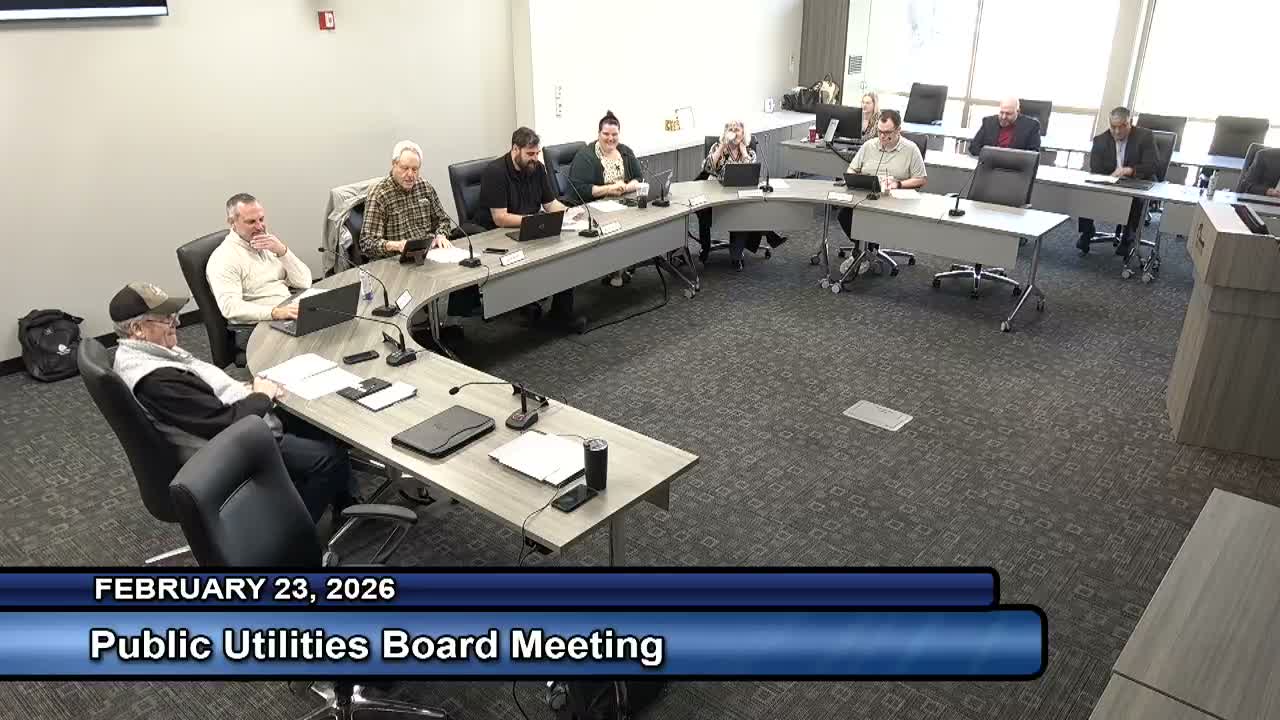
Denton Public Utilities Board members on Feb. 23 discussed proposed changes to city billing rules that staff said would broaden refunds for overbillings while limiting how far the city would seek to recover underbilled amounts.
Tony, identified in the session as the DME general manager, told the board DME has a little more than 71,000 electric meters and roughly 7,600 commercial meters. Staff uncovered 218 commercial accounts that had not been adjusted for demand over a 24-month period. For the cohort staff identified 32 accounts were overbilled (about $51,000 in refunds issued) and about 186 were underbilled with a total underbilling identified at roughly $382,000; staff said it recovered a net of about $331,000 in back billing and refunds during the review.
As a remedy, staff recommended changing the city’s Chapter 26 billing approach so that if the utility overbilled a customer the city would refund amounts extending back to the date of the error, while underbillings would be recoverable only for six months. Tony said that the recommendation aligns with common practice for retail electric providers and PUCT rules that limit underbilling recovery for private providers to shorter windows.
Staff also proposed keeping the existing two-consecutive-month threshold for demand-based reclassification (the "ratchet") and a 12-month lock-in period, but adding an audit at the end of the lock-in period so the utility can re-evaluate a customer's rate class prospectively in the thirteenth month.
Board members asked whether the six-month cap would shift costs to other ratepayers. One committee member asked, "Why are we reducing the underbilling period to 6 months? Isn't the rest of the ratepayers subsidizing that underpayment?" Staff acknowledged the tradeoff and said the proposed approach mirrors industry practice and PUCT limits for retail entities. Staff committed to providing comparative rate data with neighboring utilities and to returning ordinance language and graphics to clarify the timing and customer impacts.
Staff said the recommended change would apply across city billings (electric, water, wastewater, solid waste) under Chapter 26, although demand reclassification mechanics are specific to electric accounts. The board indicated general comfort with staff direction and asked for follow-up materials; staff will return with proposed ordinance text and supporting graphics before sending the change to council.