Get Full Government Meeting Transcripts, Videos, & Alerts Forever!
Get email alerts on the Parks Tennis Pickleball topic
No spam. Unsubscribe anytime.
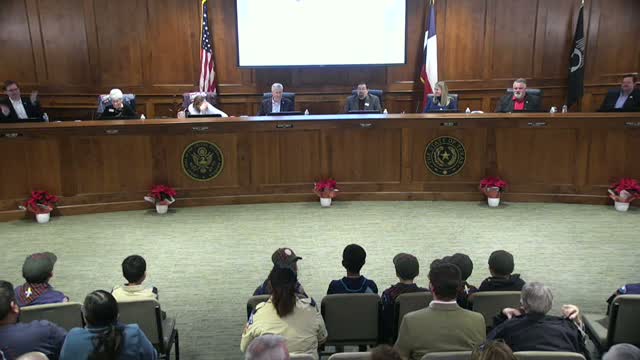
Katy council approves park rehab but drops pickleball alternate after residents decry loss of tennis courts
Summary
After about an hour of public comment and council debate, the Katy City Council approved the Katy City Park improvement base bid (drainage, turf subgrade, sidewalks, accessibility and field lighting) but removed the alternate that would have converted two public tennis courts to permanent pickleball courts, directing staff to seek lower-cost restriping proposals and report back.
The Katy City Council voted to approve the base components of the Katy City Park capital improvement project while excluding a separate alternate that would have converted two existing tennis courts into permanent pickleball courts.
The decision came after more than a dozen residents urged the council during public comment to preserve the park’s six public tennis courts, which speakers said are heavily used by children, teens and adult league players. “If we destroy those two tennis courts, that would take away a third of our courts,” said Kathy Bisbee, who said the city has only six public tennis courts and that leagues and youth training regularly fill the facilities. Allen Walker, who said his daughter practices there, urged the council to restripe courts so both tennis and pickleball could be played without eliminating courts.
Parks staff described the larger renovation scope — drainage improvements, a new subgrade for a multipurpose turf field, improved sidewalks and upgraded field lighting — and said the pickleball work was bid as an alternate because of differing site constraints (drainage, lighting, proximity to playing fields). Staff also reported that tennis-court rentals rose sharply in recent years, from 274 reservations in 2022 to 1,594 in fiscal 2025, a trend council members and members of the public cited as evidence that removing courts would reduce access.
After discussion, Councilmember Gina Hicks moved to amend the pending award to approve the base bid (park improvements and field work) and exclude the pickleball alternate; the motion passed. Council then directed park staff to obtain proposals to restripe two of the tennis courts to accommodate pickleball lines as a lower-cost, reversible test and to share the results with council. Staff said restriping and temporary solutions would be pursued outside the current construction award and that permanent, standalone pickleball courts remain a long-term option if a suitable site is identified.
Supporters of retaining tennis said youth athletes use the lit courts after school and rely on that nearby access for training and tournaments; several parents warned that reducing courts would force young players to travel farther, delay practice and could limit scholarship opportunities. Other speakers and some council members acknowledged the growing popularity of pickleball and urged staff to find additional locations so both sports can be supported.
The council’s action keeps the park renovation moving forward while pausing the more expensive alternate that would have reconfigured the tennis courts. The item’s approval will be reflected in the next budget paperwork; council also asked that staff return with cost proposals and an implementation plan for any restriping or new-court options.