Get Full Government Meeting Transcripts, Videos, & Alerts Forever!
Get email alerts on the Ems Billing topic
No spam. Unsubscribe anytime.
Flower Mound fire chief and billing vendor outline EMS billing, costs and fee options
Summary
Fire Chief Paul Henley and billing partner Emergicon gave an overview of EMS billing processes, payer mix and recovery options. Chief Henley cited a $2,100 approximate cost-per-call and an average cash-per-transport of about $494; Emergicon outlined fee‑schedule changes and an 'EmergeFire' option to bill insurers for heavy deployments. Council requested further analysis and a potential fee‑setting process in the first quarter.
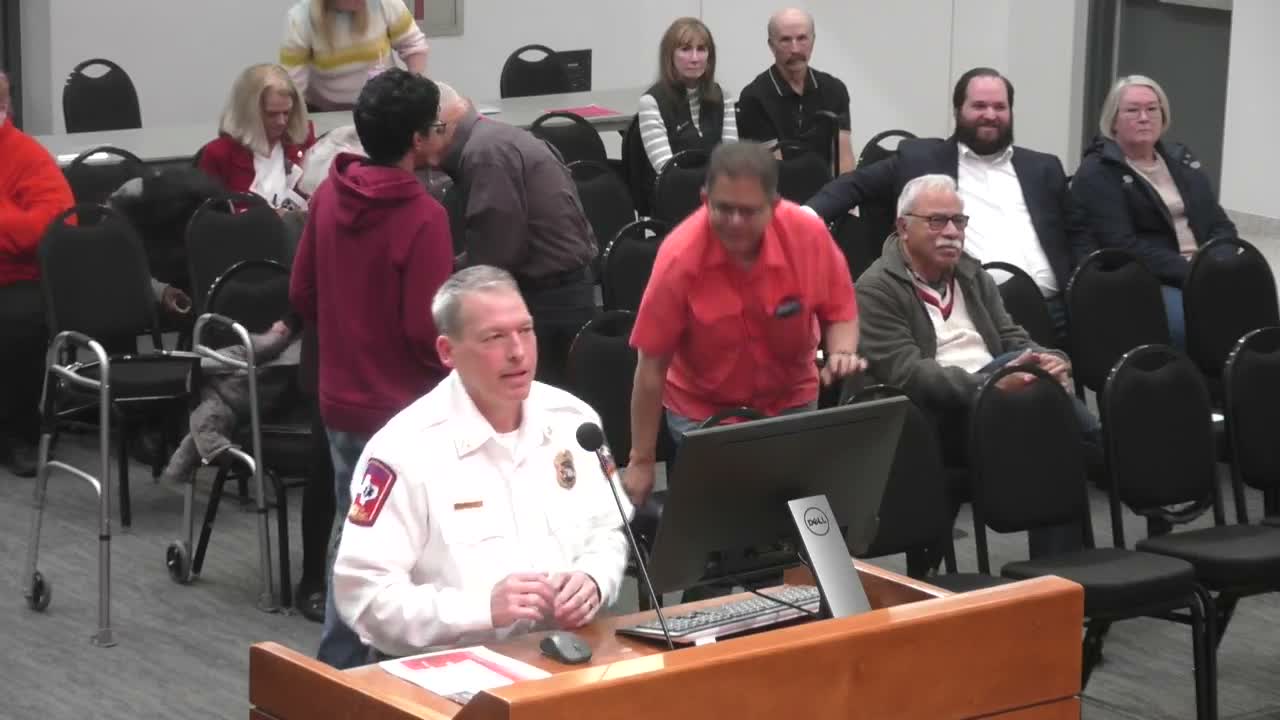
Fire Chief Paul Henley presented an overview of Flower Mound's emergency medical services billing and introduced Emergicon, the town's billing partner, to review processes and recovery options.
Henley described the department's documentation and internal quality‑control work before charts go to billing. "We document those equally," he said, stressing that field medics should focus on care while billing specialists and the chief manage revenue capture and compliance.
Representatives from Emergicon summarized the billing workflow: pre‑billing teams verify payer information, a billing team codes interventions against documentation, an AR team follows claims until payment or denial, and a collections team works patient payment plans. Emergicon reported the town's payer mix is heavy on Medicare (the largest payer), with about 26.6% commercial insurance and a remainder from Medicaid and private pay. Emergicon cited an average cash‑per‑transport figure of $494.
Chief Henley said the department's internal cost estimate is roughly $2,100 per response when accounting for stations, staff and equipment. Council members said the difference between that cost and current average collections suggests limited full cost recovery but potential incremental revenue from fee increases. The chief estimated a possible additional revenue of about $90,000–$110,000 if rates moved toward regional medians, though he cautioned outcomes depend on payer mix.
Emergicon also described an optional "EmergeFire" program to bill insurers for certain heavy‑deployment fire incidents (motor vehicle accidents, hazmat, swift‑water rescue), noting that customers would not be directly billed for incidents covered by specific state programs (for example, TDI‑funded accounts) and that cities can choose how broadly to apply such billing.
Council asked procedural questions about fee setting and timing: staff indicated the CFO will review fee schedules in the first quarter and the council can bring fee changes forward midyear or sooner; staff also said an upcoming survey will collect direction about desired cost‑recovery levels.
No formal fee changes were adopted at the meeting; staff and Emergicon will provide additional detail for council consideration.