Get Full Government Meeting Transcripts, Videos, & Alerts Forever!
Get email alerts on the Land Use topic
No spam. Unsubscribe anytime.
Lake Elsinore council approves Rome Hill commercial project over environmental objections
Summary
The City Council approved the Rome Hill commercial project and related zone change after contested public comment from environmental advocates who asked for an Environmental Impact Report; the motion passed 4–0 with one recusal.
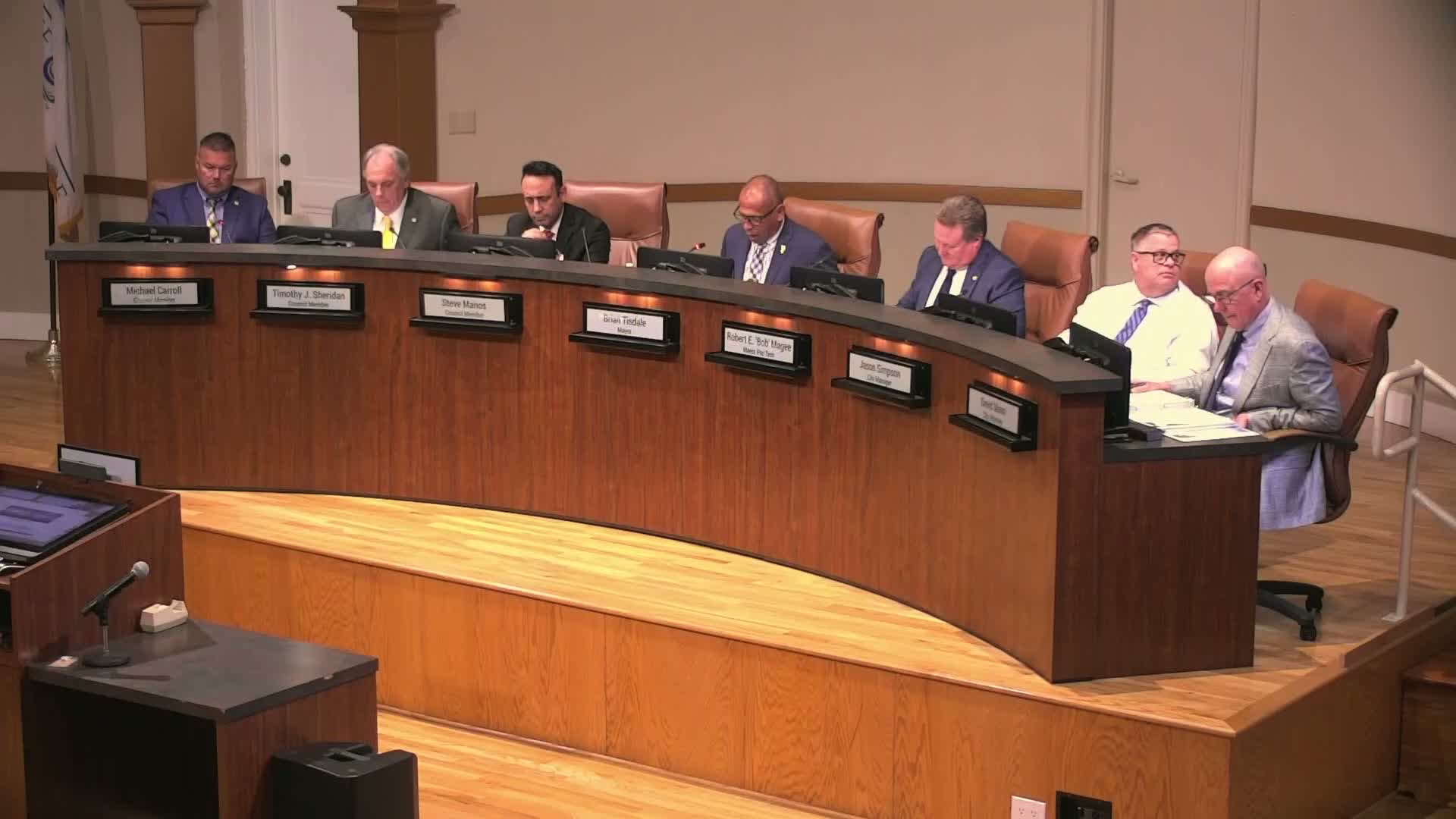
The Lake Elsinore City Council on Nov. 18 approved a zone change and associated permits for the Rome Hill Commercial Project, a proposed two‑building commercial/manufacturing development totaling about 92,760 square feet on a 6.77‑acre site on Grand Avenue, after a period of public comment and council discussion. The motion passed 4–0; Councilmember Michael Carroll recused himself because of a prior relationship with the applicant.
Supporters and opponents framed the project as a choice between local jobs and potential environmental and health risks. Chase Presciado, speaking for the supporters’ alliance for environmental responsibility (SAFER), said SAFER’s experts found “11 special status species” on the site and raised concerns about diesel particulate matter, saying a screening‑level health‑risk analysis indicated “an excess cancer risk of more than 6 times greater than the cancer risk threshold” used by the South Coast Air Quality Management District and argued that a full environmental impact report (EIR) is warranted.
The applicant’s attorney, Kelly Black of Fenimore, told the council SAFER’s experts had not walked the site and that their submissions lacked the factual foundation required to constitute substantial evidence under CEQA, calling the written claims speculative. Staff and several council members said the project was evaluated under a mitigated negative declaration and that prior analyses covered relevant impacts; staff recommended approval with the included mitigation and conditions.
Council members who spoke in favor said the proposal would bring local manufacturing jobs, reduce longer commutes for some workers, and represented a plausible use compared with the parcel’s existing zoning alternatives. Council discussion acknowledged neighborhood traffic concerns on the two‑lane portion of Grand Avenue and cited project conditions and state water‑quality standards intended to manage stormwater and contaminants.
The approved actions included a set of resolutions and an ordinance implementing the zone change, design and permit approvals, and associated conditions of approval; the council adopted the package by a 4–0 vote with one recusal. The record includes written comments from SAFER and responses in the staff report. The council’s approval does not itself construct the project; it authorizes the zoning and permits necessary for the applicant to proceed subject to the conditions and any required permits from other agencies.
The council indicated the matter attracted substantial public comment from nearby residents and community groups; several speakers asked for more information on truck traffic, chemical uses, and site remediation. The applicant’s counsel said the business is a commercial manufacturer of building materials relocating from Anaheim and estimated it would bring sales‑tax revenue and local employment. The project record cites a mitigated negative declaration prepared for the proposal; opponents argued that record is insufficient and asked the city to require an EIR.
Next steps: the city clerk’s record will reflect the adopted resolutions and the conditions contained in the staff report; any administrative appeals or legal challenges would follow the council’s action.