
Pro se appellant David Yard urges appeals court to revisit alleged withheld evidence and disputed forensic analysis
Get AI-powered insights, summaries, and transcripts
Subscribe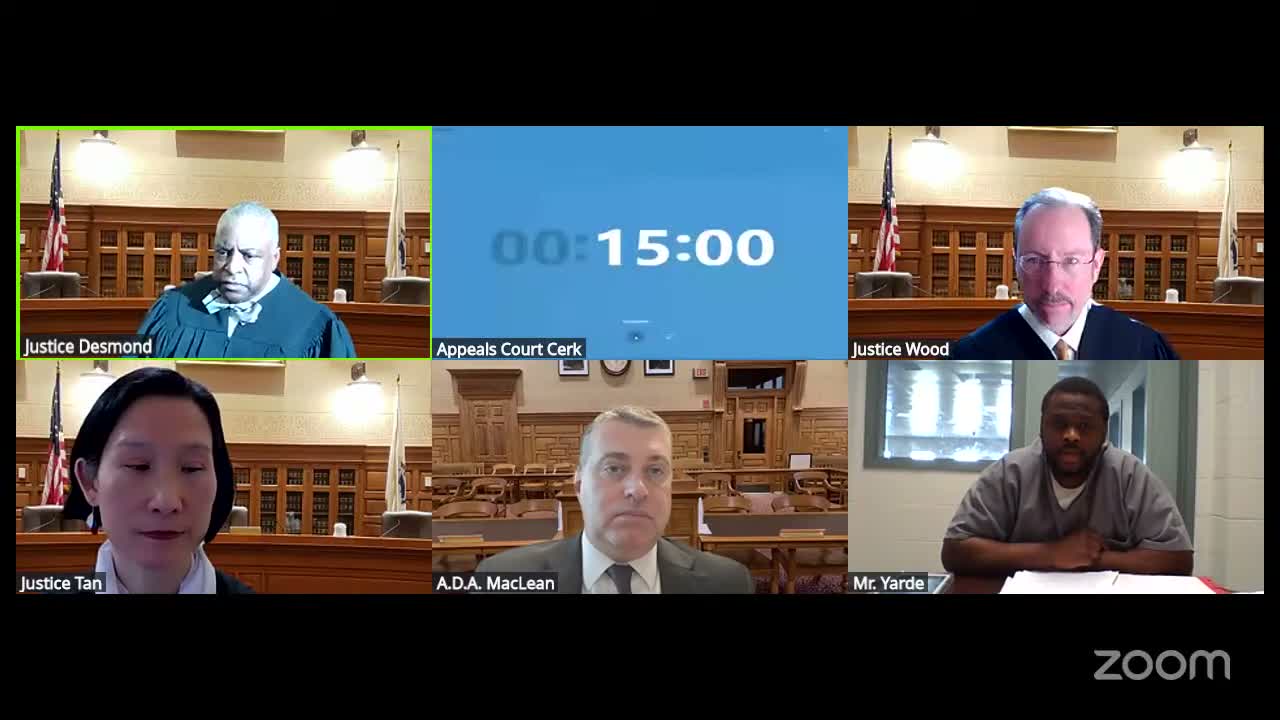
Summary
The Massachusetts Appeals Court heard oral argument in Commonwealth v. Yard, where pro se appellant David Yard argued prosecutors withheld exculpatory material and that post‑trial forensic analyses undermine the prosecution’s account; the panel heard competing views on whether those issues are properly in the appellate record and submitted the matter for decision.
The Massachusetts Appeals Court heard oral argument in Commonwealth v. Yard, an appeal from a 2012 homicide conviction, where pro se appellant David Yard told a three‑justice panel the record contains evidence and expert analyses that were not properly considered below and that, he said, establish he did not fire the fatal shot.
Yard told the panel he had sought to supplement the appellate record with an affidavit and later expert reports that, he said, show timing and trajectory measurements inconsistent with his having been the shooter. He said "four different experts came to the same conclusion independently" and urged the court to consider that science alongside the trial record.
The panel, led by Judge Desmond, pressed Yard on which of the five issues listed in his brief are properly before the court and whether several of the post‑trial materials were part of the underlying motions for new trial. Judge Desmond told counsel each side has 15 minutes for argument and cautioned that supplementation of the record is a separate procedural process the appeals court does not accept on the fly.
Assistant Attorney Ian McClain, appearing for the Commonwealth, answered the primary claims in turn. On the juror‑influence issue, McClain pointed to the trial colloquy where the juror stated he could remain impartial and to both parties’ decision not to remove the juror, arguing "the judge did exactly what they're supposed to do in conducting the voir dire, making credibility determinations." On the allegation about Delano Hawthorne, McClain said materials regarding Hawthorne were produced to the defense and Hawthorne testified at trial.
McClain also addressed a Brady‑type claim about ammunition recovered at the Collins residence. He said the Commonwealth disclosed a search‑warrant return showing 11 rounds were recovered and that defense counsel had notice of that fact before trial. On the ineffective‑assistance claims tied to expert testimony, McClain summarized the lower courts’ reasoning that the defense experts (including a pathologist and a scene reconstructionist/ballistician) largely repeated the substance of the Commonwealth’s trial expert, Kimberly Springer, and therefore did not demonstrate prejudice or deficient performance warranting relief.
The panel discussed technical points raised by Yard and the Commonwealth, including how many shots were fired (a justice noted six shots; counsel described the record as three shots producing six wounds) and whether a video clip shown at trial supported an inference the defendant fled with a firearm tucked into his sweatshirt. The Commonwealth argued that inference was reasonable from the evidence and that objections were not preserved at trial.
Yard sought to raise a post‑trial affidavit and other expert analyses that he said were not available earlier; the panel declined to resolve the record‑supplementation process during oral argument. The court submitted the matter for decision at the close of argument and did not permit a rebuttal from Yard.
The panel did not announce a ruling from the bench; a written decision will follow in due course.