Get Full Government Meeting Transcripts, Videos, & Alerts Forever!
Get email alerts on the Land Use topic
No spam. Unsubscribe anytime.
Council fails to override P&Z; rezoning for large self‑storage at Flower Mound Road and Old Orchard denied
Summary
After hours of public testimony split between nearby residents and supporters, the Flower Mound Town Council fell one vote short of the four‑member threshold needed to override a Planning & Zoning denial, so the applicant’s rezoning request to allow a 3‑story self‑storage facility at the Flower Mound Road/Old Orchard corner failed.
The Flower Mound Town Council on Feb. 2 declined to grant a rezoning that would have allowed a large, three‑story self‑storage facility at the northwest corner of Flower Mound Road and Old Orchard Lane. Planning & Zoning had recommended denial; the council vote was 3–2 in favor, short of the four affirmative votes required to override that recommendation.
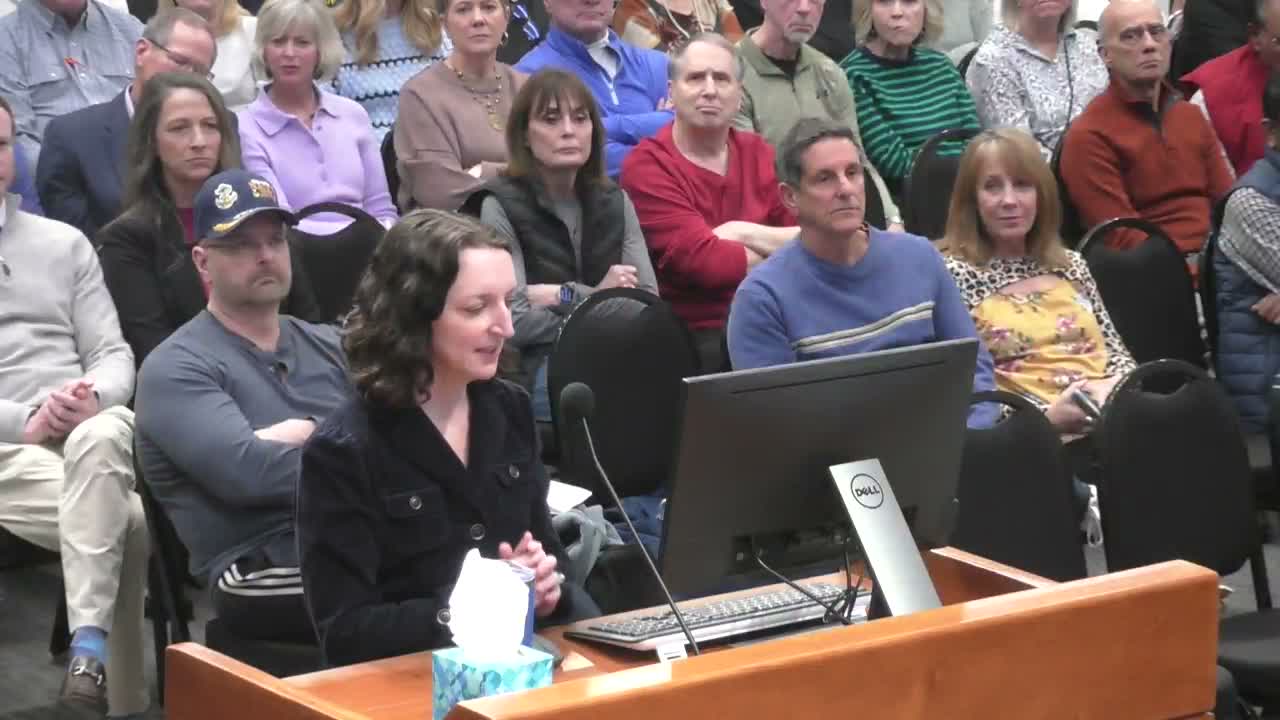
Supporters and opponents split sharply during a lengthy public hearing. The applicant, represented by Moniel Gray, told the council the project had been substantially revised since the Planning & Zoning hearing: parapet heights were lowered, rooftop mechanical equipment would be moved to the ground and screened, landscape buffers increased to 23.5 feet on the residential side, an 8‑foot masonry wall and additional evergreen trees were proposed, and murals and higher‑quality materials would improve the building’s appearance. Gray also said the developer would limit customer gate hours and add security measures, and estimated 35–40 vehicle trips per day to the site.
Opponents, many of them residents of the adjacent Orchard Flower retirement community and members of the HOA, urged the council to honor the Planning & Zoning denial. They said the structure’s scale and reduced compatibility setback would set a harmful precedent at a major gateway to town, could harm property values for nearby homeowners, and would risk additional traffic and safety problems at the Old Orchard intersection. Several speakers urged the council to require a smaller building or a land use more consistent with a gateway location.
Supporters, including HOA representatives and nearby business leaders, said a single, well‑designed storage facility would produce far fewer vehicle trips and less noise than a multi‑tenant retail configuration, would increase security behind the subdivision’s rear wall, and represented a compromise that preserved green buffer relative to other by‑right retail uses.
During deliberations, staff clarified that the property’s current PD exhibits allow two retail buildings (about 11,000 and 12,000 square feet) as the by‑right scenario; several council members said that uncertainty about future by‑right tenants factored into their thinking. Council questions focused on how building height is measured (average finished grade versus road grade), whether fill could be used to artificially alter the measured grade, gate hours and gate noise, location of mechanical equipment, and traffic turning movements at Old Orchard (a Lewisville‑controlled roadway). Staff said they would include a condition prohibiting use of fill to artificially raise grade if the council required it.
Council member votes were recorded as follows: Council member Drew — Aye; Deputy Mayor Pro Tem Schistel — Nay; Mayor Pro Tem Martin — Aye; Council member Taylor — Aye; Council member Warner (referred to in the roll call as Council member Werner in the clerk’s roll sequence) — Nay. Because the Planning & Zoning Commission had unanimously recommended denial, the town code requires a four‑vote affirmative majority to overturn that recommendation; the three affirmative votes were insufficient, and the rezoning therefore failed.
After the vote the mayor noted the community’s strong engagement on both sides of the issue and moved to the next agenda item. The applicant may choose to revise and resubmit, pursue the currently approved retail plan, or appeal procedural steps, but no formal follow‑up direction was made by the council at the meeting's end.
What happens next: With the council’s failure to override Planning & Zoning, the applicant does not have the requested PD amendment; any substantially different development would require a new application and another public hearing.