
Heated public hearing on Clark Road leaves supervisors reaffirming rural‑rustic status and removing Slatersville segment
Get AI-powered insights, summaries, and transcripts
Subscribe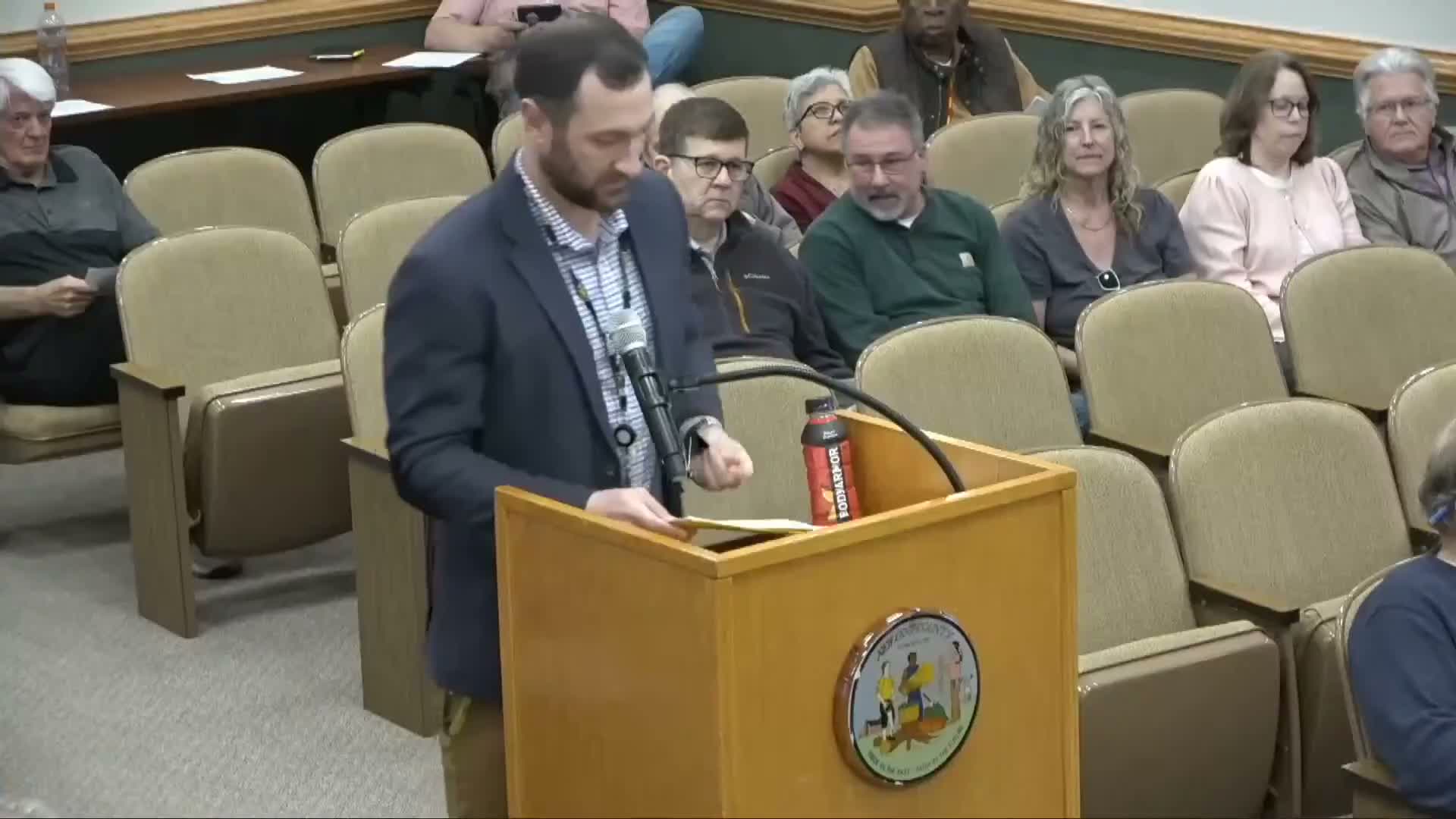
Summary
Hundreds of comments and several residents urged both for and against surfacing Clark Road (State Route 678) under VDOT’s rural‑rustic program. After extensive testimony on safety, dust and historic character, the board removed the Slatersville segment from the project and reaffirmed Clark Road’s surface‑treatment priority.
VDOT’s residency administrator, Philip Frasier, described the rural‑rustic program and the proposed surface‑treatment (double‑shot chip seal) for roughly 1.35 miles of Clark Road (State Route 678). He said the program allows hard surfacing within the existing right‑of‑way while minimizing geometry and tree removal; VDOT intends to post a 25 mph speed limit on Clark Road after the surface treatment.
The public hearing drew many Clark Road residents who sharply disagreed about the project. Opponents — including members of the Clark family representing multi‑generation farming interests — said paving would erode rural character, encourage higher speeds and endanger farm equipment users on a narrow, single‑lane section. Several residents produced a petition opposing paving with 19 signatures representing a majority of affected tax parcels.
Supporters and other residents said the road’s prior deterioration, dust, and occasional impassability made maintenance difficult and posed emergency‑access concerns; they noted recent VDOT ditching and culvert replacement had improved conditions and said surface treatment would reduce long‑term maintenance costs and enable snow removal. One resident urged the county to complete adjoining segments so the state could maintain the entire route.
After questions and discussion about project scope, safety studies and the differences between chip‑seal surface treatment and full asphalt paving, the board adopted a motion to remove the Slatersville Road portion from the previously adopted project and reaffirm Clark Road as a rural‑rustic surfacing priority. VDOT staff said the surface treatment is more durable than stone and can be plowed (unlike a gravel surface), though it is not as durable as full‑depth asphalt.
What happens next: VDOT will proceed with the revised scope and the county’s secondary six‑year plan will be updated; final scheduling and construction windows depend on seasonal conditions and contracting timelines.