
Developer, town and property owner argue over mitigation covenant and whether town action amounted to a taking
Get AI-powered insights, summaries, and transcripts
Subscribe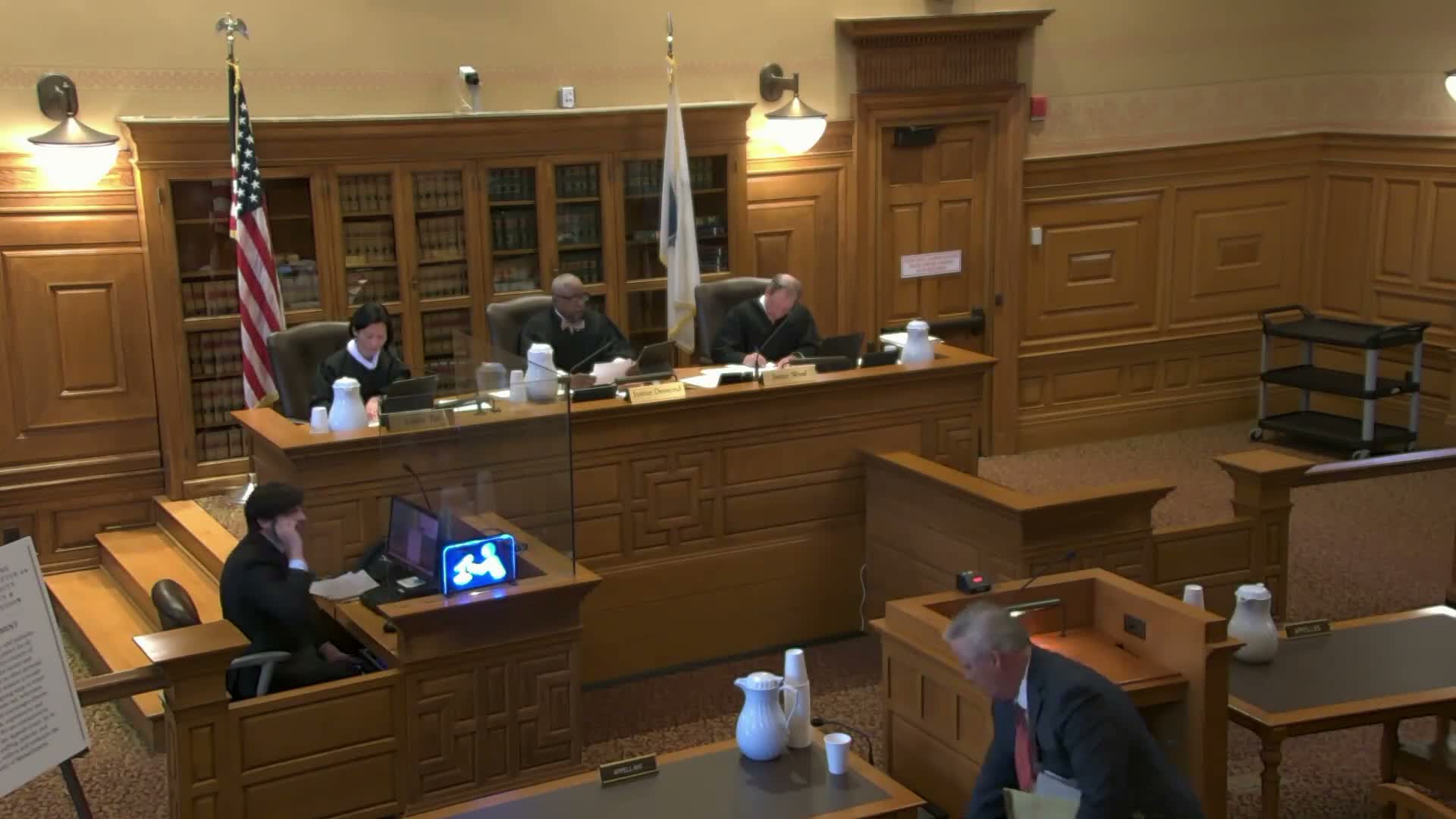
Summary
RFF contended a mitigation covenant tied to rezoning was an extracted promise amounting to a regulatory taking; the town and shops countered the covenant was drafted by the developer in response to public concerns and that the record lacks evidence of coercive government action.
In RFF Family Partnership v. Shops at Saugus (Docket 25P0768), the panel heard argument about whether a mitigation covenant imposed as part of a rezoning process amounted to an extractive government taking or was a voluntary contractual accommodation.
Richard Bryansk, representing RFF, said the covenant was not an ordinary private promise but a product of exchange between the town and developer that had the practical effect of removing development rights and imposing conditions on RFF’s property; he asked the court to remand for trial on whether the town’s role converted the covenant into a regulatory imposition and raised Penn Central factors and contract‑zoning precedents.
Patrick McCoo, for the town of Saugus, replied that the shops drafted the covenant after open meetings and community concern and that the town did not coerce or adopt the covenant in a way that would support a taking claim; he urged the court to resolve the matter on summary judgment, saying the record lacks evidence of coercion or a formal adoption vote and characterizing the meetings as informational deliberations.
The panel explored whether negotiations and recitals in the covenant showed town involvement beyond mere informational advice, whether the mitigation covenant was a conditional, contingent offer by the shops, and whether evidence of back‑and‑forth communications (emails, town‑lawyer approvals) existed. Parties disagreed about whether the covenant’s recitals and the town planning board’s actions were sufficient to show final government action.
Why it matters: The court’s decision will inform when municipal engagement in contract‑zoning or mitigation covenants crosses the line into coercive government action that can support a regulatory‑taking claim and will guide developers and municipalities about lawful negotiation practices.