
Appeals court probes whether a brief seizure tainted consent to search a car
Get AI-powered insights, summaries, and transcripts
Subscribe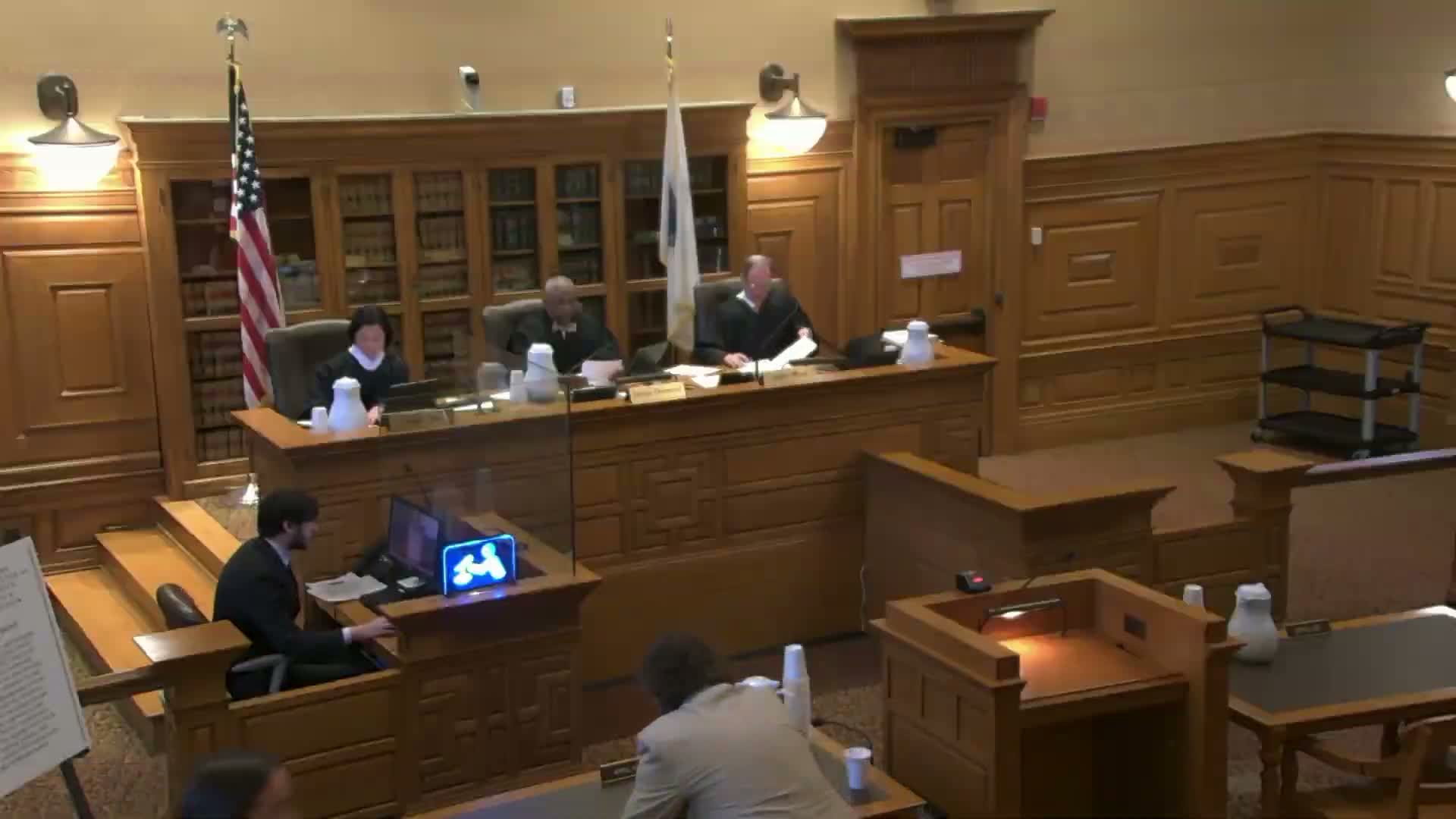
Summary
In the Wheeler argument the court questioned whether officers’ early contact (grabbing the suspect’s arm and crowding him) rendered a later "you can search everything" volunteered statement involuntary; counsel debated whether the pat frisk and timing vitiated consent under Massachusetts precedent.
At argument in the Wheeler matter, counsel and the panel focused on whether the defendant’s statement "you can search everything" was voluntary or the product of coercion after officers surrounded and grabbed him during a traffic stop.
Kenneth Steinfeld, appearing for the Commonwealth with trial prosecutor Michael Thomasini at counsel table, acknowledged the encounter was tense but urged the court that the defendant volunteered the statement and that there was no exercise of authority to search the car before the statement. He argued the defendant’s subsequent actions (offering registration, offering to "pop the trunk," and saying he would record) were susceptible to other reasonable explanations and not an unambiguous withdrawal of consent.
Opposing counsel argued the initial holding of the defendant’s arm and the presence of three officers amounted to a seizure that began before the statement and that the pat frisk was illegal; counsel relied on cases such as Laughlin, Torres and Cantalupo to say consent obtained after close‑in time exploitation of an illegality is not free and voluntary. Counsel also emphasized that officer statements that they were "not here to search" and their actions (moving him away from the car and obstructing his view) could have led a reasonable person to think the search was not under his control.
The court drilled into two issues: whether the initial contact amounted to an illegal seizure and, if so, whether the later statement was attenuated from that illegality; and whether the defendant’s phrases ("I'll pop the trunk", "you can search everything") were ambiguous or reasonably limited to the trunk. Counsel debated whether ambiguity in the original granting of consent favored the defendant and whether withdrawal of consent must be unambiguous.
The justices asked for precise application of precedent about when an act "clearly inconsistent" with consent or an "unambiguous" withdrawal is required and whether the search scope was limited by the defendant’s words. The matter was submitted.
Why it matters: The court’s ruling will clarify how Massachusetts courts treat consent that follows officer contact that may constitute an unlawful seizure, including whether volunteers to "pop" a trunk can be treated as limited consent and how ambiguity is assessed.