WSBA pilot lets nontraditional legal entities seek authorization; court, lawyers press for transparency and consumer safeguards
Loading...
Summary
The Washington State Bar Association told the Supreme Court it has five applicants in a pilot allowing entities to deliver legal services under court authorization; the WSBA described background checks, public application postings and client surveys while justices and counsel pressed it to monitor competition, enforcement and unauthorized practice risks.
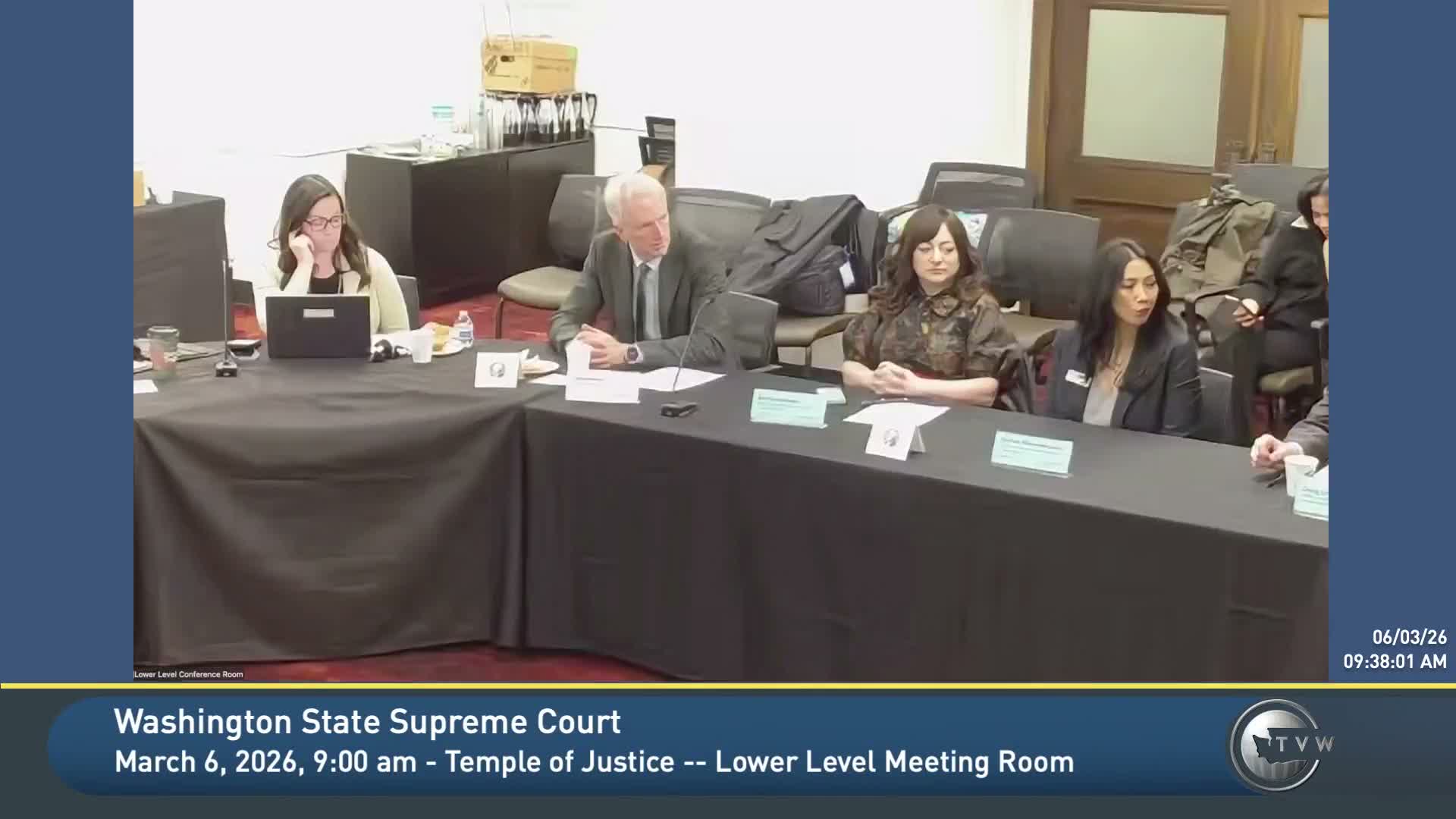
The Washington State Bar Association told the Washington State Supreme Court that an entity-regulation pilot it launched in October has drawn five applicants and is nearing a recommendation to the court on the first file. Renata Garcia, the Bar’s chief regulatory counsel, said the pilot requires applicants to describe their delivery model, the specific rule waivers they seek, potential consumer risks and the safeguards they will use.
The work matters because the projects propose technology-enabled legal delivery and alternative business structures that may require waivers of RPC 5.4. “Entity regulation pilot project is up and running. We launched the pilot in October. Entities can now apply for authorization to provide legal services in Washington,” Garcia said in her update to the court. She said the practice-of-law board uses a four-step review—initial staff completeness check, background investigations, a substantive subcommittee review and interviews—before recommending an application to the full board and then to the Supreme Court.
Why it matters: advocates say the pilot could expand access for low- and moderate-income residents by enabling new, technology-driven service models. Skeptics worry the projects could undercut traditional lawyers or mask unauthorized practice. Several justices and governors urged the WSBA to preserve public notice and robust enforcement tools so consumer protection—not market disruption—drives the pilot.
Court members pressed WSBA staff on three practical points: how members of the public and practicing attorneys will provide input before the practice-of-law board makes decisions; whether the program will assess impacts on the legal profession; and how the Bar will detect and remediate applicants that fail to meet promised access goals. Justice Colleen Melody relayed concerns raised by the Office of Civil Legal Aid about surveying respondents amid high distrust, and Justice Whitener asked why competition’s effects on attorneys are not being directly measured.
Garcia said applications will be posted publicly with confidential business information redacted, there is a complaint and enforcement process routed to the WSBA, and applicants must have compliance officers and agree to client surveys that report directly to the Bar. “We want to be very transparent with the public about who is applying and what they're able to do,” she told the court. She added that client surveys and quarterly reporting from entities will be used to spot consumer harm and that the Bar can remove entities from the pilot if problems arise.
Board leaders and several governors emphasized that the pilot’s purpose is experimentation and data collection, not immediate rule changes. Jordan Couch, a governor involved in implementation conversations, noted the pitch applicants must make includes how their proposal expands access to legal services: “So if you're coming in and saying, I'm going to take over this marketplace where there's already a bunch of lawyers serving these clients, you're not really making a pitch of how you're expanding access,” he said.
What comes next: WSBA staff said they are drafting a proposed order for the Supreme Court on the first application and expect to send it for court consideration in the coming weeks; the Bar will continue reviewing applications and collecting data from approved entities to assess real-world consumer impacts.
The court did not act on a rule change at the meeting. Instead, justices asked the Bar to formalize follow-up reporting on how the pilot gauges competitive effects, how it reaches underserved communities and how enforcement and consumer-complaint channels will work in practice.