Get Full Government Meeting Transcripts, Videos, & Alerts Forever!
Get email alerts on the Telecommunications topic
No spam. Unsubscribe anytime.
Brentwood approves first reading of ordinance to update rules for cell towers to fill coverage gaps
Summary
On Jan. 12 the Brentwood City Commission approved on first reading a zoning text amendment that adds a 'tier 4' category for personal wireless service facilities to address coverage gaps while aiming to limit visual impacts and require colocation and technical review.
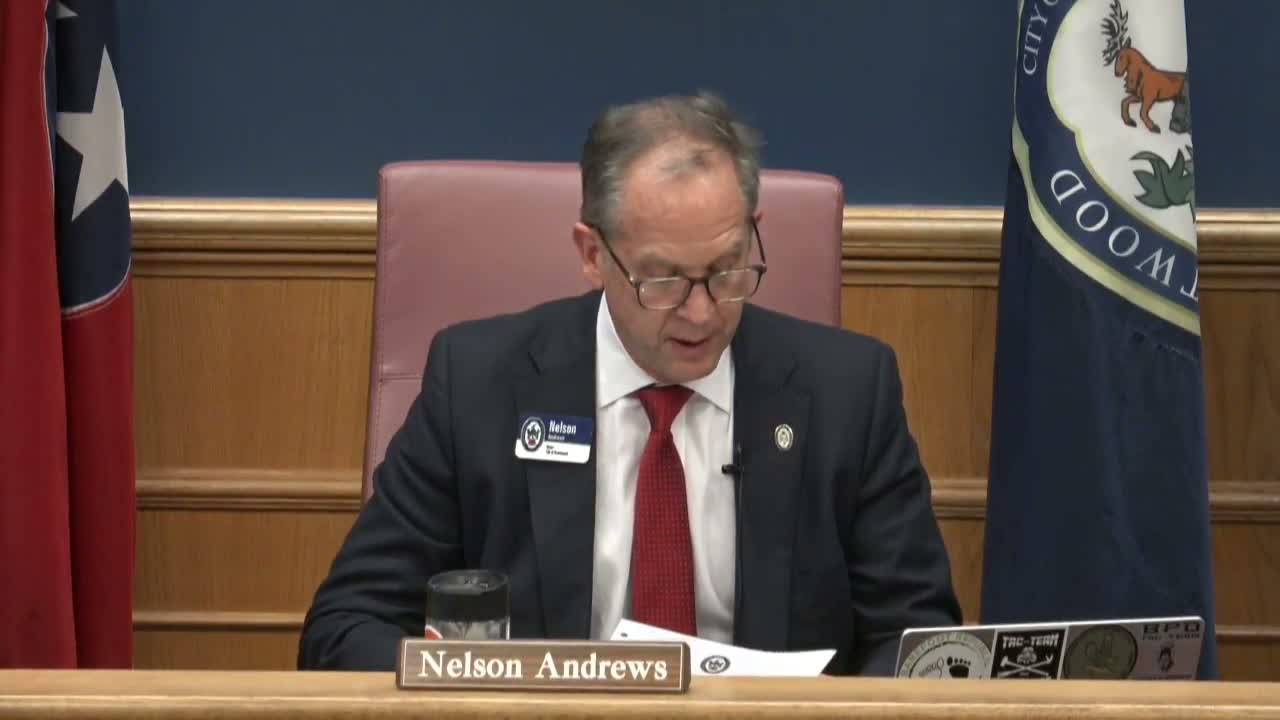
The Brentwood City Commission voted unanimously Jan. 12 to approve on first reading an amendment to the city’s personal wireless service facilities ordinance aimed at closing cellular coverage gaps while preserving neighborhood character.
City Manager Jason Gage, summarizing staff recommendations, said the amendment retains the ordinance’s tiered approach and adds a new “tier 4” to allow taller, better‑engineered monopoles where necessary to reach areas with poor or no service. “One of the more important uses is a public safety use, when you need to call 911,” Gage said, arguing the changes are meant to ensure residents can reach emergency services from trails and parks.
The amendment would require applicants to submit a technical propagation study showing that proposed sites and heights are necessary, and would require colocation so multiple providers share towers rather than building separate structures. The draft bans lattice towers, sets engineering standards (including hinge or collapse‑fold designs), and requires property‑owner notification within 1,000 feet of proposed sites. Staff said the city could hire a third‑party reviewer at the applicant’s expense to verify technical studies.
Commissioners asked about safety and precedent. Commissioner Dunn raised health concerns he has heard from residents about emissions and said these issues often drive public opposition; staff responded that the city will provide technical information to answer safety questions and that monopole designs with hinge points are widely used. “It opens up more potential sites,” a staff member said of the revised fall‑zone approach, adding that modern monopoles are engineered to fold rather than fall in a single direction.
The ordinance will go to the Planning Commission Feb. 2 for review, return to the commission for a public hearing Feb. 9, and is scheduled for a second (final) reading Feb. 23 if the process proceeds as expected.
The commission’s first‑reading approval moves the text amendment forward in the formal zoning process; it does not authorize construction of any specific tower or site. Public notices and further Planning Commission materials will be published before the Feb. 9 public hearing.
What’s next: Planning Commission review Feb. 2; public hearing before the City Commission Feb. 9; anticipated final reading Feb. 23.