Get Full Government Meeting Transcripts, Videos, & Alerts Forever!
Get email alerts on the Taxes And Fees topic
No spam. Unsubscribe anytime.
Treasurer defends collection rates as residents press Southampton County on solid-waste fee and delinquencies
Summary
Residents pressed the Board of Supervisors on rising multi-year delinquency totals and the county’s $200 solid-waste fee; Treasurer Miss Edwards defended the office’s 99%+ collection rates for real estate and explained statutory limits and collection tools while board members warned eliminating the fee would require replacing roughly $1.2 million in revenue.
Miss Edwards, the county treasurer, told the Southampton County Board of Supervisors on April 22 that her office is collecting a higher share of taxes than in past years but that statutory limits and practical constraints curb collection.
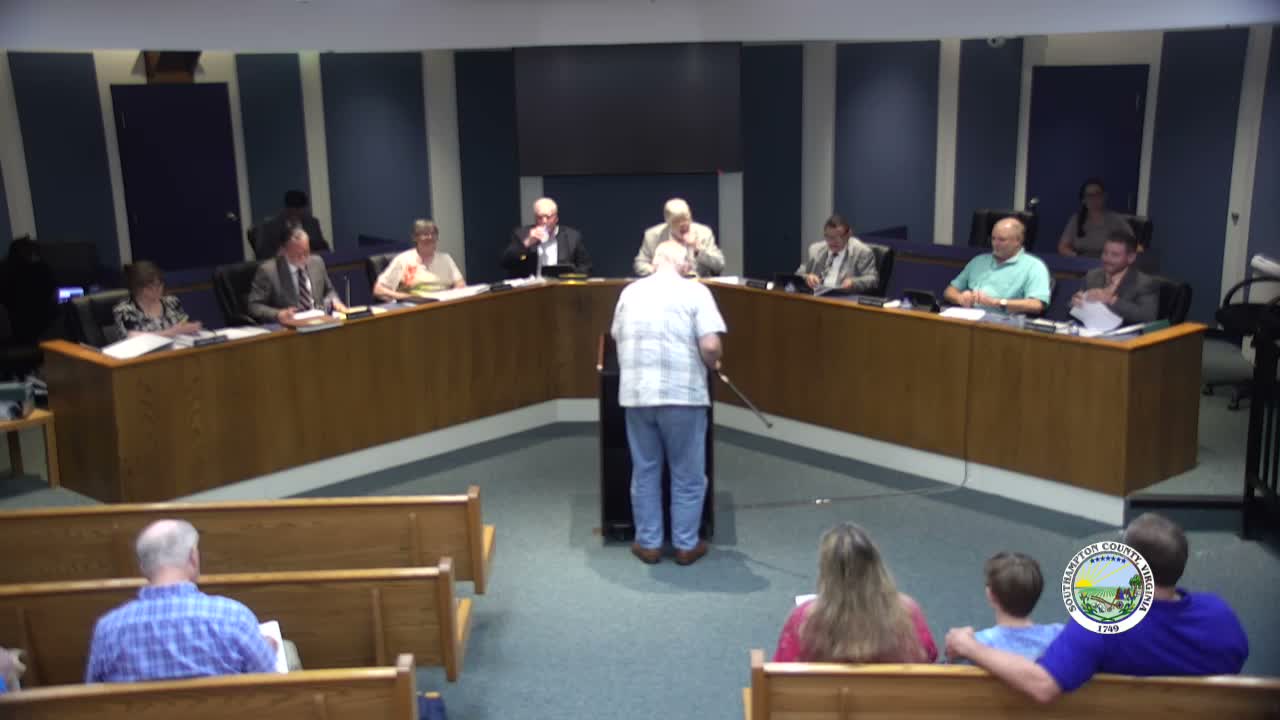
At the board’s public comment period, Ash Cutchin of Darden Point Road said a recent solid-waste bill he received was $225.50 after a missed $200 payment and questioned why longstanding unpaid accounts are not pursued more aggressively. ‘‘I’ve probably paid $2,000 in solid-waste fees,’’ Cutchin said, adding frustration that some residents evade payment while others are billed.
Miss Edwards replied with specific collection figures: real-estate collections are at 99.68% with an outstanding balance of $700,965.61; personal property collections are at 96.31% with $2,312,273.83 outstanding; and solid-waste collections were 76.29% with $897,729.27 outstanding. She explained legal limits on collections that shape outcomes: solid-waste debts can be pursued for three years, personal property for five years and judgments have time limits set by changes in state law. She described the office’s tools — liens, bank and employment garnishments and, when appropriate, referrals to collection firms — and said she will pull state tax refunds to collect debts when eligible.
Colleen Flick, a resident, pressed the board about the headline delinquencies she’d seen cited at prior meetings and asked whether audits or oversight of delinquent balances had been performed. Board members and staff clarified that some figures presented in public materials combine multi-year totals (three, five and ten years depending on tax type), which inflates what appears to be a single-year shortfall. One supervisor noted that the combined multi-year presentation explains why totals can look large even though the county’s annual collections are strong.
On the policy side, supervisors stressed trade-offs: removing the $200 solid-waste fee (which yields roughly $1.2 million annually, board members said) would require covering that revenue through higher real-estate or personal-property taxes or cutting county services. Administration said the fee was adopted in 2012 to avoid drawing down the county’s fund balance and has been reviewed annually; board members said any change would need a formal motion and budget offset. Miss Edwards urged residents who face hardship to contact the treasurer’s office early to arrange payment plans, while acknowledging options narrow once accounts proceed to collections.
The board did not vote to change the fee at the meeting. Members moved forward several related public hearings (including one tied to proposed income-limit increases for elderly/disabled tax relief) so the community can review ordinance language and fiscal impacts before any policy change.